Why Sudan's Peace Agreements Keep Succeeding at Everything Except Peace
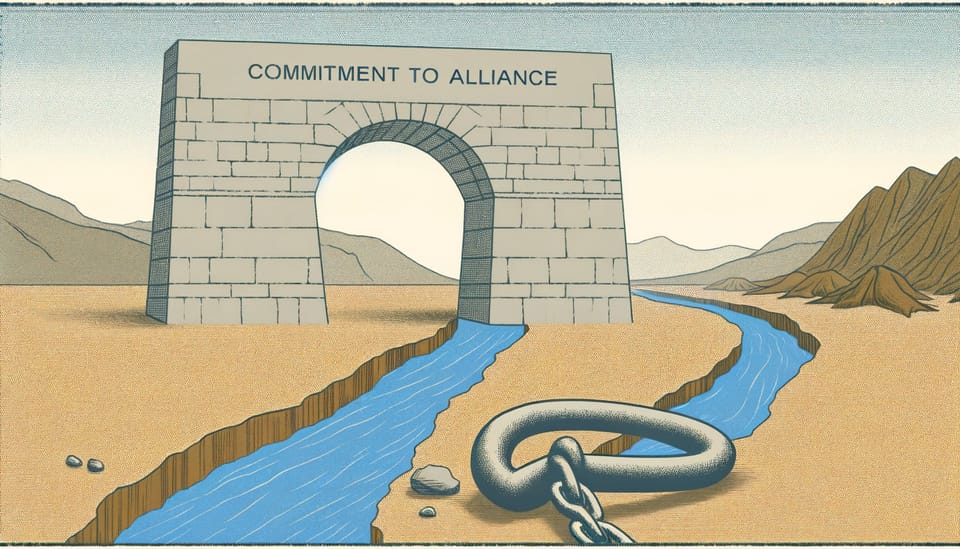
Sudan has signed more than a dozen major peace accords since 1972. Each promised transformation. Each delivered reconfiguration. The problem isn't failed implementation—it's a political economy where durable peace is structurally irrational for those with guns.
The Architecture of Perpetual War
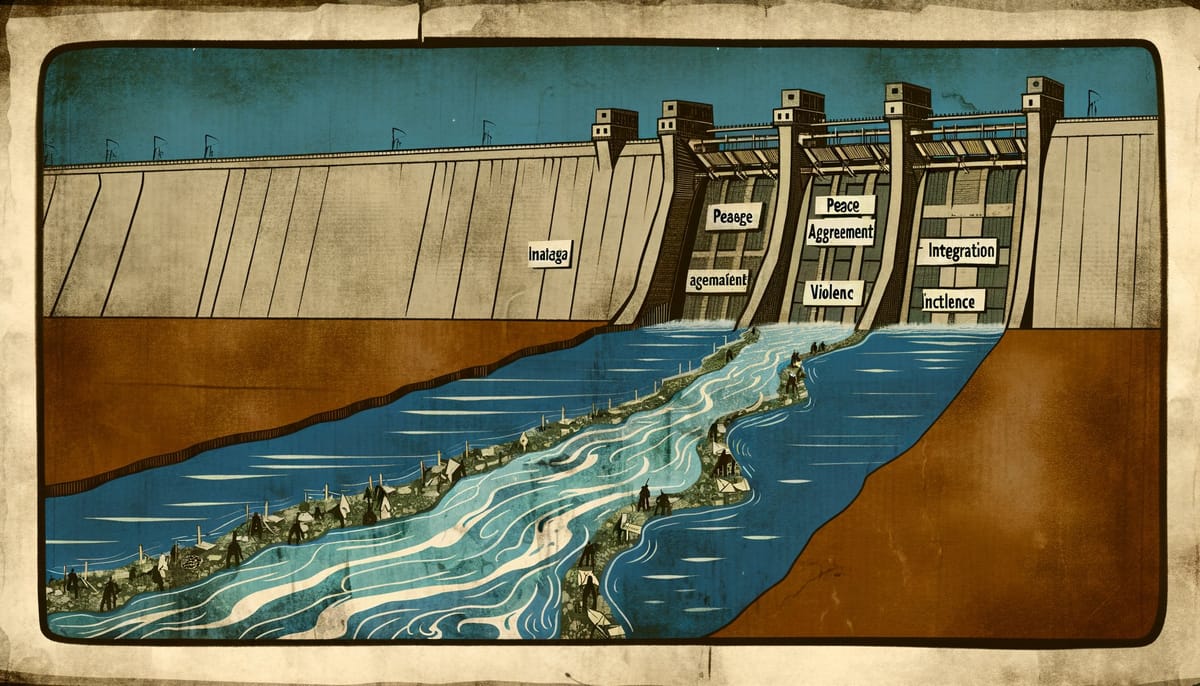
Sudan’s peace agreements don’t fail. They function exactly as designed—as instruments for redistributing violence rather than ending it. Since 1972, the country has signed more than a dozen major peace accords. Each promised transformation. Each delivered reconfiguration. The 2005 Comprehensive Peace Agreement ended Africa’s longest civil war and birthed a new nation, yet the structures it left behind now fuel a conflict that has displaced ten million people in eighteen months. The 2020 Juba Peace Agreement integrated rebel commanders into government, then watched those same commanders choose sides when war erupted in April 2023. These are not failures of implementation. They are successes of a different kind—agreements that preserve the underlying system while reshuffling who controls it.
The question is not why peace initiatives fail but why Sudan’s political economy makes durable peace structurally irrational for those with guns. The answer lies in a confluence of factors so deeply embedded that they resist any intervention designed around the assumption that warring parties want the fighting to stop.
The Franchise Model of Sudanese Governance
Sudan’s state has never functioned as a Weberian monopoly on violence. It operates as a franchise system. Khartoum licenses violence to peripheral actors in exchange for political loyalty and a cut of extracted resources. The Janjaweed militias that burned Darfur in the 2000s were not rogue elements—they were subcontractors. The Rapid Support Forces that now contest control of the capital are the same franchise, rebranded and scaled.
This model predates independence. British colonial administrators created “native administration” systems that assigned tribal authorities to fixed territories, transforming fluid pastoral governance into bounded administrative units. The cartographic trap they set continues to generate violence: land tenure research documents how territorial legibility requirements didn’t eliminate mobility—they criminalized it, making seasonal movement into trespass and traditional grazing rights into competing sovereignty claims.
The franchise model explains why integration provisions in peace agreements consistently backfire. When the 2020 Juba Agreement promised to absorb Darfur rebel forces into the national army, it wasn’t offering peace—it was offering franchise expansion. Commanders who accepted gained access to state resources while retaining autonomous command structures. Those who refused remained outside the system, available for future mobilization. Neither outcome reduced the total capacity for organized violence.
The Rapid Support Forces represent the franchise model’s apotheosis. Mohamed Hamdan Dagalo, known as Hemedti, built the RSF from Janjaweed remnants into a parallel military with its own gold mines, its own border trade routes, and its own foreign patrons. By 2023, the RSF controlled an estimated 70% of Sudan’s gold production. Its annual revenues exceeded those of many African states. Security sector reform demanding RSF integration into the Sudanese Armed Forces within two years functioned as organizational sterilization—an attempt to terminate the RSF’s capacity for independent reproduction. Hemedti understood this. War followed.
The Wealth That Prevents Peace
Gold remade Sudan’s conflict economy. When South Sudan’s secession in 2011 stripped Khartoum of 75% of its oil revenues, artisanal gold mining filled the gap. Production exploded from negligible quantities to over 100 tonnes annually. But gold doesn’t flow through pipelines that can be metered and taxed. It moves through networks—camel trains across the Sahara, small aircraft to Dubai, briefcases to Kampala.
Control of gold mining areas became existential for armed actors. The RSF’s 2017 seizure of the Jebel Amer mines in North Darfur wasn’t resource competition—it was state formation. A force that controls gold extraction, refining, and export needs no budget allocation from Khartoum. It becomes a parallel treasury.
UAE customs data reveals the structural dependency this creates. In 2024, 97% of Sudan’s official gold exports—$1.52 billion worth—went to the Emirates. This represents 48.5% of Sudan’s total exports. The UAE’s gold imports from Sudan increased 70% during active civil war, inverting the expected relationship between conflict intensity and trade flows. War doesn’t disrupt the gold trade. War enables it by destroying the institutional capacity that might formalize and tax extraction.
Peace agreements cannot compete with this arithmetic. The Juba Agreement’s wealth-sharing provisions promised Darfur 40% of regional revenues. But “regional revenues” meant whatever the central government chose to count. Gold mined by armed groups and exported through informal channels generated no regional revenues to share. The formula distributed nothing while appearing to distribute everything.
The same dynamic corrupted the 2005 CPA’s oil revenue split. South Sudan received 50% of oil revenues on paper—a headline achievement. But implementation analysis found that local and state governments remained 62-100% dependent on central transfers for basic operations. The franchise fee (resource extraction rights) appeared to create autonomy. The operating costs (everything else) maintained dependency. This is the franchise paradox: wealth-sharing formulas that appear to distribute power while concentrating it.
The Temporal Trap
Sudan’s conflicts operate on incompatible time horizons. International mediators work in months. Electoral cycles run in years. Armed groups plan in generations.
The RSF’s power lies partly in what might be called temporal sovereignty—the capacity to keep agreements in permanent future tense. Transitional justice provisions remain “to be implemented.” Security sector reform stays “under discussion.” Constitutional processes exist as perpetual drafts. This isn’t delay. It’s strategy. An agreement that never crystallizes into binding commitments cannot constrain future action.
The Abyei referendum illustrates this mechanism. The 2005 CPA mandated a vote on whether the oil-rich border region would join north or south Sudan. The referendum was scheduled for 2011. It has never occurred. An unofficial vote in 2013 showed overwhelming support for joining South Sudan. The result changed nothing. Abyei exists in permanent liminality—too valuable to resolve, too contested to ignore.
Implementation monitoring bodies designed to verify compliance become trapped in the same temporal loop. Their existence depends on perpetual non-completion. A fully implemented agreement would dissolve the monitoring body. Incomplete implementation justifies continued operation. The institution develops structural incentives against the outcome it was created to achieve.
Victim absence compounds this temporal dysfunction. Transitional justice research shows that victims demand present-tense accountability—they want justice now. Their exclusion from agreement design removes the only constituency with incentive to crystallize time. Perpetrators and political elites benefit from keeping agreements in permanent future tense. Without victims at the table, no one pushes for temporal closure.
The Integration Paradox
Every major Sudan peace agreement has included provisions for integrating rebel forces into national security structures. Every integration attempt has increased total armed capacity rather than reducing it.
The mechanism is straightforward. Demobilization, disarmament, and reintegration (DDR) programs treat militia membership as employment—a job that can be quit. But armed groups in Sudan function as kinship systems. Membership is social identity, not occupational status. DDR eligibility criteria requiring fighters to have “joined after 2005” and “left the army” assume clear entry and exit points that don’t exist in practice.
The pattern repeats with mechanical consistency. Disarmament and demobilization achieve their targets—weapons are collected, fighters are processed. Reintegration fails. Ex-combatants retain the social networks, the grievances, and the skills that made them fighters. They also retain option value: the possibility of remobilization if circumstances change. Accepting a demobilization package doesn’t foreclose future armed participation. It just provides interim income.
Integration into formal security forces creates different problems. The Sudanese Armed Forces inherited British colonial rank structures—fixed-ratio pyramids that cannot flex to accommodate large-scale integration without triggering rank deflation. Absorbing thousands of rebel officers means either creating impossible numbers of senior positions or forcing experienced commanders to accept junior ranks. Neither option produces stable integration.
The RSF’s own history demonstrates this. Created in 2013 as a “border guard” force under the National Intelligence and Security Service, it was never meaningfully integrated into SAF command structures. It maintained separate recruitment, separate funding, separate chains of command. The 2019 constitutional declaration placed both SAF and RSF under the Sovereignty Council, but this formal equivalence masked continued operational autonomy. When the two forces went to war in April 2023, they had spent a decade in parallel development rather than integration.
The Regional Multiplication
Sudan’s neighbors don’t want peace. They want outcomes.
Egypt backs the SAF because a fragmented Sudan threatens Nile water agreements and border security. The UAE backs the RSF because Hemedti’s gold networks and port concessions serve Gulf commercial interests. Ethiopia’s internal conflicts make Sudanese instability useful for distracting domestic attention and controlling refugee flows. Eritrea sees opportunity in chaos. Chad fears contagion but also exploits cross-border trade. Saudi Arabia hedges between factions.
Crisis Group analysis documents how the war’s spillover into eastern Chad has created new armed actors, new displacement patterns, and new smuggling routes that benefit regional networks. The conflict’s regionalization means that ending it requires coordinating actors with fundamentally incompatible interests.
Mediation architecture reflects this fragmentation. IGAD, the African Union, the United Nations, the United States, Saudi Arabia, and the UAE have all launched parallel diplomatic initiatives. The multiplication of mediation platforms creates what researchers call “forum shopping”—warring parties select whichever venue offers the most favorable terms, playing mediators against each other. The perverse incentive structure documented in humanitarian military interventions applies equally to mediation: external attention encourages escalation to attract continued engagement.
The UAE’s position deserves particular attention. Port concession analysis reveals that a $6 billion UAE port deal was cancelled not because war made it impossible, but because the conflict itself became the enforcement mechanism for investor protection. Democratic governance—with its transparency requirements, competitive bidding, and parliamentary oversight—threatens returns that depend on preferential access negotiated with military regimes. Stability under civilian rule may be worse for Gulf investors than profitable instability under armed factions they can influence.
The Land Beneath the War
Beneath the political economy of gold and guns lies an older conflict over land. Sudan contains Africa’s largest agricultural land area—over 100 million hectares of arable land, most of it contested.
The British colonial introduction of mechanized farming in Gedaref deliberately bypassed existing customary tenure systems rather than formalizing them. Historical analysis shows this wasn’t administrative oversight—it was productive design. Mechanized schemes required labor that could be coerced. Leaving tenure ambiguous enabled dispossession. The legal uncertainty persists: UN assessments document how overlapping statutory and customary claims generate violence that formal courts cannot resolve because the legal frameworks themselves conflict.
Climate change intensifies these pressures. Rainfall patterns have shifted southward, pushing pastoralists into farming areas and farmers onto marginal land. The traditional marahil—seasonal migration routes—have been blocked by agricultural expansion, mechanized schemes, and armed checkpoints. When physical movement is criminalized, militarization becomes the only mechanism for asserting embodied legal claims. Violence isn’t competition for scarce resources. It’s enforcement of jurisdictional rights that no institution will recognize.
The Gezira Scheme exemplifies how infrastructure creates dependency. Two million acres of irrigated land fed by gravity flow from the Nile—a physical architecture where water delivery timing is determined by hydraulic engineering constraints rather than seasonal flood cycles. This transforms the relationship between farmers and the state. Traditional agriculture followed ecological rhythms. Gezira farmers follow bureaucratic schedules. The scheme created not just agricultural production but temporal sovereignty over peripheral communities.
Why This Cannot Be Fixed
Sudan’s conflict is structurally unresolvable not because the problems are too complex but because the solutions require actors to act against their interests.
Peace agreements that genuinely redistribute power threaten elites who benefit from current arrangements. Wealth-sharing formulas that capture informal gold flows would require enforcement capacity that doesn’t exist and would destroy the arbitrage opportunities that fund armed groups. Security sector reform that actually integrates parallel forces would require one side to accept subordination—organizational death. Transitional justice that holds perpetrators accountable would incriminate the same people negotiating agreements. Land tenure reform that clarifies rights would create losers with guns.
The international community’s toolkit assumes parties want peace and need help achieving it. Sudan’s parties want victory, or at minimum survival, and treat peace processes as continuation of conflict by other means. Mediation becomes another arena for competition rather than resolution.
This doesn’t mean nothing can change. It means change requires either exhaustion sufficient to make continued fighting more costly than compromise, or external pressure sufficient to alter the calculations of key actors. Neither condition currently obtains. The RSF’s gold revenues and UAE backing provide sustainable funding. The SAF’s control of formal state structures and Egyptian support ensure continued capacity. Regional actors benefit from managed instability. International attention has moved elsewhere.
The default trajectory is partition without agreement—de facto territorial division along current front lines, with neither side strong enough to defeat the other and neither willing to accept formal division. This outcome satisfies no one’s stated objectives while serving many actors’ revealed preferences. It is not peace. But it may be the equilibrium toward which Sudan is heading.
FAQ: Key Questions Answered
Q: Why did the 2005 Comprehensive Peace Agreement fail to prevent renewed conflict? A: The CPA succeeded at its primary goal—ending the north-south civil war and enabling South Sudan’s independence through the 2011 referendum. But it failed to address the underlying governance model that generates conflict: centralized control of resources, marginalization of peripheral regions, and reliance on armed proxies. The agreement resolved one war while preserving the structures that produce wars.
Q: What role does gold play in Sudan’s current conflict? A: Gold replaced oil as Sudan’s primary revenue source after South Sudan’s secession took 75% of oil production. The RSF controls an estimated 70% of gold mining areas, generating revenues that fund operations independent of state budgets. This economic autonomy makes the RSF structurally resistant to peace agreements that would require surrendering mining territories.
Q: Can international sanctions pressure warring parties toward peace? A: Sanctions have limited effect when targets operate outside the international financial system. The RSF’s gold exports flow through informal channels to UAE refineries, bypassing sanctioned banking networks. The SAF controls formal state institutions that provide sanctions-resistant legitimacy. Neither party depends on Western financial access enough for sanctions to change behavior.
Q: What would a realistic peace settlement require? A: Durable peace would require regional powers—particularly Egypt and the UAE—to withdraw support from their respective proxies, which would require those powers to accept outcomes contrary to their interests. It would require wealth-sharing arrangements that capture informal gold revenues, which would require enforcement capacity that doesn’t exist. And it would require security sector integration that one side would experience as organizational death. These conditions are unlikely to emerge without either military exhaustion or coordinated external pressure that current international politics cannot generate.
The Equilibrium of Exhaustion
Sudan’s war will end eventually. Wars always do. The question is whether it ends through negotiated settlement, military victory, or mutual exhaustion that freezes current lines into permanent division.
The historical pattern suggests the third option. Sudan’s previous conflicts ended not when parties reached agreement but when fighting became unsustainable. The 2005 CPA followed decades of stalemate. The 2020 Juba Agreement followed years of low-intensity conflict that neither side could escalate to victory. Peace came not from resolution but from exhaustion.
The current war has not yet reached that point. Both sides retain capacity, funding, and external support. The humanitarian catastrophe—famine conditions affecting millions, displacement exceeding any conflict since World War II—has not translated into military pressure on either faction. Civilians bear costs that combatants externalize.
What remains is the architecture of perpetual war: a franchise model that distributes violence rather than monopolizing it, a resource economy that funds armed autonomy, a regional system that profits from instability, and a mediation infrastructure that multiplies platforms without generating leverage. These structures don’t prevent peace agreements. They ensure that agreements cannot deliver peace.
Sudan’s tragedy is not that peace initiatives fail. It is that they succeed—at everything except ending the war.
Sources & Further Reading
The analysis in this article draws on research and reporting from:
- Land Tenure and Conflict in Sudan - Comprehensive analysis of how overlapping land claims generate violence
- Implementing Wealth-Sharing Provisions of the CPA - Assessment of revenue-sharing failures in the 2005 agreement
- The Spillover of Sudan’s War into Eastern Chad - Crisis Group analysis of regional conflict dynamics
- The Juba Peace Agreement and Sudanese Transition - International IDEA assessment of implementation challenges
- Access to Land and Tenure in Sudan - UN documentation of tenure system conflicts
- Mechanized Schemes and the Sudanese State - Historical analysis of agricultural dispossession
- Sudan: Options for Systemic Conflict Transformation - Berghof Foundation analysis of structural conflict causes
- The Everyday Politics of Sudan’s Tax System - Research on informal revenue extraction