Why a tiny Indian Ocean atoll is fracturing the UK-US alliance
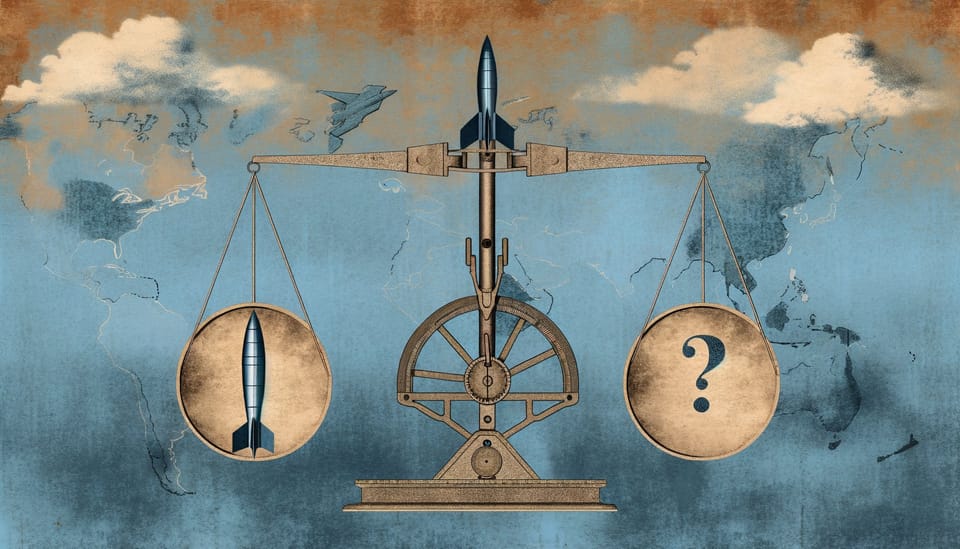
The Chagos Islands deal was meant to resolve a colonial wrong. Instead, it has exposed how legal challenges, sovereignty disputes, and shifting politics can threaten military infrastructure that great powers assumed was permanent.
🎧 Listen to this article
The Atoll That Broke the Alliance
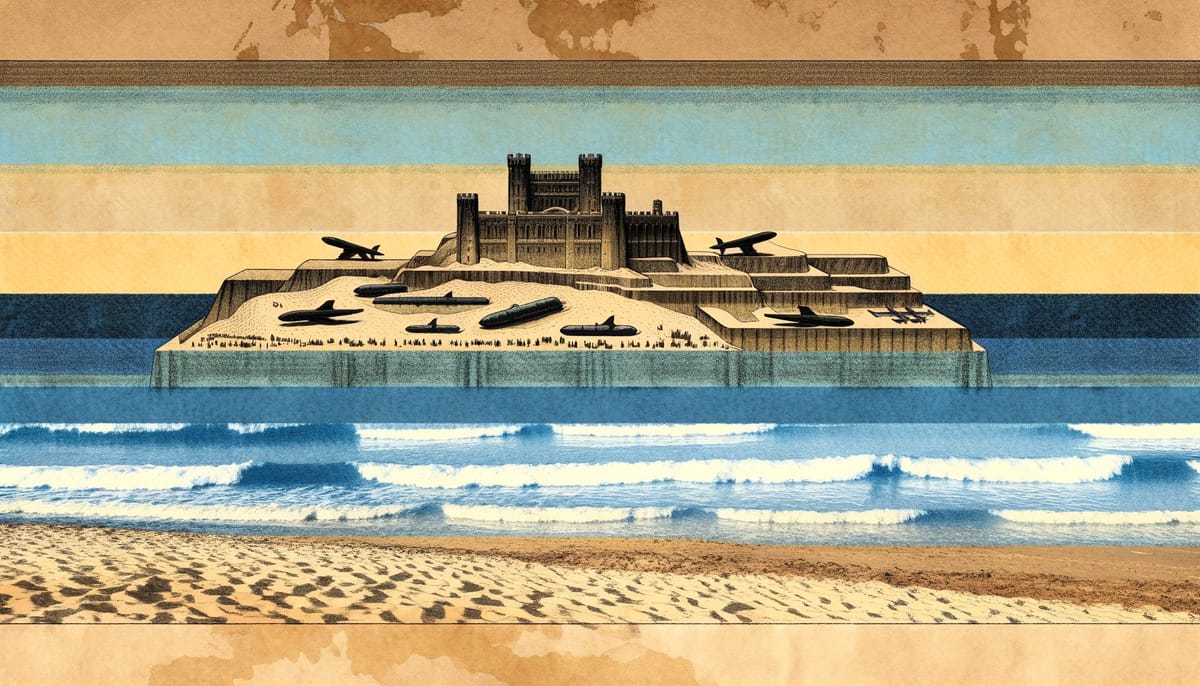
Diego Garcia sits 1,000 miles south of India, a coral smudge in an ocean that covers a fifth of the Earth’s surface. For half a century, this remoteness was its strategic gift. B-52 bombers could reach the Persian Gulf in hours. Nuclear submarines could disappear into deep water. The nearest hostile power was a continent away. Now that same isolation has become a trap—not for enemies, but for the alliance that built the base.
The UK-Mauritius agreement signed in May 2025 transfers sovereignty of the Chagos Archipelago while granting Britain a 99-year lease on Diego Garcia. On paper, this resolves a colonial wrong. In practice, it has exposed fractures in the UK-US relationship that neither government anticipated. Donald Trump called the deal “stupid and weak.” Only 31% of Britons now view America as their closest ally, down from 54% a year earlier. The special relationship, forged in world wars and sustained through Cold War and terror, is being tested by 55 islands totalling 60 square kilometres.
What makes this crisis instructive is not the atoll itself but what it reveals. Diego Garcia is a case study in how legal challenges, sovereignty disputes, and domestic politics can combine to threaten military infrastructure that great powers assumed was permanent. The vulnerability is structural, and it extends far beyond the Indian Ocean.
Colonial Shadows, Legal Landmines
The Chagos dispute has always been about more than territory. When Britain detached the archipelago from Mauritius in 1965—three years before independence—it violated the principle that colonial territories should proceed to self-determination with their boundaries intact. The UK then forcibly removed between 1,500 and 2,000 Chagossians to make way for the American base, a displacement that Human Rights Watch has characterised as constituting crimes against humanity.
For decades, this history remained a footnote to Cold War strategy. The base worked. The legal architecture held. Then the architecture began to crack.
In 2019, the International Court of Justice ruled 13-1 that Britain’s separation of the Chagos Archipelago from Mauritius was unlawful under international law. The process of decolonisation, the Court found, “was not lawfully completed when that country acceded to independence.” The UK was obligated to end its administration “as rapidly as possible.” The ruling was advisory, not binding. But it shifted the normative ground beneath the base.
The UN General Assembly followed with Resolution 73/295, adopted 116-6, demanding that Britain withdraw within six months. The vote was not close. The United States, United Kingdom, Australia, Hungary, Israel, and Maldives stood isolated against the global South, much of Europe abstaining rather than defending their ally. The resolution affirmed that “the Chagos Archipelago forms an integral part of the territory of Mauritius.”
Britain ignored the deadline. But ignoring legal rulings is not the same as defeating them. Each year the UK remained, its position eroded. By 2024, the Labour government concluded that a negotiated settlement was preferable to perpetual legal attrition. The result was the May 2025 treaty: sovereignty to Mauritius, a 99-year lease on Diego Garcia, £101 million annually in rent.
The deal was meant to resolve the dispute. Instead, it opened new ones.
The Transatlantic Fracture
Trump’s criticism of the Chagos agreement was not diplomatic nuance. He called it “stupid” and threatened tariffs on British goods. The attack was personal—aimed at Keir Starmer’s government—but it reflected a deeper divergence in how Washington and London understand their alliance.
The American view, at least in the Trump administration, is transactional. Alliances are cost-benefit calculations. If Britain is handing sovereignty to Mauritius, that creates risk. If the risk affects an American base, America should not bear it. The fact that Britain negotiated the lease, that the Pentagon was consulted, that the arrangement provides legal stability for 99 years—these details matter less than the headline. London gave something away.
The British view is more complicated. Starmer’s government inherited a legal position that was deteriorating. The ICJ opinion was not enforceable, but it was persuasive. Other states were beginning to treat British sovereignty over Chagos as illegitimate. Mauritius was gaining support in international forums. The alternative to negotiation was not the status quo but escalating isolation.
This is the core tension. America sees the deal as Britain offloading risk onto the alliance. Britain sees it as managing risk before it became unmanageable. Both views contain truth. Neither government can fully acknowledge the other’s.
The polling data reflects this disconnect. British public opinion has shifted sharply against viewing America as the UK’s closest ally. The decline—from 54% to 31% in a single year—is not explained by Chagos alone. Tariff threats, divergent views on Ukraine, and Trump’s broader posture toward European allies all contribute. But the Chagos dispute crystallises something: the sense that when legal and political pressure mounts, Britain cannot count on American support.
The Anatomy of Base Vulnerability
Diego Garcia’s predicament is not unique. It is exemplary. The base reveals a pattern that applies across the network of American and British overseas military facilities: legal frameworks that were adequate in the 1960s are inadequate now.
The original US-UK Exchange of Notes, signed in December 1966, granted America defence use of the British Indian Ocean Territory for 50 years, with a 20-year extension to 2036. The agreement assumed British sovereignty would remain unchallenged. It assumed international law would not evolve to question colonial-era territorial arrangements. It assumed that the people removed to build the base would remain invisible.
All three assumptions have failed.
The Chagossian diaspora now numbers 8,000 to 10,000 people, scattered across Mauritius, Seychelles, and the UK. They are no longer invisible. Their legal challenges have reached British courts, the European Court of Human Rights, and the ICJ. Each case that fails in one forum creates precedent and momentum for the next. The humanitarian narrative—forced displacement, poverty, cultural destruction—has become a strategic weapon.
This is the mechanism that makes Chagos dangerous as precedent. The more successful the humanitarian narrative becomes, the more it increases the attack surface for legal and reputational challenges to other bases. Vieques Island in Puerto Rico offers a parallel: US Navy training operations there ended after protests and litigation over accidental killings. The presence was legal. The politics became untenable.
The vulnerability extends to Status of Forces Agreements across the American basing network. Many were negotiated decades ago under different political conditions. Host-state governments change. Domestic courts assert jurisdiction. Popular movements demand renegotiation. The Chagos case demonstrates that even a tiny, remote territory can generate sufficient legal and political pressure to force a great power to the negotiating table.
Sovereignty as Commodity
The 2025 treaty introduces a novel structure: Mauritius holds sovereignty; Britain operates the base; America uses the facilities. This layering creates what might be called commodified sovereignty—the treatment of territorial control as an alienable asset that can be leased, partitioned, and monetised.
For Mauritius, the arrangement is lucrative. The £101 million annual payment represents substantial revenue for a small island economy. The 99-year term provides long-term fiscal stability. The government gains the symbolic victory of sovereignty without the burden of administering a remote archipelago.
For Britain, the deal provides legal certainty. The ICJ opinion and UN resolution created a trajectory toward delegitimisation. The treaty arrests that trajectory. London retains operational control of Diego Garcia while transferring the sovereignty dispute to a bilateral relationship with Mauritius rather than a multilateral confrontation with the global South.
For America, the calculus is less clear. The Pentagon was consulted during negotiations and reportedly supported the outcome. A stable legal framework for 99 years is preferable to perpetual uncertainty. But the Trump administration’s reaction suggests that not everyone in Washington shares this view. The transactional lens sees only that Britain created a new dependency—on Mauritius—and that dependencies can be exploited.
This is the sovereignty paradox at the heart of the dispute. The more sovereignty is diluted through conditionalities and carve-outs, the more potent its disruptive potential becomes. Mauritius now holds leverage it did not have before. A future government in Port Louis could demand renegotiation. It could impose conditions on base operations. It could invite Chinese investment in the archipelago’s other islands.
These are not predictions. They are possibilities that did not exist before the treaty. The deal that was meant to provide stability has created new vectors for instability.
The Wider Pattern
Diego Garcia is not an isolated case. It is part of a broader erosion of the legal and political foundations that support Western military infrastructure abroad.
Consider Kyrgyzstan’s Manas Air Base, which the United States used as a logistics hub for Afghanistan operations. Russia and China exerted sustained pressure on the Kyrgyz government, offering economic inducements and political support. The base closed in 2014. The legal framework was never challenged; the political environment simply changed.
Consider the Philippines, where domestic opposition forced the closure of Subic Bay Naval Base in 1992. The US has since negotiated Enhanced Defense Cooperation Agreements allowing rotational access to Philippine facilities, but the arrangement is more limited and more contingent than permanent basing.
Consider Honduras, where the US maintains Joint Task Force Bravo at Soto Cano Air Base. The presence depends on continued US Foreign Military Financing and a cooperative Honduran government. Neither is guaranteed indefinitely.
The pattern is consistent. Overseas bases that seemed permanent prove vulnerable to shifts in international law, domestic politics, great-power competition, or some combination of all three. The Chagos case adds a new element: the weaponisation of decolonisation discourse to challenge basing arrangements that predate the modern human rights framework.
This matters because the United States and its allies have built their military posture on assumptions of access. Power projection requires forward presence. Forward presence requires bases. Bases require host-state consent, legal frameworks, and political stability. When any of these erode, the entire posture becomes contingent.
Climate and the Dissolving Baseline
A final vulnerability compounds the others. Diego Garcia sits barely two metres above sea level. Climate change is not a distant threat to the base; it is a present engineering challenge.
Rising seas and intensifying storms create direct risks to infrastructure. But the more insidious effect is legal. International law defines maritime boundaries from coastal baselines. As sea levels rise and coastlines erode, those baselines shift. Territorial waters shrink. Exclusive economic zones contract. The legal geography that underpins sovereignty claims becomes unstable.
For low-lying atolls like Diego Garcia, this creates an existential question: what happens to sovereignty when the territory disappears? International law has no clear answer. The UN International Law Commission is studying the question, but consensus remains distant.
The practical implication is that the 99-year lease may outlast the physical territory it covers. Mauritius will hold sovereignty over islands that are increasingly uninhabitable. Britain will operate a base that requires ever-greater investment to maintain. America will depend on facilities whose long-term viability is uncertain.
This is not a reason to abandon Diego Garcia. The base remains strategically valuable. But it is a reason to recognise that the infrastructure of power projection is more fragile than it appears. Legal challenges, political shifts, and environmental change all erode the foundations. The question is not whether these pressures will force adaptation but when and how.
What Comes Next
The Chagos dispute will not end with the 2025 treaty. The Chagossians themselves were not party to the negotiations. Many oppose the deal, arguing that their right of return has been traded away without their consent. Legal challenges will continue. The humanitarian narrative will persist.
For the UK-US relationship, the damage is real but not irreparable. Institutional ties—intelligence sharing, defence cooperation, nuclear collaboration—remain robust. The Five Eyes framework continues to function. But the political relationship, the sense of shared purpose and mutual trust, has weakened. Rebuilding it will require both governments to acknowledge what the other faces.
Britain cannot pretend that American concerns about the deal are merely transactional pique. The Trump administration’s reaction, however crudely expressed, reflects genuine anxiety about alliance reliability. If Britain can be pressured into sovereignty transfers, what else might it concede?
America cannot pretend that Britain had unlimited options. The legal trajectory was clear. The choice was between negotiated settlement and escalating isolation. London chose the path that preserved operational control of the base. Washington should recognise that this outcome, however imperfect, serves American interests.
The broader lesson is about the fragility of assumptions. Military infrastructure that seems permanent is not. Legal frameworks that seem settled are not. Alliances that seem unshakeable are not. Diego Garcia forces both governments to confront these realities.
The atoll will remain strategically valuable for decades. But its value now comes with conditions, contingencies, and vulnerabilities that did not exist when the first B-52s arrived. That is the inheritance of colonial history meeting the pressures of contemporary international law. Neither London nor Washington can escape it. They can only manage it—together or apart.
Frequently Asked Questions
Q: Why does the US care so much about a British-controlled island? A: Diego Garcia hosts critical American military infrastructure including bomber runways, submarine support facilities, and logistics hubs that enable power projection across the Middle East, East Africa, and Indo-Pacific. The base has supported operations from the Gulf War to current Iran contingency planning. Any change to its legal status directly affects US strategic flexibility.
Q: Can Mauritius actually threaten the base now that it has sovereignty? A: The 99-year lease provides substantial legal protection, but sovereignty creates leverage. A future Mauritian government could demand renegotiation of terms, impose conditions on operations, or invite competing powers to invest in other islands of the archipelago. The risk is not immediate expulsion but gradual erosion of operational freedom.
Q: What happens to the Chagossians under the new agreement? A: The treaty permits Chagossian resettlement on outer islands of the archipelago but not on Diego Garcia itself. Many Chagossians oppose this arrangement, arguing their right of return has been traded away without consent. Legal challenges from diaspora communities are expected to continue.
Q: Does this set a precedent for other overseas bases? A: Yes. The Chagos case demonstrates that colonial-era basing arrangements can be successfully challenged through international courts and UN resolutions. Other territories with disputed sovereignty or indigenous displacement—including Okinawa, Guam, and various Pacific islands—may see similar legal strategies deployed.
Sources & Further Reading
The analysis in this article draws on research and reporting from:
- International Court of Justice Advisory Opinion on Chagos - the foundational legal ruling that shifted international consensus on British sovereignty
- UK Government Joint Statement on Chagos Agreement - official announcement of the sovereignty transfer framework
- UN General Assembly Resolution 73/295 - the 116-6 vote demanding British withdrawal
- Chagossian Voices - primary source on Chagossian identity, displacement, and diaspora demographics
- Lawfare analysis of the Chagos dispute - legal and strategic implications of the sovereignty transfer
- Defense News on climate impacts to military infrastructure - Pentagon assessments of environmental vulnerability
- Jerusalem Post on Diego Garcia strategic value - analysis of the base’s operational role in current contingency planning
- Carnegie Endowment on sovereignty and climate - framework for understanding how environmental change affects territorial claims