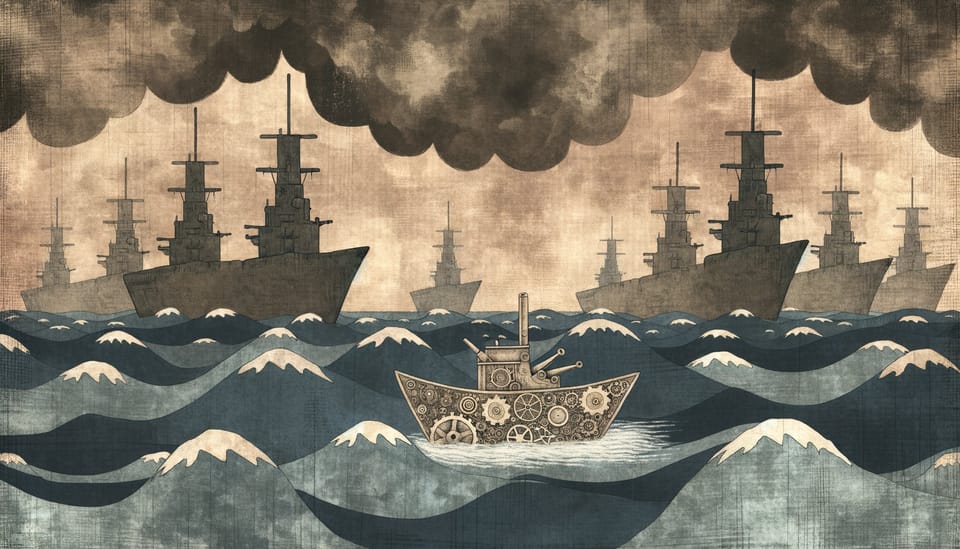
The Wires Beneath the Waves: Tech Giants and Pacific Sovereignty
Google and its peers are laying cables to connect the Pacific's most isolated nations. The infrastructure brings genuine benefits—and dependencies that look increasingly like digital feudalism. For island governments that cannot maintain what they do not understand, the gift may cost more than...
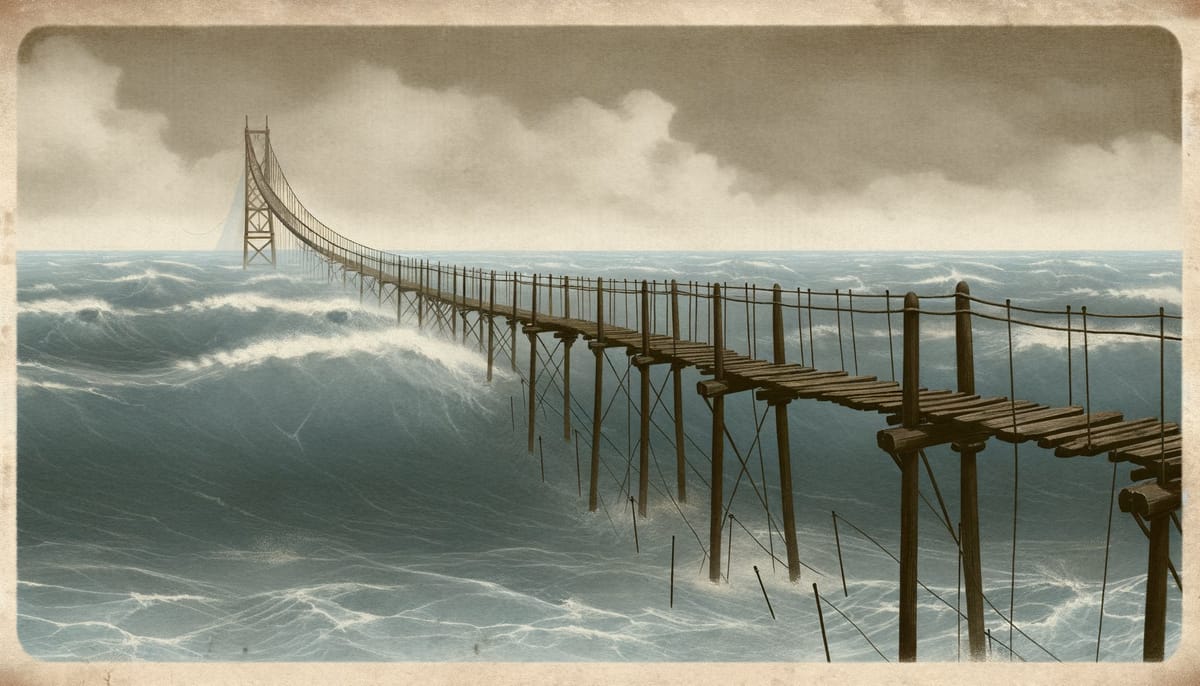
The Wires Beneath the Waves
In October 2023, Google announced it would lay undersea cables to eight Pacific Island nations—Micronesia, Kiribati, Marshall Islands, Papua New Guinea, Solomon Islands, Timor-Leste, Tuvalu, and Vanuatu. The project would bring high-speed internet to some of the world’s most isolated communities. It would also make those communities dependent on a single corporation for their digital lifeline.
This is the Pacific’s dilemma in miniature. The region’s governments face a choice that looks like a gift: accept infrastructure from foreign tech giants or remain disconnected from the global economy. But gifts create obligations. And in the Pacific, where seven nations depend on single submarine cables for all digital connectivity, those obligations compound into something that resembles sovereignty transfer.
The question is not whether to accept corporate infrastructure. That ship has sailed—or rather, that cable has been laid. Google, Microsoft, Amazon, and Meta now own or lease roughly half of all undersea bandwidth worldwide. The question is whether embedding these companies in Pacific defense architecture creates genuine resilience or merely shifts dependency from one foreign power to another, with the added complication that corporations answer to shareholders rather than treaties.
The Architecture of Dependence
The conventional framing treats this as a security question: better American tech giants than Chinese state-linked firms. Huawei and ZTE have built the digital backbone of many Pacific Island nations, embedding what one analysis calls “strategic dependencies across mobile networks, undersea cables, data centers, and surveillance systems.” The geopolitical logic follows naturally. If China controls the cables, China controls the information. If Google controls the cables instead, at least the information flows to a democracy.
This framing is incomplete. It mistakes the identity of the landlord for the structure of the lease.
The deeper issue is what happens when infrastructure becomes invisible. As the philosopher of technology Star observed, successful infrastructure “disappears in use”—it becomes naturalized, inevitable, the way things simply are. When a Pacific Islander opens a video call, they don’t think about the cable on the ocean floor or the data center humming in Sydney. They just connect. This invisibility is infrastructure’s success condition. It is also its danger.
Consider what invisibility means for sovereignty. The Pacific Islands Forum’s 2050 Strategy identifies digital connectivity as essential for “building regional resilience and driving sustainable development.” Mobile broadband networks cover 86% of the region’s population. Yet only 27% use mobile internet—a 59% usage gap that represents not technical failure but economic exclusion. The infrastructure exists. The capacity to use it, maintain it, or regulate it does not.
Here the numbers tell a stark story. In cyber maturity rankings, Vanuatu places 17th, Fiji 22nd, Papua New Guinea 23rd, and Solomon Islands 25th—out of 25 Pacific nations assessed. These governments cannot evaluate the infrastructure contracts they sign. They must accept turnkey systems from vendors who understand the technology far better than any local regulator ever will. This is not partnership. It is asymmetric dependence encoded in technical specifications.
The result resembles what political economists call technofeudalism. Medieval serfs owed labor obligations to lords who controlled the land. Pacific Islanders increasingly owe data, attention, and behavioral compliance to corporations that control the digital substrate of modern life. The infrastructure provider becomes gatekeeper to all digitally-mediated activity—not just communication but commerce, education, healthcare, and governance itself.
The Maintenance Trap
Resilience, according to U.S. Presidential Policy Directive 21, means “the ability to prepare for and adapt to changing conditions and withstand and recover rapidly from disruptions.” By this definition, corporate-built infrastructure in the Pacific fails before the first storm arrives.
The failure mode is maintenance. Building a submarine cable requires capital and expertise. Maintaining it requires the same—year after year, decade after decade. Cables have 25-year lifespans. Corporate quarterly cycles run 90 days. The temporal mismatch is structural.
When Pacific governments lack maintenance incentives—often because development assistance creates moral hazard, with donors expected to fund repairs—vendors fill the vacuum. They become indispensable not through initial construction but through the neglect phase that follows. A government that cannot maintain its own infrastructure must return to the vendor who built it. Each return deepens the dependency.
The U.S. Cable Security Fleet program reveals what genuine maintenance sovereignty looks like: 24-hour crew availability, federal contingency contracts, explicit recognition that wartime necessity demands domestic repair capability. This emergency framework has no peacetime equivalent for Pacific nations. They own the landing stations. They do not own the ships, the crews, or the expertise to fix what breaks.
Training programs designed to build regulatory capacity face their own temporal trap. Regulators need 5-10 years to develop expertise. Corporate strategy pivots every quarter. By the time a Pacific telecommunications authority understands the technology it regulates, that technology has been superseded twice over. The knowledge gap is not a bug to be fixed but a feature of the system.
Redundancy’s Illusion
The standard response to dependency is redundancy. Build two cables instead of one. Source from multiple vendors. Diversify supply chains. This logic dominates infrastructure planning from Brussels to Canberra.
It misunderstands the problem.
When redundant systems share design DNA—the same Triple Modular Redundancy patterns, the same vendor software, the same maintenance protocols—they don’t fail independently. They fail together, in synchronized temporal patterns that resemble choreographed collapse. The “defense-in-depth” strategy paradoxically creates common-mode failure, where the very standardization meant to ensure reliability becomes the vector for system-wide breakdown.
Pacific infrastructure exhibits this pattern acutely. The same handful of vendors build cables across the region. The same financing structures—Australian grants mixed with concessional loans—shape the same contractual terms. The same training programs, funded by the same donors, produce regulators who think in the same conceptual categories. Diversity of ownership masks homogeneity of design.
The result is what systems engineers call correlated failure. A cyberattack that compromises one vendor’s software compromises every system running that software. A geopolitical rupture that restricts one nation’s exports restricts every cable that nation helped build. The Pacific’s apparent infrastructure diversity is a single point of failure distributed across multiple physical locations.
Real resilience would require something different: deliberately heterogeneous systems designed by different vendors using different standards, maintained by different crews, financed through different structures. This is expensive. It is inefficient. It violates every principle of economies of scale that make corporate infrastructure provision viable in the first place.
Which is precisely the point. The efficiency that makes corporate infrastructure attractive is the same efficiency that makes it fragile.
The Sovereignty Performance
Pacific Island Countries are not passive recipients of this dynamic. They perform sovereignty even when they cannot exercise it.
The pattern has historical precedent. King Leopold’s Congo Free State generated elaborate sovereignty discourse—treaties, administrative structures, international recognition—despite lacking actual authority over most of its claimed territory. The performance served external audiences: European powers that needed to believe the Congo was governed, investors who needed legal cover for extraction. The performance created facts on the ground even as it obscured the absence of genuine control.
Contemporary Pacific infrastructure regulation follows the same logic. Governments designate “critical infrastructure.” They establish telecommunications authorities. They publish policies and hold consultations. These performances satisfy donors who need to believe their investments support sovereign decision-making. They satisfy tech companies who need regulatory approval for their projects. They satisfy domestic audiences who need to believe their governments remain in control.
What they do not do is create actual regulatory capacity. The Solomon Islands’ Telecommunications Commission was established through a structured process of institution-building. The digital centers of excellence that train its staff necessarily transmit the conceptual categories, problem definitions, and solution frameworks of the vendors and donors who design the curricula. The regulators learn to think like the entities they are meant to regulate. This is not capture through corruption. It is epistemological colonization through capacity-building.
The Lagatoi Declaration of 2023, signed by ICT ministers from 13 Pacific nations, prioritizes “digital security and trust, alongside transformation, innovation, capacity building, and regional cooperation.” These are the right words. They describe a sovereignty that exists in aspiration rather than practice. The declaration’s emphasis on regional cooperation acknowledges implicitly what no government will say explicitly: no Pacific Island nation can regulate global tech companies alone.
The Quantum Strategy
Here is where the analysis typically ends—with a call for greater coordination, more investment in regulatory capacity, perhaps a regional digital authority with teeth. These recommendations are not wrong. They are insufficient.
The more interesting question is whether Pacific Island Countries have discovered something their larger neighbors have not: that dependency, properly managed, can itself become leverage.
Consider the strategic position. Seven nations depend on single submarine cables. This looks like vulnerability. It is also a chokepoint. The cable that connects Fiji to the global internet also connects global tech companies to Fijian data, Fijian markets, Fijian regulatory approval. Dependency runs both ways.
Australia’s post-AUKUS hedging demonstrates the point. Even a major power with explicit security commitments continues to balance relationships, maintain options, keep multiple powers engaged. If Australia can hedge, Pacific Island Countries can do more than hedge—they can maintain what might be called quantum superposition, existing in multiple strategic alignments simultaneously until observation forces collapse into a single state.
Traditional Melanesian exchange systems operated through precisely this logic. Kula exchange maintained autonomy through ritualized border-crossings between separate ceremonial spheres. The exchange itself was the boundary maintenance mechanism, not a path to integration. When tech companies and nations provide “subsidized” infrastructure, they invoke the prestigious language of partnership and mutual benefit. Pacific leaders can accept the gift without accepting the giver’s worldview—a distinction their donors often fail to grasp.
This is not a solution. It is a survival strategy. The difference matters.
What Breaks First
The default trajectory leads somewhere specific. Not to catastrophic failure—cables cut, communications severed, digital darkness. That scenario, while possible, is not the most likely.
The more probable future is gradual capability erosion. Each contract signed with opaque pricing terms transfers a little more operational control. Each training program that teaches regulators to think like vendors narrows the space for alternative approaches. Each maintenance cycle that requires foreign expertise deepens the dependency ratchet.
The endpoint is not colonization in the 19th-century sense. It is something more subtle: infrastructure that works, connectivity that flows, digital services that function—all provided by entities whose interests align with Pacific interests only accidentally and temporarily. The islands remain sovereign in law. They become subsidiaries in practice.
Climate change accelerates this timeline. Post-disaster needs assessments already list 150+ stakeholders across multiple sectors, creating coordination bottlenecks that necessitate emergency reliance on pre-existing vendor relationships. When the next cyclone destroys a landing station, the government that cannot maintain its own infrastructure in peacetime certainly cannot rebuild it in crisis. The emergency procurement that follows locks in whatever vendor can deploy fastest—typically the vendor already embedded in the system.
The cascade failure scenario is not a single catastrophic event but a progressive loss of optionality. Each crisis narrows the range of possible responses. Each response deepens the dependencies that made the crisis damaging in the first place. The system stabilizes, but at a lower level of sovereignty than before.
The Intervention Points
Three leverage points exist. None is sufficient alone. All require trade-offs that current policy discussions prefer to ignore.
First: Maintenance sovereignty. The U.S. Cable Security Fleet model could be regionalized. A Pacific Cable Maintenance Facility, jointly owned by Pacific Island Countries, staffed by Pacific Islanders trained to repair rather than merely operate infrastructure, would break the maintenance dependency cycle. The cost is substantial—specialized ships, training programs, ongoing operational expenses. The alternative is permanent dependence on whoever builds the next cable.
Second: Regulatory pooling. No Pacific Island nation can regulate Google. A regional telecommunications authority with genuine enforcement power—the ability to deny market access, impose data localization requirements, mandate interoperability—could. This requires sovereignty transfer from national governments to a regional body. Pacific leaders have historically resisted such transfers. The question is whether national sovereignty over infrastructure you cannot regulate is worth more than regional sovereignty over infrastructure you can.
Third: Strategic ambiguity. Pacific Island Countries could formalize what they already practice informally: accepting infrastructure from multiple competing powers without exclusive alignment to any. This requires resisting pressure from both Washington and Beijing to choose sides. It means tolerating the discomfort of donors who want gratitude expressed as loyalty. It means maintaining relationships with Huawei and Google simultaneously, playing each against the other for better terms.
The trade-off in all three cases is the same: short-term friction with powerful partners in exchange for long-term optionality. Donors prefer grateful recipients. Tech companies prefer exclusive contracts. Great powers prefer reliable allies. Pacific Island Countries that prioritize resilience over relationships will face pressure to conform.
Whether they can resist that pressure depends on something no policy intervention can provide: political will sustained across electoral cycles in nations where the next cyclone is always more urgent than the next contract negotiation.
Questions That Linger
Q: Can Pacific Island nations realistically regulate global tech companies? A: Not individually. Regional coordination through bodies like the Pacific Islands Forum could create collective bargaining power, but this requires sovereignty pooling that governments have historically resisted. The regulatory gap is structural, not merely a capacity deficit.
Q: Does Chinese infrastructure actually pose greater risks than Western alternatives? A: The risks differ in kind rather than degree. Chinese state-linked firms create surveillance and political leverage concerns. Western tech giants create commercial dependency and data extraction concerns. Neither offers genuine sovereignty—the question is which form of dependency aligns better with national interests.
Q: What happens if a submarine cable is cut during a geopolitical crisis? A: Seven Pacific nations with single-cable dependencies would lose all international digital connectivity. Satellite backup exists but cannot handle full traffic loads. Recovery depends entirely on repair ships and crews that Pacific nations do not control—a vulnerability that current infrastructure planning has not addressed.
Q: How do Pacific Islanders themselves view this infrastructure dependency? A: Research shows complex attitudes. Youth increasingly serve as digital knowledge transmitters, inverting traditional elder authority structures. Communities value connectivity while expressing concern about cultural impacts. The 59% mobile internet usage gap suggests that access alone does not equal adoption—affordability and relevance matter as much as infrastructure availability.
The Wires That Bind
The Pacific’s digital infrastructure dilemma has no clean resolution. The choice is not between resilience and dependency but between forms of dependency that offer different degrees of maneuverability.
Tech companies embedded in Pacific defense architecture do provide something valuable: connectivity that enables economic participation, educational access, health services, and disaster response. This is not nothing. For nations where a single cyclone can destroy years of development progress, reliable communication infrastructure is genuinely life-saving.
But the terms of that provision matter. Infrastructure that disappears in use also disappears from political consciousness. The cables on the ocean floor, the data centers humming in foreign capitals, the maintenance contracts renewed without scrutiny—these become the invisible substrate of Pacific life, shaping possibilities without appearing as choices.
The honest answer to whether corporate infrastructure creates resilience or dependency is: both, simultaneously, in proportions that shift with each contract signed and each maintenance cycle completed. The question for Pacific leaders is not how to escape this dynamic but how to navigate it with eyes open—accepting the gifts while refusing the obligations, maintaining the relationships while preserving the options, performing sovereignty while building the capacity to exercise it.
The wires beneath the waves will carry whatever signals flow through them. Who controls those signals, and on what terms, remains the Pacific’s defining strategic question for the next quarter century.
Sources & Further Reading
The analysis in this article draws on research and reporting from:
- Pacific Islands Forum 2050 Strategy - The foundational regional framework establishing digital connectivity as a development priority
- USAID Digital Ecosystem Country Assessment - Comprehensive data on Pacific digital infrastructure gaps and usage patterns
- CSIS Analysis on Subsea Cables - Documentation of tech company ownership of global undersea bandwidth
- Transparency International Australia Report - Analysis of corruption risks in Pacific infrastructure investment
- DHS Resilience Framework - Official U.S. definitions of infrastructure resilience
- 3Gimbals Analysis on Chinese Telecommunications - Assessment of Chinese infrastructure embedding in Pacific nations
- Common Mode Failure Analysis - Technical explanation of correlated failure in redundant systems
- Technofeudalism Explainer - Conceptual framework for understanding digital dependency structures