The Speed Trap: North Korea's Hypersonic Weapons and the Limits of Missile Defense
Pyongyang's successful hypersonic tests reveal how advanced strike technology spreads to states the international order was designed to contain—and why defensive systems cannot keep pace.

The Speed Trap
North Korea’s Hwasong-8 hypersonic glide vehicle streaked across the Sea of Japan in January 2022, reaching Mach 10 before executing a 240-kilometer lateral maneuver. The test succeeded. More importantly, it revealed a structural shift in how advanced military technology spreads to states the international order was designed to contain.
The conventional narrative frames this as proliferation—dangerous weapons leaking to dangerous regimes. That framing misses what actually happened. Pyongyang did not steal hypersonic technology. It developed indigenous capability through a combination of legitimate physics, illicit finance, and the unintended consequences of export control regimes that function as R&D roadmaps for determined adversaries.
The implications extend far beyond the Korean Peninsula. Hypersonic weapons compress decision timelines to minutes, arrive from unpredictable trajectories, and blur the distinction between conventional and nuclear payloads. They are, in short, designed to defeat the missile defense architectures that underpin American extended deterrence in Asia. When such weapons proliferate to states that reject the rules-based order, the strategic mathematics shift. Not gradually. Fundamentally.
What Hypersonic Actually Means
Speed alone does not define hypersonic weapons. Intercontinental ballistic missiles have traveled at Mach 20 for decades. The distinguishing characteristic is sustained maneuverability at extreme velocities within the atmosphere—a combination that creates tracking nightmares for defenders.
Hypersonic glide vehicles launch atop ballistic missiles, then separate and surf the upper atmosphere on aerodynamic lift. They can alter course throughout flight. Hypersonic cruise missiles use air-breathing scramjet engines to sustain powered flight at Mach 5-plus. Both defeat traditional missile defense through physics: they fly too low for midcourse interceptors designed for ballistic arcs, too fast for terminal defenses designed for slower threats, and too unpredictably for either.
The technical barriers are formidable. Vehicles must withstand temperatures exceeding 2,000 degrees Celsius during sustained atmospheric flight. Sandia National Laboratories has developed ultra-high-temperature ceramics specifically for this thermal environment—materials that represent decades of American materials science investment. Guidance systems must function through ionized plasma sheaths that disrupt communications. Propulsion requires engineering tolerances that challenge even advanced industrial economies.
Yet North Korea tested successfully. How?
The Roadmap Problem
Export control regimes designed to prevent proliferation inadvertently accelerate it. The Missile Technology Control Regime’s technical annexes specify precisely which technologies matter: analog-to-digital converters at particular specifications, composite materials with specific thermal properties, guidance components meeting defined accuracy thresholds. For states with indigenous engineering talent and sufficient resources, this reads less as prohibition than as specification sheet.
The pattern repeats across proliferation history. The UN’s dual-use catch-all provisions require states to prevent indirect supply through their territories. In practice, this creates demand for procurement specialists who structure multi-hop transactions to obscure origins. Sanctions do not block acquisition. They professionalize it.
North Korea’s approach combines three elements. First, indigenous physics and engineering capability—Pyongyang’s missile program dates to the 1980s, and its engineers have accumulated substantial tacit knowledge through iterative testing. Second, external technology acquisition through front companies, cyber theft, and state-to-state transfers. Third, cryptocurrency theft generating $630 million to $2 billion annually, funding procurement that bypasses the dollar-denominated financial system entirely.
The result: a state under comprehensive sanctions developing weapons that the world’s most advanced economies struggle to counter.
Russia’s Accelerant Role
The timeline matters. North Korea’s hypersonic program showed modest progress through 2021. Then came the Ukraine war.
Russia-North Korea cooperation intensified dramatically from 2022 onward. Pyongyang supplied artillery shells Moscow desperately needed. In return, cooperation expanded across military domains. North Korea’s December 2023 missile test succeeded immediately following this intensification—a coincidence that strains credulity.
The transfer that matters most is not blueprints but diagnostic culture. Hypersonic development requires interpreting test telemetry, recognizing failure signatures, and iterating designs based on empirical data. This tacit knowledge cannot be downloaded. It must be taught. Russian engineers with operational hypersonic experience—the Kinzhal entered service in 2017, the Avangard in 2019—possess exactly this expertise.
The dynamic creates a proliferation accelerant that sanctions cannot address. Russia faces no meaningful international consequences for technology sharing with North Korea; it already endures maximum Western pressure. North Korea offers tangible military value in return. Both states benefit from undermining American deterrence architecture. The incentives align perfectly.
Iran follows a parallel trajectory. The Fattah-1 and Fattah-2 systems, unveiled in 2023, claim hypersonic capability—though Western analysts question whether they meet technical thresholds. What matters strategically is the aspiration and the investment. Tehran and Pyongyang maintain longstanding missile cooperation dating to the 1990s Nodong-Shahab transfers. Hypersonic knowledge flows through the same channels.
The Defense Dilemma
American missile defense was designed for a different threat. The Ground-based Midcourse Defense system intercepts ballistic missiles during their predictable parabolic flight. THAAD handles terminal-phase threats at high altitude. Patriot defends against shorter-range missiles and aircraft. None were architected for maneuvering hypersonic glide vehicles.
The 2022 National Defense Strategy acknowledges this gap. The Pentagon is developing the Glide Phase Interceptor to address hypersonic threats, supported by the Hypersonic and Ballistic Tracking Space Sensor constellation for persistent surveillance. Both remain years from operational capability.
The Defense Intelligence Agency projects China’s hypersonic inventory will grow from 600 to 4,000 weapons by 2035. Russia’s will expand from 200-300 to 1,000. These numbers create a structural problem that no plausible defense investment can overcome: the offense-defense cost ratio tilts dramatically toward attackers.
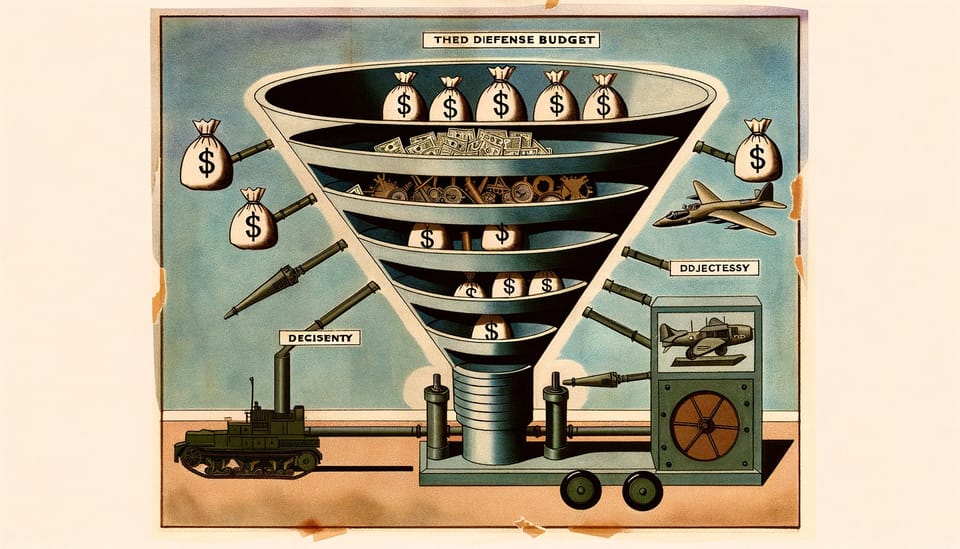
Each interceptor costs $10-40 million. Each hypersonic weapon costs less. Defenders must achieve near-perfect interception rates to protect high-value targets; attackers need only occasional penetration. The mathematics favor the offense.
North Korea exploits this asymmetry deliberately. Pyongyang cannot match American quantity or quality in conventional forces. It can develop enough hypersonic capability to complicate American defense planning, threaten regional allies, and strengthen its nuclear deterrent. Even a handful of maneuvering warheads capable of evading interception changes the strategic calculus.
Compressed Time, Expanded Risk
Hypersonic weapons do not merely travel fast. They compress decision timelines to the point where human judgment becomes structurally constrained.
A hypersonic glide vehicle launched from North Korea could strike Japan in under ten minutes. The flight path remains ambiguous until late in the trajectory—the weapon might target Okinawa, Tokyo, or Guam. Defenders cannot wait for clarity; by the time intent becomes obvious, interception windows close. Yet launching interceptors against ambiguous threats risks escalation and wastes limited defensive assets.
The problem intensifies with nuclear ambiguity. North Korea’s hypersonic systems could carry conventional or nuclear payloads. Radar discrimination technology cannot distinguish payload type during flight. Defenders must assume worst-case scenarios. Attackers know this.
The resulting dynamic inverts Cold War deterrence logic. Mutual assured destruction depended on certainty: both sides knew nuclear use meant mutual annihilation, creating stability through terror. Hypersonic ambiguity introduces uncertainty at every level—about capability, intent, and consequence. Uncertainty breeds miscalculation.
North Korea’s strategic culture compounds the risk. Kim Jong Un has demonstrated willingness to execute family members who threaten his position, to pursue nuclear weapons despite crushing sanctions, and to maintain military provocations regardless of international pressure. Rationality, in the game-theoretic sense, cannot be assumed. Deterrence depends on shared understanding of costs and benefits. That understanding may not exist.
The Alliance Architecture
American extended deterrence in Asia rests on a credible promise: attacks on allies will trigger American military response. Hypersonic weapons erode this credibility through two mechanisms.
First, they threaten American forward-deployed forces directly. Bases in Japan, South Korea, and Guam become vulnerable to strikes that arrive faster than warning systems can process. The Congressional Research Service notes that current defenses were not designed for this threat. If American forces cannot protect themselves, promises to protect allies ring hollow.
Second, they raise the stakes of intervention. A North Korean hypersonic strike on Tokyo—conventional or nuclear—demands American response. But what response? Escalation against a nuclear-armed adversary risks catastrophic consequences. De-escalation signals that American security guarantees lack substance. Neither option is attractive.
Japan and South Korea are investing accordingly. Both are developing indigenous strike capabilities that reduce dependence on American power projection. Both are enhancing missile defense through trilateral cooperation with the United States. Both are quietly questioning whether American extended deterrence remains reliable.
The questioning itself damages deterrence. Alliance credibility depends on adversary perception. If Pyongyang believes Tokyo doubts Washington’s commitment, North Korean risk tolerance increases. The hypersonic threat thus creates a self-reinforcing cycle: weapons that threaten allies also undermine the alliances meant to protect them.
What Can Be Done
Three intervention points exist. None is sufficient alone. All involve trade-offs.
Accelerate defensive technology. The Glide Phase Interceptor and space-based tracking constellation address real capability gaps. But timelines matter: current projections suggest initial operational capability in the late 2020s. North Korea’s hypersonic program advances now. The window between threat maturation and defense deployment creates a period of heightened vulnerability.
The Pentagon requested $11 billion for long-range fires in fiscal year 2024, a category that includes hypersonic weapons and defenses. This represents substantial investment. It may not be enough. Defense acquisition timelines, constrained by procurement bureaucracy that prioritizes process over speed, extend years beyond adversary development cycles. By the time American defenses deploy, the threat will have evolved.
Trade-off: Faster acquisition requires accepting higher risk of program failure and potential waste. The alternative is accepting higher risk of strategic vulnerability.
Constrain technology transfer. Russia-North Korea cooperation represents the most significant proliferation pathway. Disrupting it requires either changing Russian incentives or imposing costs that exceed benefits.
Neither appears feasible. Russia already faces maximum Western sanctions. Additional measures offer diminishing returns. Positive incentives—sanctions relief in exchange for limiting North Korea cooperation—would require reversing Ukraine-related pressure, which Western governments will not accept. The proliferation pathway remains open because the states involved have no reason to close it.
Trade-off: Effective counter-proliferation may require engaging adversaries diplomatically, which conflicts with values-based foreign policy. Maintaining principled positions may accelerate proliferation.
Strengthen alliance resilience. If hypersonic threats cannot be fully countered, allied postures must adapt. This means distributed force structures that reduce target concentration, enhanced early warning through space-based sensors, and improved coordination for rapid response.
Japan’s recent defense budget increases and South Korea’s indigenous missile development reflect this logic. The risk is that self-reliance shades into strategic autonomy, weakening the alliance structures that remain essential for regional stability. American policy must balance encouraging allied capability with maintaining integration.
Trade-off: Allies capable of independent action may choose independent action. Dependence preserves alliance cohesion at the cost of capability. Independence builds capability at the risk of fragmentation.
The Trajectory
The most likely outcome is adaptation without resolution. American and allied defenses will improve, but not fast enough to neutralize hypersonic threats entirely. North Korea will continue developing capability, constrained by resources but enabled by external support. The strategic balance will shift toward instability without triggering crisis—a slow erosion rather than sudden collapse.
This trajectory favors revisionist states. Hypersonic weapons provide asymmetric advantages to actors seeking to challenge the existing order. They complicate American power projection, stress alliance relationships, and compress decision timelines in ways that benefit those willing to accept higher risks.
The deeper pattern extends beyond any single weapons system. Advanced military technology diffuses faster than defensive responses develop. States under sanctions find procurement pathways that sanctions cannot close. International institutions designed for a different era struggle to address contemporary threats. The rules-based order faces adversaries who have learned to exploit its gaps.
North Korea’s hypersonic program reveals this dynamic with particular clarity. A state of 26 million people, under comprehensive sanctions for decades, developed weapons that the world’s most advanced militaries struggle to counter. It did so through indigenous capability, illicit finance, and great-power enablement. It will continue doing so because the incentives favor continuation.
Missile defense cannot keep pace. Not because the technology is impossible, but because the structural dynamics favor offense over defense, proliferation over control, and adaptation over prevention. The question is not whether adversaries will acquire advanced strike capabilities. It is how the international order adapts to a world where they already have.
Frequently Asked Questions
Q: Can current U.S. missile defense systems intercept North Korean hypersonic missiles? A: Current systems like THAAD and Patriot were designed for ballistic missiles with predictable trajectories, not maneuvering hypersonic glide vehicles. The Glide Phase Interceptor under development specifically addresses this gap, but remains years from deployment.
Q: How did North Korea develop hypersonic weapons despite sanctions? A: Through three channels: indigenous engineering capability accumulated over decades of missile development, cryptocurrency theft generating hundreds of millions annually to fund procurement, and technology cooperation with Russia that intensified after 2022.
Q: What makes hypersonic weapons different from ballistic missiles? A: While both travel at extreme speeds, hypersonic weapons maintain maneuverability throughout atmospheric flight. This unpredictable trajectory defeats defenses designed to intercept objects following ballistic arcs.
Q: Does Iran also have hypersonic weapons? A: Iran claims hypersonic capability with its Fattah-1 and Fattah-2 systems unveiled in 2023, though Western analysts question whether these meet technical thresholds. The aspiration and investment, regardless of current capability, signal proliferation momentum.
The Quiet Arithmetic
In the end, hypersonic proliferation reveals something uncomfortable about technological advantage. It does not compound indefinitely. It diffuses.
The United States developed hypersonic technology first. Russia and China followed. Now North Korea demonstrates capability, and Iran pursues it. Each iteration of proliferation narrows the gap between those who possess advanced weapons and those who aspire to them. Export controls slow the process without stopping it. Sanctions impose costs without preventing acquisition. The physics, once understood, cannot be unlearned.
This is not a problem with a solution. It is a condition to be managed. The question for American strategists is not how to restore technological primacy—that primacy was always temporary—but how to maintain strategic advantage as the technological gap closes. The answer lies not in any single weapons system but in the integration of capabilities, the resilience of alliances, and the willingness to adapt faster than adversaries can exploit.
North Korea’s hypersonic tests demonstrated that a small, isolated, impoverished state can develop weapons that challenge the world’s most advanced military. That demonstration will not be forgotten. Others are watching. Others are learning. The proliferation has only begun.
Sources & Further Reading
The analysis in this article draws on research and reporting from:
- Congressional Research Service: Hypersonic Weapons - Comprehensive background on U.S. hypersonic programs and policy considerations
- CSIS: Timeline of North Korea-Russia Cooperation - Detailed tracking of military cooperation since 2022
- 2022 National Defense Strategy - Official Pentagon assessment of missile defense requirements
- MTCR Annex Handbook - Technical specifications for controlled missile technologies
- 38 North: North Korea’s Solid-Propellant Infrastructure - Analysis of indigenous missile production capability
- Sandia National Laboratories: Ultra-High-Temperature Ceramics - Materials science for hypersonic thermal protection
- UN Sanctions Implementation Manual - Framework for understanding sanctions enforcement challenges
- Northern Command: Denial, Deterrence, and Resilience - U.S. homeland defense considerations