The Silicon Shield's Expiration Date
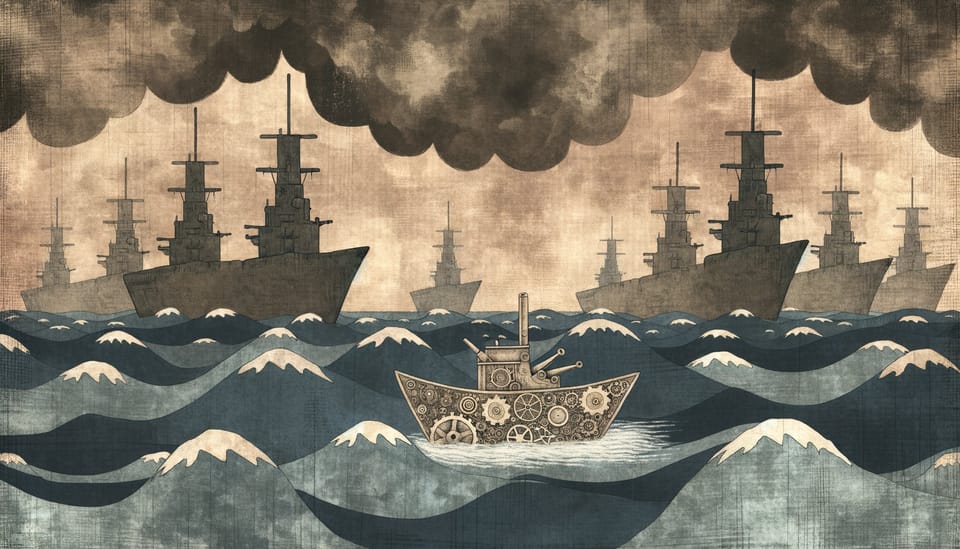
Taiwan's semiconductor monopoly has made the island indispensable to its international partners. But American industrial policy is explicitly designed to end that dependence. As chip production diversifies and military costs rise, the calculus sustaining Taiwan's security is quietly shifting.
The Silicon Shield’s Expiration Date
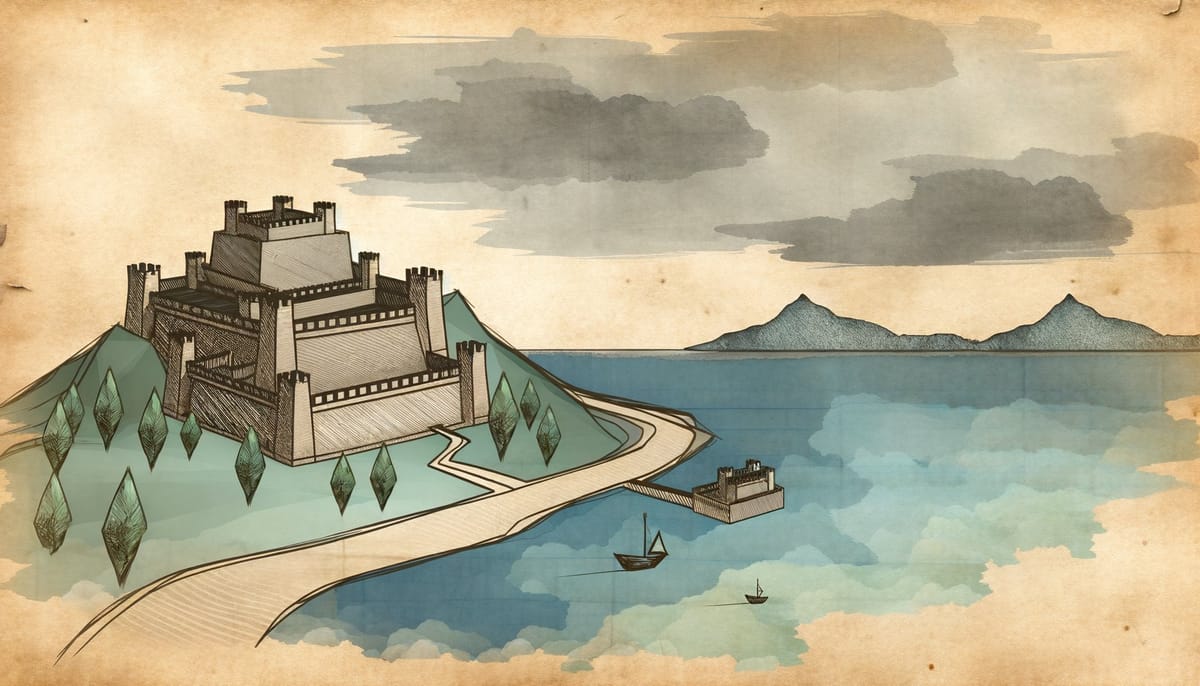
Taiwan’s semiconductor dominance has become so central to its security calculus that strategists now speak of it as a “silicon shield”—the idea that the world’s dependence on Taiwanese chips makes the island too valuable to abandon. But shields can be pierced. And this one comes with a timer.
The conditions under which Taiwan’s strategic value might diminish enough to alter international support structures are not hypothetical. They are emerging. TSMC produces 92% of the world’s leading-edge semiconductors, the sub-5nm chips that power everything from smartphones to missile guidance systems. That monopoly has made Taiwan indispensable. It has also made Taiwan a target—not just for China’s military planners, but for American industrial policy.
The CHIPS and Science Act, signed in August 2022, allocates $52.7 billion explicitly to reduce U.S. dependence on Taiwan. Intel is building fabs in Ohio. Samsung is expanding in Texas. The European Union is pursuing its own semiconductor sovereignty agenda. These are not gestures. They are strategic hedges against a future in which Taiwan’s chips are no longer available—whether through Chinese coercion, conflict, or simply the maturation of alternatives.
The question is not whether Taiwan’s value will diminish. It is when, how fast, and what happens to the political will that currently sustains its security.
The Chip Monopoly’s Half-Life
Start with the numbers. Taiwan controls 64% of global foundry chip production. TSMC alone commands 92% of the most advanced nodes. This concentration is the product of decades of investment, talent accumulation, and relentless execution. It is not easily replicated.
But “not easily” is not “never.”
The CHIPS Act provides $39 billion in manufacturing incentives and a 25% investment tax credit. TSMC itself is building a $40 billion facility in Arizona. Intel’s Ohio megafab is designed to produce leading-edge chips by the end of the decade. These projects face delays, cost overruns, and workforce challenges—American engineers are expensive and scarce. Yet the trajectory is clear: diversification is underway.
The timeline matters enormously. Current projections suggest meaningful non-Taiwan capacity for advanced chips by 2030 at the earliest, with full diversification unlikely before 2035. That creates a window—roughly a decade—during which Taiwan’s semiconductor leverage remains substantial. After that window closes, the calculus shifts.
Consider what changes when American fabs can produce 3nm chips at scale. The economic argument for Taiwan’s defense weakens. Not disappears—Taiwan’s manufacturing ecosystem includes packaging, testing, and supply chain integration that cannot be replicated overnight. But the urgency diminishes. The political cost of defending Taiwan becomes harder to justify when the chips can be made in Phoenix.
This is not speculation. It is the explicit logic of American industrial policy. Secretary of Commerce Gina Raimondo has been direct: the goal is to ensure that “we are never again in a position where we are dependent on any one country for our most critical technologies.” That country is Taiwan. The dependency is the target.
Geography’s Stubborn Value
Semiconductors are not Taiwan’s only strategic asset. The island sits at the center of the First Island Chain, the archipelago stretching from Japan through Taiwan and the Philippines that forms a natural barrier to Chinese naval expansion into the Pacific. This geographic position has value independent of any single industry.
For American strategists, Taiwan’s location is a chokepoint. Chinese submarines seeking access to the deep Pacific must pass through the Luzon Strait or the waters east of Taiwan. A Taiwan under Chinese control would punch a hole in the containment architecture that has structured Pacific security since 1945. Japan’s southwestern islands would be exposed. The Philippines would face a transformed threat environment. American forward presence in the Western Pacific would become vastly more complicated.
This geographic logic is durable in ways that economic logic is not. You cannot build an alternative First Island Chain in Arizona. Taiwan’s position is fixed. Its military value persists even if every fab relocates.
But geography alone has never been sufficient to guarantee support. The United States has abandoned strategically positioned allies before—South Vietnam most obviously, but also smaller partners whose geographic value was real but whose political costs exceeded their strategic benefits. Geography creates options. It does not guarantee their exercise.
The question becomes: under what conditions might Taiwan’s geographic value be insufficient to sustain current support structures?
The Cost-Benefit Ledger
Three conditions could tip the balance.
First, if the cost of defending Taiwan becomes catastrophically high. China’s military modernization has been relentless. The People’s Liberation Army Navy now fields more ships than the U.S. Navy. Chinese missile forces can hold American carriers at risk across the Western Pacific. War games consistently show American losses in a Taiwan scenario that would shock domestic audiences—dozens of ships, hundreds of aircraft, thousands of casualties in the opening weeks.
Public opinion in the United States currently supports defending Taiwan, but that support is shallow. Polls show majorities favoring defense in principle, but the same respondents balk at the costs when specified. A conflict that kills ten thousand Americans in the first month would test that support in ways that no peacetime polling can capture.
Second, if Taiwan’s own commitment to defense appears inadequate. Taiwan’s defense spending has increased in recent years, reaching approximately 2.5% of GDP. But this remains below the levels that American strategists consider sufficient. The island’s conscription system produces soldiers with limited training. Its reserve forces are poorly organized. Its civil defense preparations are nascent.
American patience with allies who do not invest adequately in their own defense is finite. The burden-sharing debates within NATO have been acrimonious. Taiwan, which is not even a formal ally, faces an even higher bar. If Taipei is seen as free-riding on American security guarantees while underinvesting in its own capabilities, the political constituency for its defense will erode.
Third, if China offers a credible alternative to conflict. Beijing’s preferred outcome is not war but capitulation—a Taiwan that accepts some form of political accommodation under pressure, without requiring the PLA to fire a shot. The tools for this include economic coercion, diplomatic isolation, and gray-zone operations that raise costs without triggering alliance commitments.
Taiwan’s formal diplomatic partners have dwindled to twelve countries. Nauru switched recognition to Beijing in January 2024. Each defection signals Taiwan’s isolation and tests the credibility of informal support. If China can demonstrate that supporting Taiwan carries escalating costs while offering economic rewards for accommodation, some partners may recalculate.
The Domestic Politics of Distance
Support for Taiwan is not uniform across the political spectrum, and it is not stable over time.
In the United States, Taiwan currently enjoys bipartisan backing. The Taiwan Relations Act has structured policy since 1979, committing the United States to provide “arms of a defensive character” and to maintain the capacity “to resist any resort to force or other forms of coercion.” But the Act does not require the United States to defend Taiwan. It requires only that the U.S. maintain the capability to do so and treat any attempt to determine Taiwan’s future by non-peaceful means as “a matter of grave concern.”
This ambiguity is deliberate. It has served American interests for four decades. But it also means that the commitment is interpretive, not automatic. A future administration could read the Taiwan Relations Act narrowly, emphasizing arms sales while downplaying any obligation to intervene.
The political conditions for such a shift are not currently present. But they are imaginable. A protracted conflict elsewhere that exhausts American military capacity. A domestic crisis that turns attention inward. A president who views alliance commitments as transactional rather than structural. An electorate that has absorbed years of messaging about the costs of foreign entanglements.
In Japan, support for Taiwan is complicated by constitutional constraints, historical sensitivities, and economic exposure to China. Tokyo has moved toward a more assertive posture, but Japanese public opinion remains cautious about military commitments. A crisis that required Japan to choose between its alliance with the United States and its economic relationship with China would produce agonizing debates.
In Europe, Taiwan is distant—geographically, economically, and politically. The European Union maintains its “One China” policy while developing trade and investment relationships with Taipei. But European willingness to impose costs on China over Taiwan is limited. The EU is Taiwan’s largest source of foreign direct investment, yet European capitals have shown little appetite for the kind of confrontation that Taiwan’s defense might require.
The Threshold Question
How much diminishment is enough to alter support structures?
The answer is not a single threshold but a series of tipping points. Semiconductor diversification reduces economic urgency. Rising military costs reduce willingness to fight. Perceptions of Taiwanese free-riding reduce moral commitment. Chinese coercion raises the price of support while offering alternatives.
These factors interact. A Taiwan that invests heavily in its own defense, maintains technological leadership in emerging sectors beyond semiconductors, and cultivates deep relationships with key partners can offset the erosion of any single pillar. A Taiwan that relies too heavily on any one source of value—chips, geography, democratic solidarity—is vulnerable to shifts in that domain.
The most dangerous scenario is not sudden collapse but gradual erosion. Support structures do not fail catastrophically; they attenuate. Arms sales slow. Diplomatic backing becomes more qualified. Intelligence sharing becomes more restricted. Training programs are cut. Each step is individually defensible. Cumulatively, they signal declining commitment.
China understands this. Beijing’s strategy is not necessarily to invade Taiwan but to make the island’s defense appear too costly, too uncertain, and too unrewarding. If Taiwan’s partners conclude that the costs exceed the benefits, they will find reasons to step back. The reasons will be framed as prudent, realistic, responsible. They will still amount to abandonment.
What Sustains Commitment
The factors that sustain commitment are not primarily material. They are normative and reputational.
Taiwan is a democracy of 24 million people. Its absorption by an authoritarian China would be the largest such event since the Cold War. The message to other democracies—in Asia, in Europe, globally—would be unmistakable: American security guarantees are conditional, limited, and ultimately unreliable.
This reputational stake is why Taiwan’s defense matters beyond its chips and its geography. The United States has built its post-1945 order on the premise that it will defend allies against aggression. That premise has been tested—in Korea, in the Gulf, in Europe. It has never been definitively refuted. Taiwan’s fall would refute it.
For American strategists, this creates a paradox. The more Taiwan’s material value diminishes—as semiconductor production diversifies, as military costs rise—the more its symbolic value increases. Defending Taiwan becomes less about Taiwan and more about the credibility of the entire alliance system.
Whether this symbolic stake is sufficient to sustain support when material interests erode is the central uncertainty. Symbols matter in peacetime. In war, they compete with body bags.
The Decade Ahead
The next ten years will determine Taiwan’s trajectory.
If semiconductor diversification proceeds on schedule, Taiwan’s economic leverage will decline significantly by the mid-2030s. The island will remain important—a major trading partner, a technological hub, a democratic exemplar—but not indispensable. The “silicon shield” will have holes.
If China’s military modernization continues, the costs of Taiwan’s defense will rise. American strategists already acknowledge that a Taiwan contingency would be the most demanding military operation since World War II. By 2030, it may be even more so.
If Taiwan does not accelerate its own defense investments, questions about burden-sharing will intensify. American willingness to bear disproportionate costs for partners who do not invest adequately is limited and declining.
Against these pressures, Taiwan’s defenders will emphasize the reputational stakes, the democratic values, and the broader implications for regional order. These arguments are not wrong. But they are also not self-executing. They require political leaders willing to make them, publics willing to accept them, and institutions capable of translating them into policy.
The conditions under which Taiwan’s strategic value might diminish enough to alter current support structures are not exotic. They are the logical extension of trends already underway. Semiconductor diversification. Rising military costs. Burden-sharing disputes. Chinese pressure campaigns. Democratic fatigue.
None of these factors is sufficient alone. Together, they could prove decisive.
Frequently Asked Questions
Q: How long until U.S. chip production reduces dependence on Taiwan? A: Meaningful domestic capacity for leading-edge semiconductors is unlikely before 2030, with full diversification probably not achievable until the mid-2030s. TSMC’s Arizona fab and Intel’s Ohio facility are progressing but face workforce and cost challenges.
Q: Would the U.S. actually go to war to defend Taiwan? A: The Taiwan Relations Act does not require military intervention—only that the U.S. maintain the capability and treat coercion as a “grave concern.” Whether any administration would choose war depends on circumstances, costs, and political will at the moment of crisis.
Q: What is Taiwan doing to strengthen its own defense? A: Taiwan has increased defense spending to approximately 2.5% of GDP and is developing asymmetric warfare capabilities. However, American strategists generally consider these investments insufficient relative to the threat.
Q: Could China take Taiwan without a military invasion? A: Beijing’s preferred approach is coercion short of war—economic pressure, diplomatic isolation, gray-zone operations, and blockade threats. The goal is to make resistance appear futile and accommodation inevitable.
The Quiet Calculation
Taiwan’s strategic value is not permanent. It is a function of technology, geography, politics, and perception—all of which can change. The silicon shield that has made the island indispensable is being deliberately eroded by the very partners who benefit from it. The geographic position that makes Taiwan a linchpin can become a liability if the costs of holding it exceed the costs of losing it.
The support structures that currently protect Taiwan—arms sales, diplomatic backing, implicit security guarantees—rest on a calculation that benefits exceed costs. That calculation is not fixed. It is made and remade by politicians, publics, and strategists responding to shifting circumstances.
The question is not whether Taiwan’s value will diminish. It is whether Taiwan and its partners can adapt quickly enough to sustain the commitment when it does.
Sources & Further Reading
The analysis in this article draws on research and reporting from:
- Taiwan Semiconductor Manufacturing Company (TSMC) and Global Chip Production - Analysis of Taiwan’s semiconductor dominance and emerging brain drain concerns
- First Island Chain Strategic Significance - Geographic and military context for Taiwan’s position
- Taiwan Relations Act Text - Primary source for U.S. legal commitments to Taiwan
- CHIPS Act and U.S. Semiconductor Strategy - Assessment of American industrial policy goals
- Nauru Diplomatic Switch - Reporting on Taiwan’s shrinking diplomatic recognition
- EU-Taiwan Trade Relations - European Commission framework for Taiwan economic engagement
- U.S. Public Opinion on Taiwan Defense - Polling data on American attitudes toward Taiwan contingencies