The Sanction That Couldn't Bite
Russia was supposed to collapse by now. When Western nations imposed what officials called "unprecedented" economic sanctions in February 2022, the predictions were stark: GDP would crater 15%, the ruble would become rubble, Putin's war machine would grind to a halt within months.
The Illusion of Resilience
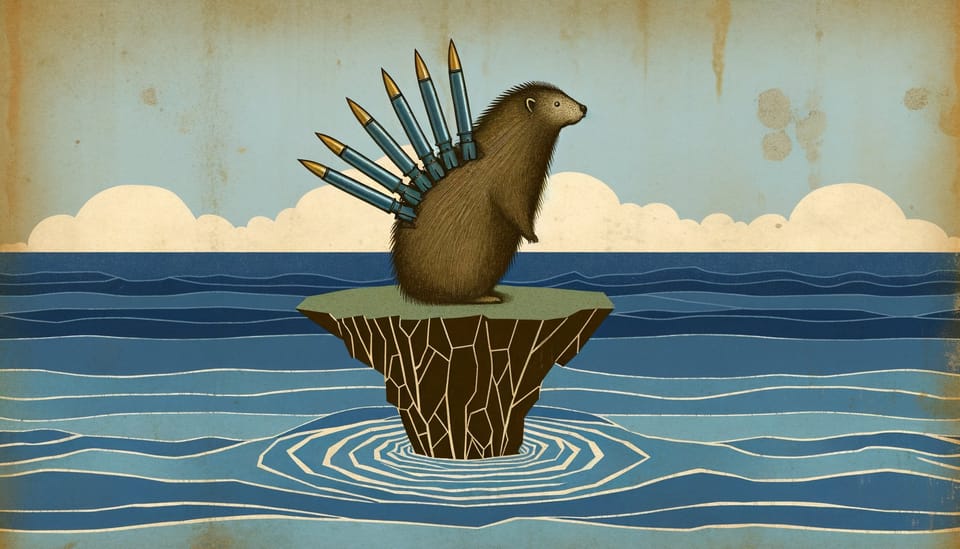
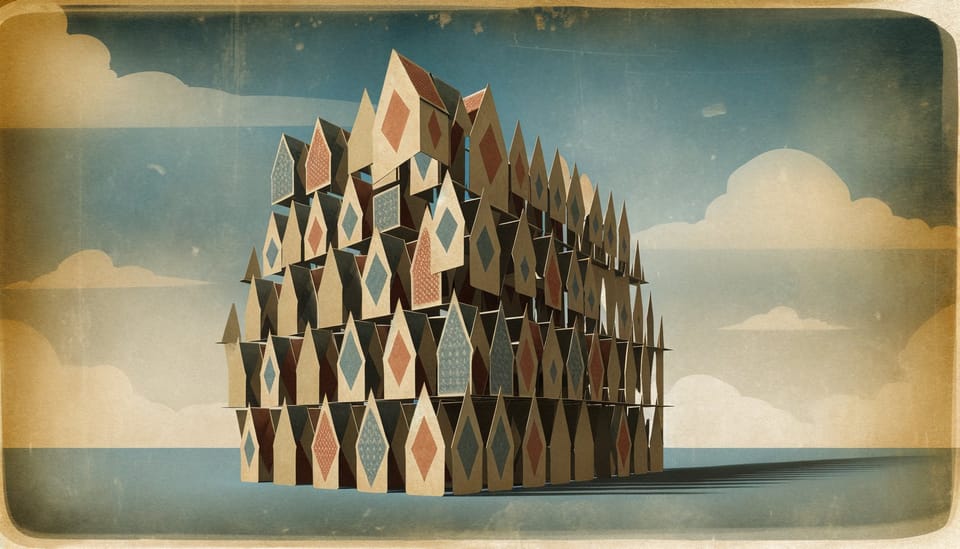
Russia’s headline numbers conceal structural rot. GDP growth sounds impressive until you examine its composition: a 68% surge in military production, construction booms in occupied territories, and government spending that reached 40% of GDP in 2023. This isn’t economic health. It’s wartime metabolic overdrive.
The Soviet Union managed similar feats. Its economy “grew” throughout the 1980s according to official statistics, even as grocery shelves emptied and technological stagnation metastasized. Growth fueled entirely by state mobilization and resource extraction isn’t growth—it’s controlled demolition on a delayed fuse. Russia today exhibits the same pattern: record-low unemployment (2.9%) coexists with labor shortages so severe that factories offer signing bonuses. Wages rose 16% in nominal terms, but real household consumption barely budged. The money circulates; nothing accumulates.
The inflation story reveals the mechanism. Official figures claim 7.4% for 2023, but independent economists tracking actual prices—particularly food and consumer goods—estimate 12-15%. Russia’s statistical agency, Rosstat, stopped publishing monthly demographic data in 2022. It ceased reporting detailed trade statistics. The numbers that do emerge pass through filters designed to demonstrate resilience, not measure reality. This isn’t incompetence. It’s institutional architecture inherited from Soviet planning, where statistics existed to prove plan fulfillment rather than describe conditions.
Yet sanctions clearly haven’t produced the swift collapse Western officials predicted. Why not? Because economic warfare operates on timescales mismatched to military campaigns. Financial sanctions hit immediately—Russia’s foreign exchange reserves dropped from $640 billion to $300 billion in weeks. Trade sanctions take months as supply chains reroute. Technology sanctions take years as equipment degrades and cannot be replaced. The effects compound, but slowly. Russia fires shells today from stockpiles built in 1985. When those run out, the war changes.
The Evasion Ecosystem
Russia’s adaptation has been neither miraculous nor trivial. It represents the largest sanctions evasion operation in modern history, and it works because the global economy offers willing accomplices.
The shadow fleet exemplifies the dynamic. Russia now operates roughly 600 tankers—14% of the global oil tanker fleet—that exist in a legal twilight. These vessels carry Russian crude to buyers in India, China, and Turkey at discounts averaging $15-20 per barrel below benchmark prices. They sail without Western insurance, often without classification society certification, and increasingly without automatic identification systems broadcasting their positions. When one runs aground or spills oil, there’s no insurer to sue, no registry to sanction, no clear legal jurisdiction.
This isn’t improvisation. It’s systematic industrial organization. The ships transfer cargoes ship-to-ship in international waters, mixing Russian oil with Kazakh or Iraqi crude to obscure origin. They reflag monthly, cycling through registries in Gabon, Cameroon, and Liberia. The beneficial owners hide behind shell companies registered in Dubai and Hong Kong, themselves owned by trusts in Cyprus and the British Virgin Islands. Unraveling one transaction requires piercing six corporate veils across four jurisdictions. Western enforcement agencies, even when motivated, lack the legal tools and international cooperation to do this at scale.
The numbers are brutal. Russia exported 7.3 million barrels per day in late 2023—only marginally below pre-war levels. The G7 price cap of $60 per barrel was supposed to limit revenue while maintaining supply. Instead, it created a two-tier market. Russia sells to price-cap compliant buyers (mainly European countries still purchasing) at $60, and to everyone else at $70-75—above the cap but below market prices. India’s crude imports from Russia increased 1,900% between 2021 and 2023. Reliance Industries alone processes 500,000 barrels daily of Russian crude, refines it into diesel and gasoline, then exports the products to Europe. The molecules are Russian; the paperwork is Indian.
China plays a different role. It doesn’t just buy Russian oil—it provides the financial plumbing that makes evasion possible. Chinese banks, particularly smaller regional institutions, process yuan-denominated transactions that settle outside SWIFT. The yuan’s share of Russian trade financing jumped from 4% in early 2022 to over 40% by late 2023. This isn’t yuan internationalization in the sense Beijing once hoped—these are captive transactions within a closed loop, not a genuine alternative reserve currency. But for sanctions evasion, captivity is sufficient.
The technology blockade shows similar patterns. Export controls banned semiconductors, precision machinery, and dual-use components. Russian weapons manufacturers responded by stripping chips from washing machines, cars, and consumer electronics. A Kh-101 cruise missile recovered in Ukraine contained components from a 2020 Lenovo laptop. Orlan drones use cameras from Canon DSLRs. This isn’t sophisticated—it’s desperate. But desperation at scale still produces weapons.
More concerning is the transshipment network. Exports of sanctioned goods to Central Asian countries increased 40-70% in 2022-2023. Kyrgyzstan’s imports of ball bearings rose 800%. These aren’t consumption surges—Kyrgyzstan’s population is 6.7 million. They’re waypoints. The goods arrive in Bishkek, Almaty, or Tashkent, then cross land borders into Russia with minimal customs scrutiny. Turkey and the UAE serve similar functions for higher-value items. Dubai’s exports of microchips to Russia increased fifteenfold.
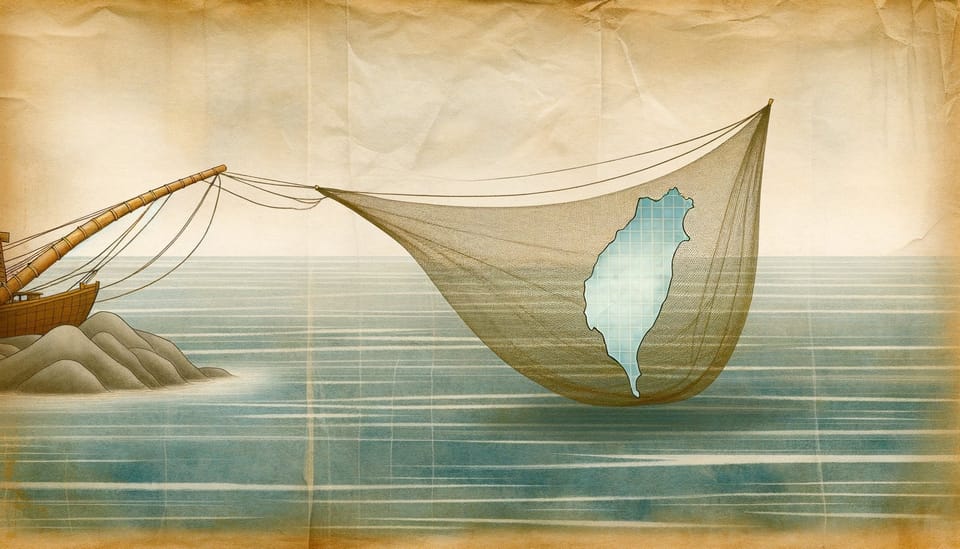
This creates a whack-a-mole dynamic. The EU imposes sanctions on specific goods. Exports to Russia drop. Exports to Kazakhstan spike. The EU adds Kazakhstan to watch lists. Exports shift to Armenia. The enforcement apparatus is always reactive, always lagging the evasion networks by six to twelve months. And each new control adds complexity to legitimate trade, raising compliance costs that hurt European exporters more than Russian importers.
The Military Calculus
The question that matters isn’t whether sanctions hurt Russia’s economy—they clearly do. The question is whether they degrade Russia’s military capacity faster than Russia can degrade Ukraine’s.
Here the picture is mixed and troubling. Russia fired an estimated 10-12 million artillery shells in 2022-2023. It began the war with stockpiles of perhaps 15-20 million, accumulated over decades. Current production runs at roughly 3 million shells annually—triple pre-war levels, achieved by running Soviet-era facilities at maximum capacity with minimal maintenance. This production rate exceeds the entire annual output of the United States and European Union combined before their recent mobilization efforts.
The math is unforgiving. Ukraine fires 6,000-7,000 shells daily when adequately supplied—roughly 2.2 million annually. Russia fires 20,000 daily—7.3 million annually. Western production, even after emergency expansions, will reach perhaps 2 million shells annually by late 2024. The gap compounds monthly. Every quarter of delayed production requires additional months to overcome.
Sanctions affect this calculus but don’t determine it. Russia’s shell production relies on Soviet-era equipment and domestically sourced materials—steel, explosives, primers. Export controls on precision machinery prevent Russia from building new, more efficient production lines, but they don’t stop Soviet-era plants from operating. The bottleneck isn’t technology; it’s labor and raw materials. Russia addresses labor shortages by offering wages 2-3 times the regional average and recruiting from prisons. It addresses material shortages by cannibalizing civilian industry.
Precision weapons tell a different story. Russia began the war with perhaps 2,500-3,000 Kalibr cruise missiles, Iskander ballistic missiles, and Kinzhal hypersonic missiles. It’s fired roughly 1,800. Current production runs at perhaps 100-150 annually, constrained by microelectronics shortages. Each Kalibr requires roughly 50 specialized chips that Russia cannot manufacture domestically. The washing-machine substitution strategy works for drones; it doesn’t work for missiles that must navigate, communicate, and detonate with precision at Mach 2.
This creates a strategic fork. Russia can sustain artillery-intensive grinding warfare indefinitely—or at least for years. It cannot sustain precision-strike campaigns against Ukrainian infrastructure. The massive missile barrages of winter 2022-2023 have largely ceased, not from choice but from depletion. Russia’s strategic arsenal is becoming a wasting asset.
But artillery wins wars of attrition. Ukraine’s challenge isn’t surviving missile strikes—it’s surviving the daily erosion of defensive positions under artillery bombardment that Ukrainian forces cannot match in volume. Sanctions degrade Russia’s capability at the margins. They don’t shift the fundamental material imbalance.
The Regime’s Wager
Putin’s political calculus rests on a simple bet: Russian society can endure economic pain longer than Western societies can endure supporting Ukraine. The evidence so far suggests he may be right.
Russian public opinion polls—even accounting for authoritarian bias—show sustained support for the war hovering around 70-75%. This isn’t enthusiasm. It’s resignation mixed with nationalism and the absence of alternatives. Independent polling by the Levada Center indicates that most Russians want the war to end, but they also believe Russia is “winning” and that withdrawal would constitute humiliation. These aren’t contradictory positions; they’re the psychological accommodation to a conflict that has no clear exit.
The social contract Putin offers is straightforward: we will not mobilize you (after the chaotic partial mobilization of September 2022), we will pay soldiers well, and we will maintain consumer goods availability in major cities. In exchange, you will not protest. This works because the costs fall disproportionately on Russia’s periphery—ethnic minorities, rural populations, prisoners. Moscow and St. Petersburg experience the war primarily through inflation and absent consumer goods. Dagestan and Buryatia experience it through coffins.
Economic pain is real but distributed unevenly. The professional class that might organize opposition has largely emigrated—estimates range from 500,000 to 1 million Russians left in 2022-2023, predominantly educated urbanites. Those who remain face a surveillance state that has systematically dismantled civil society. The cost of opposition isn’t unemployment; it’s imprisonment. Thousands sit in jail for “discrediting the armed forces”—a charge that covers everything from calling the war a war to wearing blue and yellow.
Yet the regime’s control isn’t absolute. It’s expensive. Military salaries now average 200,000-250,000 rubles monthly (roughly $2,200-2,750)—five times the national median wage. This creates a perverse incentive structure where military service becomes the most reliable path to middle-class income, particularly for men in depressed regions. Russia is essentially bribing its population to fight, and the bribes are working. But they’re also unsustainable. The fiscal deficit reached 3.2 trillion rubles ($35 billion) in 2023, financed by drawing down the National Wealth Fund. At current burn rates, the fund depletes by 2025.
Here sanctions bite hardest. Russia cannot borrow internationally. Domestic borrowing drives up interest rates—the Central Bank raised rates to 16% in 2023 to control inflation. High rates crowd out private investment, which collapsed 40% from pre-war levels. Foreign direct investment turned negative; companies aren’t just declining to invest, they’re liquidating existing assets at fire-sale prices. Russia’s capital stock is aging and cannot be replaced.
This is the structural damage that GDP figures conceal. Russia can maintain current output by running existing factories harder and deferring maintenance. It cannot build new factories, modernize equipment, or develop new industries. The economy is eating its seed corn. The question is how long the corn lasts.
The Temporal Trap
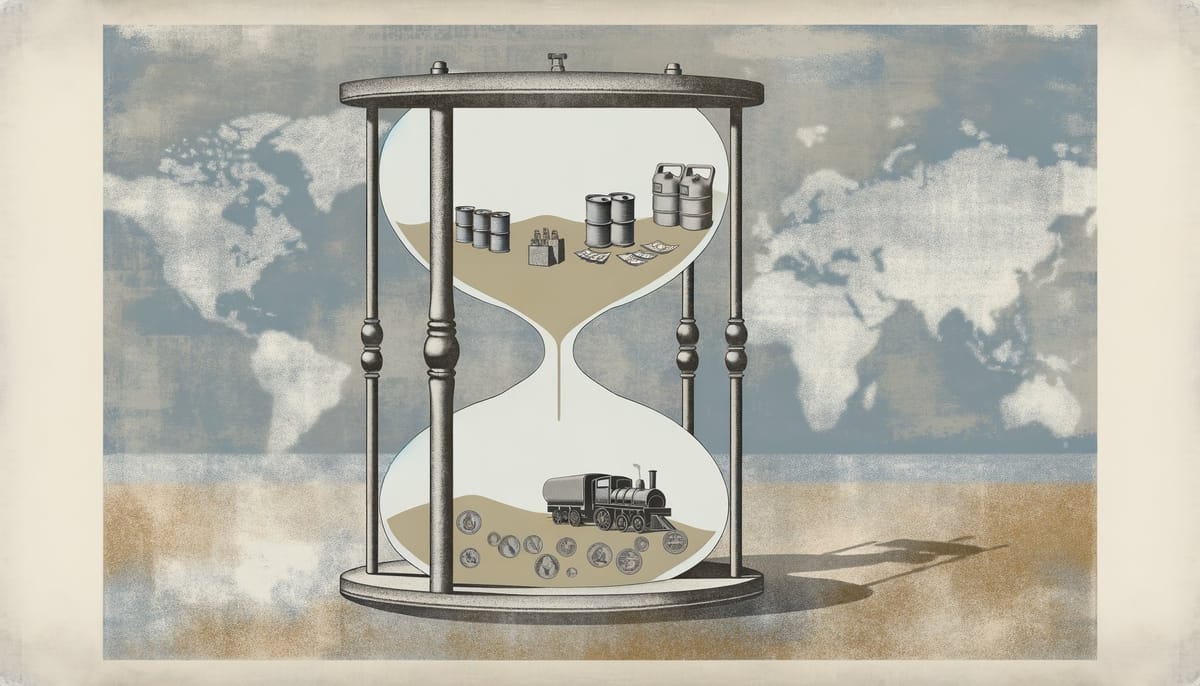
Sanctions operate on geological time; wars operate on human time. This mismatch is strategic, not incidental.
Western sanctions architecture assumes that economic pressure will eventually force behavioral change. The EU has passed eleven sanctions packages. The US has sanctioned over 2,500 Russian entities. The legal framework grows more comprehensive with each iteration—from targeting specific oligarchs to sectoral bans to secondary sanctions on third-country enablers. Each package closes loopholes from the previous one. The system is learning.
But it’s learning too slowly. Each sanctions package takes months to negotiate among EU member states, where unanimity is required. Implementation takes additional months as member states transpose directives into national law. Enforcement takes years as legal cases wind through courts. By the time Western enforcement agencies identify and sanction a shell company, it has dissolved and reformed under a new name in a new jurisdiction.
Russia’s adaptation cycle is faster. It operates in a command economy where the state can redirect resources without legislative approval, ignore bankruptcy laws, and compel firms to accept unprofitable contracts. When sanctions close one channel, Russia opens three alternatives within weeks. The West plays chess; Russia plays whack-a-mole. Chess is elegant but slow. Whack-a-mole is inelegant but fast.
This creates a strategic paradox: sanctions are working in the long term but may not work fast enough to affect the war’s outcome. Russia’s economy will be smaller, poorer, and more isolated in 2030 than it was in 2020. But 2030 is too late if Ukraine’s defensive lines collapse in 2024.
The price cap illustrates the trap. It was designed to limit Russian revenue while maintaining global oil supply—a sophisticated attempt to thread an impossible needle. It has partially succeeded: Russian crude trades at persistent discounts, costing Russia an estimated $40-50 billion in foregone revenue over two years. But Russia still earns roughly $180 billion annually from oil exports—more than enough to sustain the war. The cap creates friction and reduces profit margins; it doesn’t create crisis.
Could the cap be lowered? Yes. Should it? That depends on whether you prioritize damaging Russia or maintaining global oil prices. A $40 cap would devastate Russian revenue but would likely remove Russian supply from markets, spiking prices globally. This would hurt European consumers, benefit US producers, and potentially fracture the coalition. The current $60 cap represents political equilibrium, not economic optimization.
The Leverage That Remains
If sanctions haven’t stopped Russia yet, what could? Three pressure points remain, each with severe trade-offs.
First, financial isolation could deepen. Russia still processes roughly $200 billion in annual trade with the West, much of it in euros and dollars. This requires correspondent banking relationships—Western banks that process transactions on behalf of Russian banks. The US and EU have sanctioned major Russian banks but exempted those handling energy payments. Closing this exemption would force Russia into purely yuan- and rupee-denominated trade, dramatically increasing transaction costs and limiting trade volumes. Russia would adapt, but slowly and painfully.
The cost: European countries still importing Russian gas (primarily Austria, Hungary, and Slovakia) would face immediate supply disruptions. Global energy prices would spike. The EU coalition might fracture as member states prioritize domestic energy security over sanctions enforcement. This is why the exemption exists—not from weakness but from calculation.
Second, technology controls could expand. Current export controls focus on advanced semiconductors and precision machinery. They could extend to a broader range of industrial inputs: bearings, valves, specialized steel, chemical precursors. This would hit Russia’s ability to maintain civilian infrastructure, not just military production. Refineries would struggle to process crude. Power plants would lack spare parts. The effects would cascade across the economy.
The cost: such controls would require near-universal participation to work. If China continues supplying these inputs—and it has strong incentives to do so—the controls merely redirect trade without reducing Russian access. Worse, comprehensive controls would devastate European exporters who rely on global supply chains. Germany’s machine tool industry, for instance, depends on selling globally. Restrictions that fragment markets hurt exporters more than importers.
Third, secondary sanctions could intensify. The US has largely refrained from sanctioning Chinese and Indian entities that enable Russian evasion, fearing economic and diplomatic blowback. This restraint could end. Treasury could designate major Chinese banks processing Russian transactions, forcing them to choose between dollar access and Russian business. The effect would be immediate and severe.
The cost: this would constitute economic warfare against neutral countries, potentially driving them into closer alignment with Russia. India, which has carefully maintained strategic autonomy, would face a binary choice it desperately wants to avoid. China would retaliate, likely by restricting rare earth exports or dumping US Treasury holdings. The global financial system would fragment further, accelerating the decline of dollar dominance that already concerns US policymakers.
None of these options is cost-free. That’s the nature of economic warfare—it’s mutual damage, not surgical strike. The question isn’t whether the West can hurt Russia more; it’s whether it’s willing to hurt itself in the process.
The Most Likely Future
What actually happens? Not what should happen, but what the incentive structures suggest will happen.
Sanctions will continue tightening incrementally. The EU will pass its twelfth, thirteenth, and fourteenth packages, each closing loopholes from the previous ones. Enforcement will improve as agencies develop expertise and legal frameworks mature. Russia’s economy will continue degrading—slowly, unevenly, with occasional quarters of apparent growth that conceal structural decline. By 2026-2027, the effects will be undeniable. Productivity will stagnate. Living standards will fall. The regime will struggle to maintain both military spending and social spending.
But 2026 is too late for Ukraine. The war’s outcome will be determined by 2024-2025, driven by artillery shell production rates and Ukrainian manpower reserves, not by Russian GDP forecasts. Sanctions affect the trajectory but don’t determine the timeline.
The grimmer possibility is that sanctions succeed too well in the wrong dimension. If Russian economic pain becomes severe enough to threaten regime stability, Putin faces a choice between negotiating from weakness or escalating to change the calculus. The former is humiliation; the latter is risk. Nothing in Putin’s history suggests he chooses humiliation.
This is the scenario that should worry Western planners most: not that sanctions fail to work, but that they work just enough to create desperation without creating collapse. A Russia that’s losing slowly is more dangerous than a Russia that’s winning comfortably. The window between “hurting” and “regime change” is where nuclear weapons get discussed.
The Paradox of Patience
Economic warfare rewards patience; military conflict punishes it. The West has built a sanctions architecture designed for the long game. Russia is fighting a short one. Ukraine is caught between.
The sanctions will work. They are working. Russia’s economy in 2030 will be a shadow of its 2020 self—more isolated, less productive, technologically stagnant. The question is whether Ukraine still exists as a sovereign state when that future arrives.
This is the paradox Western policymakers cannot escape: they’ve chosen an instrument calibrated for strategic patience in a conflict demanding tactical urgency. Sanctions are the right tool for reshaping Russia’s long-term trajectory. They may be the wrong tool for determining Ukraine’s immediate survival.
The answer isn’t to abandon sanctions—they’re inflicting real damage and constraining Russia’s options. The answer is to recognize their limitations. Economic pressure shapes the strategic environment; it doesn’t win battles. Ukraine needs artillery shells in 2024, not Russian GDP decline in 2027.
Sanctions have done what sanctions do: they’ve made Russia’s war harder to sustain, more costly to continue, and ultimately unsustainable in the long run. Whether the long run arrives before Ukraine’s short run expires remains the war’s central question. The sanctions are biting. The question is whether they’ll bite through before Ukraine bleeds out.