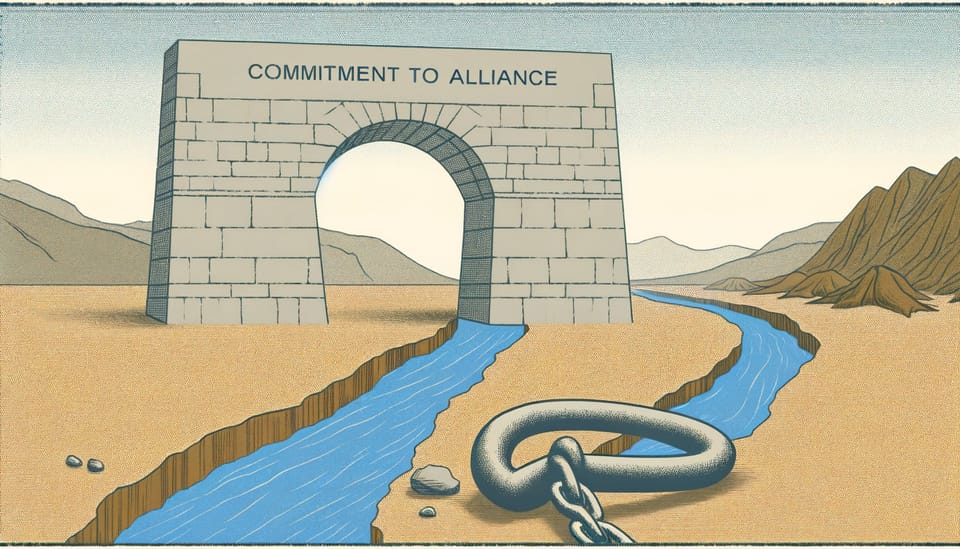
The Sahel's Sovereignty Ritual: Why the Junta Alliance Fights Wars It Cannot Win
Mali, Niger, and Burkina Faso have launched joint military operations against jihadists with a force one-twentieth the size counterinsurgency requires. The offensive is not a strategy for victory—it is a performance of sovereignty that the three military governments cannot afford to abandon,...

The Choreography of Desperation
Five thousand soldiers cannot hold a desert the size of Western Europe. The Alliance of Sahel States knows this. So do the jihadists they have pledged to destroy. Yet on December 20, 2025, Mali, Niger, and Burkina Faso launched their unified military force—the FU-AES—with promises of “large-scale operations in the coming days.” The announcement was heavy with ceremony and light on logistics. This was not a military strategy. It was a performance.
The three juntas that seized power through coups between 2020 and 2023 face a problem that no amount of Russian weapons or pan-African rhetoric can solve: they promised security to populations drowning in violence, expelled the Western forces they blamed for failure, and now must deliver results with fewer resources and less capability than their predecessors. The joint offensive is their answer—not because it can succeed, but because doing nothing guarantees their collapse.
Understanding why they act now, and what happens when the offensive stalls, requires grasping a logic that operates outside Western strategic frameworks. These juntas are not miscalculating. They are making rational choices within constraints that make failure preferable to inaction.
The Sovereignty Performance
The conventional reading of the AES offensive is straightforward: three military governments, facing insurgencies that have killed tens of thousands and displaced millions, pooled their forces to mount a coordinated counterattack. Russia provided weapons and mercenaries. ECOWAS sanctions created pressure. The juntas responded with action.
This reading misses the essential dynamic. The offensive is not primarily a military operation. It is a legitimacy ritual.
Colonel Assimi Goïta of Mali, Captain Ibrahim Traoré of Burkina Faso, and General Abdourahamane Tchiani of Niger each seized power by promising what elected governments could not deliver: security. Their coups drew popular support precisely because civilians had watched their armies lose ground to jihadists while French troops and UN peacekeepers proved unable—or unwilling—to reverse the tide. The juntas’ founding narrative was simple: sovereignty means taking responsibility for one’s own defense.
But sovereignty must be performed to exist. The Liptako-Gourma Charter that established the AES in September 2023 commits signatories to “defend the national unity and integrity of their respective States.” The language is aspirational. The reality is that none of these states controls its territory. The Liptako-Gourma region—the tri-border area where all three countries meet—is precisely where state authority has collapsed most completely. The charter creates a mutual defense pact for territories its signatories cannot govern.
This is not hypocrisy. It is the logic of performative sovereignty. By acting as if they control their borders, the juntas assert a claim that becomes partially real through its assertion. The joint offensive functions as what one might call a sovereignty ritual—a demonstration that the state exists by showing it can project force, even if that force achieves nothing lasting.
The timing is not accidental. January 2025 marked the formal withdrawal of all three states from ECOWAS, ending a year-long transition period. The juntas needed to demonstrate that departure from the regional bloc was not isolation but liberation. A joint military operation—coordinated, cross-border, announced with fanfare—proved they could cooperate without Western or ECOWAS frameworks. The operation’s success was secondary to its existence.
Why Now: The Metabolic Logic
External observers ask why the juntas would launch an offensive they cannot sustain. The question assumes sustainability matters. It does not—at least not in the way Western military planners understand it.
The AES operates on what might be called metabolic logic. Russia has provided weapons, fuel, and Wagner mercenaries (now rebranded as Africa Corps). China has offered equipment and infrastructure investment. These external inputs represent a temporary energy surplus that cannot be stored. Like organisms that must consume windfalls immediately or lose them, the juntas must convert this external support into visible action before it dissipates.
Consider the structural position. ECOWAS sanctions severed the three states from regional financial infrastructure—the West African central bank, cross-border payment systems, established trade networks. This did not punish the juntas so much as eliminate their alternatives. Deeper AES integration became the only available path to economic survival. The sanctions functioned as forced marriage, pushing the three states into an alliance they might otherwise have approached more cautiously.
Russia’s grain export expansion to 20 million tonnes in 2026 creates a parallel pressure. Moscow has committed to deliveries that must occur before the next harvest cycle. Military offensives become delivery mechanisms for a pre-sold commodity relationship. The juntas are not choosing when to fight; they are fulfilling obligations to patrons who expect visible returns.
The domestic calendar reinforces this timing. Each junta promised transitions to civilian rule that have been repeatedly delayed. Traoré initially pledged elections by 2024; they have not occurred. Goïta’s transition timeline has slipped multiple times. Tchiani has offered no credible electoral schedule. An offensive provides the justification for continued military governance: how can elections proceed while soldiers are dying to protect the nation?
This creates a perverse incentive structure. The offensive must be visible enough to justify emergency rule, but not so successful that it eliminates the emergency. The optimal outcome is perpetual campaign—enough military activity to sustain the narrative of existential threat, not enough to resolve it.
The Capability Gap
Set aside legitimacy theater. Can the FU-AES actually defeat the jihadists?
The announced force of 5,000 troops represents a fraction of what counterinsurgency doctrine requires. Standard COIN ratios suggest 20 security personnel per 1,000 population in contested areas. The Liptako-Gourma region alone has roughly 5 million inhabitants across the three countries. Effective control would require 100,000 troops—twenty times the announced force.
Numbers tell only part of the story. Counterinsurgency depends on intelligence, mobility, and sustained presence. The juntas have expelled the Western forces that provided these capabilities. French Barkhane operations offered air support, medical evacuation, and real-time intelligence that Sahelian armies could not replicate. The UN peacekeeping mission in Mali (MINUSMA) provided logistics and training infrastructure. Both are gone.
Russia’s Africa Corps cannot fill this gap. Wagner’s operational model was never designed for territorial control. It excels at resource extraction security—protecting mines, intimidating populations, enabling elite enrichment. It lacks the force density, training capacity, and logistical depth for sustained counterinsurgency. The mercenaries are optimized for a different mission.
The jihadist opposition has adapted accordingly. Islamic State Sahel Province (ISSP) and Jama’at Nusrat al-Islam wal-Muslimin (JNIM) have spent years building local networks, taxation systems, and governance structures. They collect zakat through the same water infrastructure that development organizations attempt to formalize. Their presence is woven into the social fabric in ways that military operations cannot easily sever.
The offensive faces a logistics trilemma. NATO-style operations require supply chains the juntas have rejected. Russian alternatives operate on extractive economics—funding minimal logistics through resource capture rather than sustained investment. The juntas lack the industrial base, transport infrastructure, and institutional capacity to sustain high-tempo operations independently.
The Failure Modes
“Inevitable failure” requires definition. The offensive might fail in several distinct ways, each with different consequences.
Tactical failure means the joint force cannot clear and hold territory. This is the most likely immediate outcome. The 5,000-troop force will conduct operations, kill some militants, and announce victories. But without the density to maintain presence, cleared areas will revert to jihadist control within weeks or months. This pattern has repeated across the Sahel for a decade. It discredits the juntas’ competence but does not immediately threaten their power.
Operational failure means the force itself degrades—through casualties, desertion, or internal conflict. The three armies have different training doctrines, equipment standards, and command cultures. ECOWAS-trained officers now execute operations using protocols developed within ECOWAS institutional frameworks. The very capacity to coordinate was built by the system they rejected. Interoperability problems will emerge as operations intensify. Unpaid wages—already a chronic issue—compound the risk. Soldiers owed months of back pay represent accumulating debt that grows with time.
Strategic failure means the offensive triggers consequences that worsen the juntas’ position. Civilian casualties from military operations drive recruitment to jihadist groups. Cross-border operations create refugee flows that strain already fragile social systems. Visible defeats—captured equipment, killed commanders, lost territory—shatter the narrative of military competence that justifies junta rule.
Political failure means the offensive’s costs exceed its legitimacy benefits. Each soldier killed requires a narrative of sacrifice. Each operation that fails to deliver security erodes the juntas’ founding promise. At some point, populations that welcomed military rule as an alternative to failed democracy may conclude that the alternative has also failed.
The most dangerous failure mode is success without victory. If the offensive achieves visible tactical gains—captured towns, killed commanders, recovered territory—without resolving the underlying insurgency, the juntas face impossible expectations. Having demonstrated they can win battles, they must explain why they cannot win the war. The narrative of sovereign competence becomes a trap.
What Breaks First
The offensive will not collapse the AES immediately. Military setbacks rarely topple regimes directly. The juntas control their capitals, their security services, and the instruments of repression. They can absorb tactical defeats.
The vulnerability lies elsewhere. Traditional authority structures in the Sahel operate through legitimacy mechanisms invisible to Western observers. Village elders, Sufi tariqa networks, and customary governance systems confer or withdraw support through channels that bypass formal state institutions. Military defeat activates dormant succession protocols that operate through symbolic-religious legitimacy withdrawal.
The juntas have positioned themselves as defenders of sovereignty against neo-colonial interference. This narrative requires continuous performance. Each Russian mercenary visible on Sahelian streets, each Chinese infrastructure project with foreign workers, each weapons shipment from non-African sources undermines the sovereignty claim. The juntas risk becoming what they accused their predecessors of being: clients of foreign powers who cannot protect their own people.
Economic pressure compounds military strain. The ECOWAS sanctions have disrupted trade, reduced remittances, and constrained government revenues. Gold and uranium exports provide some buffer—Niger’s uranium is strategically valuable, Mali’s gold funds regime operations—but resource extraction requires infrastructure and markets that sanctions complicate. The juntas have nationalized assets and renegotiated contracts, but extractive industries cannot replace diversified economies overnight.
The humanitarian situation deteriorates independently of military outcomes. Displacement, food insecurity, and collapsed services create suffering that no offensive can address. Populations that initially supported the juntas may not blame them for inherited crises, but patience erodes. The promise was that military government would be different. If it is not, why tolerate it?
The Patrons’ Dilemma
Russia faces its own trap. Having committed to the AES through Africa Corps deployments, weapons sales, and political support, Moscow cannot easily withdraw. Visible defeat in the Sahel would cascade across all African partnerships, signaling that Russian backing provides neither security nor success. The reputational cost of abandonment exceeds the cost of continued investment—even as that investment fails to achieve its stated objectives.
This creates a dynamic where Russia must escalate to avoid the appearance of failure, even as escalation cannot produce success. More mercenaries, more weapons, more visible support—none of these address the structural factors that make counterinsurgency in the Sahel so difficult. Russia is optimizing for presence, not outcomes.
China’s position is more ambiguous. Beijing’s interests in the Sahel are primarily economic—uranium, minerals, infrastructure contracts. Political instability threatens these interests, but Chinese engagement does not require the juntas to succeed militarily. It requires only that they survive long enough to honor agreements. China can work with whoever controls the resources, making its commitment to any particular regime contingent.
The absence of Western alternatives strengthens the juntas’ hand with their patrons. France has withdrawn. The United States maintains minimal presence. The UN peacekeeping mission ended. The juntas can credibly threaten to collapse into chaos if external support wavers—a threat that gives them leverage even as it reveals their weakness.
The Likely Trajectory
The most probable outcome is neither victory nor dramatic collapse. It is entrenchment.
The offensive will produce announced successes—captured positions, killed militants, recovered territory. These will be real but unsustainable. The juntas will claim progress while the underlying security situation remains unchanged or deteriorates. Each operation will justify the next. The emergency will become permanent.
The AES will deepen integration not because it works but because alternatives have been eliminated. Having burned bridges with ECOWAS, the three states cannot easily return. The confederation treaty signed in July 2024 created institutional structures that generate their own momentum. Bureaucracies, once created, seek to perpetuate themselves.
Russia will remain engaged because withdrawal is costlier than continuation. China will maintain economic relationships while avoiding security commitments. Western powers will watch from the margins, occasionally offering humanitarian assistance while declining to re-engage militarily.
The jihadist threat will persist, adapting to each offensive, exploiting each gap. ISSP and JNIM have demonstrated resilience across a decade of counterinsurgency operations by multiple actors with varying capabilities. There is no reason to believe the FU-AES will succeed where French special forces, UN peacekeepers, and regional coalitions failed.
The population will bear the costs. Displacement will continue. Services will remain collapsed. Violence will fluctuate but not end. The Sahel will become what it has been becoming for years: a zone of permanent emergency where governance is contested, sovereignty is performed rather than exercised, and external powers compete for influence without delivering security.
This is not failure in the sense of dramatic collapse. It is failure as stasis—a condition where nothing works but nothing changes, where offensives are launched because they must be, where juntas survive because alternatives are worse, where the future looks exactly like the present, indefinitely.
FAQ: Key Questions Answered
Q: What is the Alliance of Sahel States and when was it formed? A: The AES is a defense confederation established on September 16, 2023, through the Liptako-Gourma Charter, uniting the military governments of Mali, Burkina Faso, and Niger. It was created in direct response to ECOWAS threats of military intervention following the 2023 Niger coup, and all three states formally withdrew from ECOWAS in January 2025.
Q: How large is the AES joint military force? A: The Unified Force of the Alliance of Sahel States (FU-AES), launched on December 20, 2025, comprises approximately 5,000 personnel drawn from all three member countries. This represents a fraction of the force levels that counterinsurgency doctrine suggests would be necessary for territorial control in the region.
Q: Why did the Sahel juntas expel French forces? A: The three military governments expelled French forces as part of their founding narrative of reclaiming sovereignty from neo-colonial influence. They blamed France and Western partners for security failures despite a decade of intervention, and positioned their coups as assertions of genuine independence. Russia’s Africa Corps (formerly Wagner) has partially replaced the French presence.
Q: What happens to the Sahel if the AES offensive fails? A: The most likely outcome is not dramatic collapse but permanent emergency—a condition where the juntas survive by continuously performing military action without resolving the underlying insurgency. The humanitarian crisis will deepen, displacement will continue, and the region will remain contested between state forces, jihadist groups, and external powers indefinitely.
The Sovereignty Mirage
The Sahel’s new junta alliance is not launching joint offensives because they will work. They are launching them because the alternative—admitting that sovereignty cannot be performed into existence, that Russian backing cannot replace institutional capacity, that military government has no answer to jihadist insurgency—would be political suicide.
The offensive will not defeat ISSP or JNIM. It will not restore territorial control. It will not deliver the security that justified three coups. But it will produce footage for state television, announcements of captured positions, and narratives of sacrifice that sustain the juntas through another season.
What happens when the offensive fails is already happening. The question assumes a future event; the reality is a present condition. The Sahel’s military governments have not yet failed because failure implies an endpoint. They are failing continuously, in slow motion, while performing success. The offensive is not a departure from this pattern. It is its purest expression.
Five thousand soldiers march into a desert they cannot hold, fighting an enemy they cannot defeat, for regimes that cannot survive without the appearance of action. The choreography is precise. The outcome is predetermined. The performance continues.
Sources & Further Reading
The analysis in this article draws on research and reporting from:
- Alliance of Sahel States Launches Unified Military Force - Coverage of the FU-AES launch and announced operations
- Liptako-Gourma Charter - The founding document of the AES establishing mutual defense commitments
- The Geography of Regime Support and Political Violence - Analysis of how territorial control and legitimacy interact in fragile states
- The Withdrawal of AES from ECOWAS - Examination of regional institutional realignment
- Sahel Alliance Analysis: AES, Russia, and Regional Security - Assessment of Russian involvement and security architecture
- How Authoritarian Regimes Counter International Sanctions Pressure - Research on sanctions effects on non-democratic regimes
- Claims to Legitimacy Count: Why Sanctions Fail to Instigate Democratization - Analysis of legitimacy dynamics under external pressure
- Critical Junctures - Theoretical framework for institutional path dependency