The Protectors Who Couldn't Protect
Western counterterrorism in the Sahel collapsed not from poor execution but structural impossibility. What fills the vacuum—Russian mercenaries, jihadist governance, military juntas—offers something foreign intervention never could: belonging. The lesson is uncomfortable.
The Protectors Who Couldn’t Protect
France spent eight years and 5,000 troops trying to suppress jihadism in the Sahel. The official verdict on Operation Barkhane, recorded in French military archives: “Failure of French forces in suppressing jihadists.” By August 2022, French soldiers were leaving Mali. By December 2023, the UN peacekeeping mission MINUSMA had completed its withdrawal. The transitional government’s assessment was blunt: the mission had “failed to bring peace.”
What replaced Western forces was not peace. Violence in the central Sahel increased by 38% in 2023. Burkina Faso suffered the worst terrorism impact globally, with deaths rising 68% even as attacks declined. The Sahel now accounts for over half of all terrorism deaths worldwide.
Yet something did fill the vacuum. Russian mercenaries arrived with different methods and different metrics of success. Orthodox chapels were consecrated at military bases. Mining concessions changed hands. And the juntas who expelled Western partners found themselves bound not by treaty obligations but by shared complicity in atrocities that made separation impossible.
The failure was not tactical. It was structural—a mismatch between what Western counterterrorism could offer and what Sahelian populations actually needed.
The Architecture of Mismatch
Western counterterrorism in Africa operated on a simple theory: train local forces, provide intelligence, eliminate high-value targets, and the security situation would improve. The theory was not entirely wrong. Operation Serval in 2013 successfully pushed jihadist forces from northern Mali’s major cities. French special forces demonstrated tactical excellence. American drone strikes eliminated terrorist leaders with surgical precision.
But the theory contained a fatal flaw. It assumed that removing insurgents would allow state authority to flow into the cleared space. Instead, the same kinetic operations that removed jihadists also destroyed the registry offices, land courts, and neighborhood mediators that constituted the state’s actual presence in rural areas. The tactical success of clearing operations became strategic failure because nothing remained to contest jihadist judicial narratives when they returned.
The temporal mismatch ran deeper still. USAID project cycles operated on weeks for design, months for implementation, and defined exit strategies. Jihadist zakat collection created perpetual obligation structures with no temporal endpoint. Western stabilization aid arrived in compressed bursts; jihadist taxation promised permanent cosmic accounting. The spreadsheet saw “projects completed.” Populations experienced abandonment.
Consider the kill chain. As Western forces optimized their find-fix-finish-exploit-analyze cycles, compressing the time between intelligence and strike to hours or days, they inadvertently created what might be called a mythic narration window. The tighter the cycle, the shorter the gap between strike and jihadist arrival to explain what had happened. Operational efficiency in targeting produced temporal scarcity for alternative narratives. Speed created silence that enemies filled.
Drone strikes illustrated the paradox most starkly. A CSIS analysis of over-the-horizon counterterrorism noted the persistent challenge: strikes that eliminated leaders often generated the recruitment that replaced them. The medical intervention model applies—the “side effect” of civilian casualties was not unfortunate accident but the mechanism creating treatment dependency. Each strike that killed civilians generated the exact pathology it purported to cure.
The numbers told one story. In 2023, ten countries accounted for 87% of terrorism-related deaths globally, with concentration in Africa. Western forces had been present in most of them. The correlation invited uncomfortable questions.
What Honor Demanded
The structural failure had a cultural dimension that Western planners systematically underestimated. In honor-shame frameworks prevalent across the Sahel, the very act of accepting foreign military protection created progressive legitimacy deficits. French forces were positioned as “the savior country” and “ready-made solution”—language that emasculated the governments they supported.
This was not metaphor. It was mechanism. Each successful French operation that saved a Malian town demonstrated Malian incapacity. Each drone strike that eliminated a threat the Malian military could not reach advertised the dependency. Protection-seeking equaled emasculation in cultural frameworks where masculine honor required self-sufficient defense of community.
The juntas who eventually expelled Western forces understood this dynamic intuitively. Their anti-French rhetoric functioned not merely as nationalist posturing but as what scholars might call necropolitical performance—claiming sovereignty through the act of expulsion while demonstrating they had inherited state structures that Western protection had hollowed out.
Colonel Assimi Goïta of Mali and Captain Ibrahim Traoré of Burkina Faso emerged from this context. Both received extensive Western military training. Both witnessed continued instability despite foreign intervention. Both concluded that the training had been preparation for dependence rather than capacity. Their coups were not rejections of security assistance but rejections of security assistance that required perpetual subordination.
The irony cut deep. Western counterterrorism partnerships extracted security outputs—intelligence, basing rights, diplomatic alignment—while providing inputs that created structural dependency. The relationship resembled what anthropologists call unbalanced reciprocity: protectors incurred no obligations to the protected, creating self-reinforcing extraction rather than self-regulating exchange.
Traditional African protection systems had operated differently. Protectors incurred reciprocal obligations. The relationship was metabolic—both parties transformed through exchange. Western partnerships extracted without transformation. The protected became weaker through protection.
The Russian Proposition
What Russia offered was not better counterterrorism. It was different counterterrorism—one that aligned with junta survival rather than democratic governance.
Wagner Group, later formalized as Africa Corps, arrived with a proposition Western partners could not match: security assistance without conditions. No human rights monitoring. No electoral timelines. No anti-corruption requirements. The “no-strings-attached” model did not just fill a vacuum—it created a new market category where regime insulation from domestic opposition became explicitly purchasable.
The payment structure revealed the logic. Wagner accepted compensation in gold and mining concessions rather than cash. This required regimes to tolerate high civilian casualty rates because the payment mechanism itself depended on conditions where formal accountability was impossible. Documented atrocities in the Central African Republic, Mali, Sudan, and Libya created mutual liability that bound partners more tightly than any treaty.
When African leaders participated in or enabled Wagner operations, they became co-conspirators in documented war crimes. This created relationship architecture fundamentally different from Chinese infrastructure debt. Beijing could renegotiate terms; participation in atrocities could not be restructured. The kompromat bond proved more durable than the guanxi relationship.
The Alliance of Sahel States—Mali, Burkina Faso, and Niger—formalized this architecture in 2023. After ECOWAS threatened intervention following Niger’s coup, the three junta-led states announced mutual defense commitments and plans for a unified 5,000-strong force. The alliance was not ideological Pan-Africanism. It was resource portfolio diversification. Wagner and Africa Corps needed access to Burkina Faso’s gold and Niger’s uranium to make the Sahel profitable. Pooling sovereignty concessions achieved better subscription pricing from Moscow.
The consecration of a Russian Orthodox chapel at the Africa Corps base in Mali signaled something beyond mercenary transience. Unlike Wagner’s purely transactional presence, the Orthodox Church’s institutional investment communicated permanence. The Patriarchal Exarch did not bless temporary arrangements.
The Vacuum’s True Contents
The vacuum left by Western withdrawal was not empty space awaiting occupation. It was structured absence—shaped by what had been removed and what remained.
Jihadist groups exploited the transition with precision. JNIM, al-Qaeda’s Sahel franchise, and Islamic State-Sahel competed for populations alienated by both state collapse and foreign intervention. Their differentiation strategies resembled corporate brand competition. JNIM adopted “strategic restraint” in civilian targeting to capture market share among communities repelled by Islamic State brutality. Groups differentiated on service delivery—governance, dispute resolution, protection—rather than ideology alone.
The Africa Center for Strategic Studies documented how violent extremist groups exploited intercommunal conflicts, inserting themselves into disputes over land, water, and grazing rights that predated their arrival. They did not create grievances. They arbitrated them—often more effectively than absent state institutions.
Jihadist checkpoint taxation illustrated the dynamic. The same physical checkpoint that extracted “taxes” from herders simultaneously enforced pre-colonial pastoral mobility norms. What appeared as revenue extraction to external observers operated as governance restoration to those who remembered what colonial and post-colonial states had disrupted.
The economic logic was clarifying. Young men in the Sahel faced a portfolio of futures to price: state employment (scarce, poorly paid), agricultural labor (climate-stressed, land-contested), migration (dangerous, expensive), or armed group membership (immediate income, meaning, belonging). When Western forces withdrew, they eliminated one employer and one meaning-system from the calculation, forcing jihadist groups, ethnic militias, and criminal networks to compete more aggressively for the same recruitment pool.
Bride-price inflation compounded the crisis. Polygyny—common across the Sahel—created compounding market distortion where wealthy men accumulated multiple wives, removing women from circulation while driving up bride-price through competitive bidding. This produced a double bind: young men could not afford marriage through legitimate means while watching older, wealthier men monopolize wives. Armed group membership offered both income and status that marriage markets otherwise denied.
The Metrics That Mattered
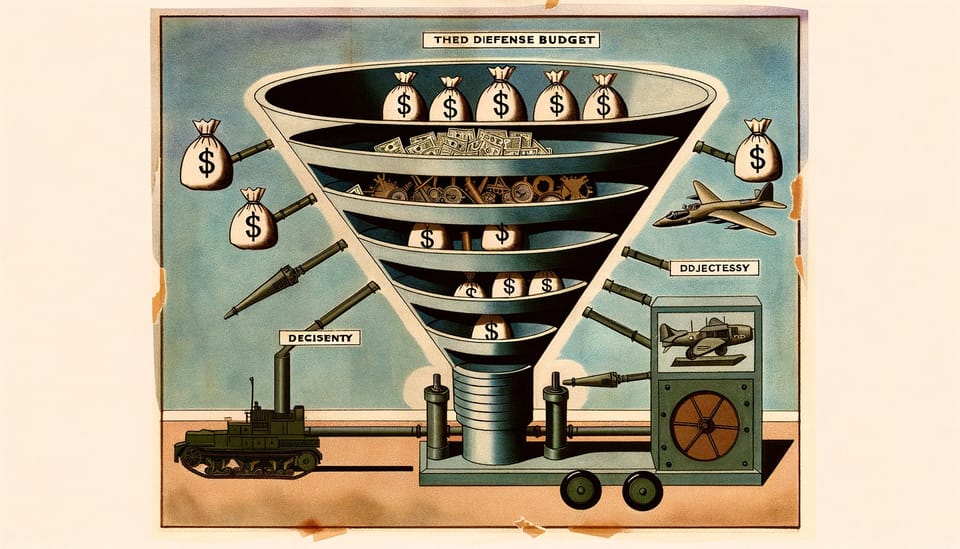
Western counterterrorism measured what it could count: strikes conducted, leaders eliminated, forces trained, bases established. These metrics satisfied congressional oversight and parliamentary questions. They did not capture what was actually happening.
The Global Terrorism Index 2024 revealed the gap. Burkina Faso’s terrorism deaths increased 68% despite attacks declining 17%. Fewer attacks produced more deaths. The violence had become more efficient—or the population more vulnerable. Either interpretation indicted the intervention model.
Operation Barkhane’s casualty figures told their own story. Forty-one French servicemen died across eight years—38 in Mali, 2 in Burkina Faso, 1 in Chad. These losses, though significant for French domestic politics, were marginal compared to civilian casualties from all parties. The asymmetry between what France sacrificed and what Sahelian populations endured created perception gaps that Russian information operations exploited relentlessly.
The drone warfare analysis from West Point concluded bluntly: drones were not the solution to Africa’s security crises. Precision strikes could eliminate individuals but could not address the structural conditions producing replacements. The technology optimized for a problem that was not primarily technological.
Compliance-driven risk aversion in Western bureaucracies created additional dysfunction. Legacy of abuse scandals and audit trail requirements produced institutional incapacity to provide rapid economic relief or debt forgiveness—exactly what populations needed to resist jihadist recruitment. This compliance paralysis generated vacuums that jihadist zakat collection filled. The organizations best positioned to help were structurally prevented from helping quickly.
What Comes Next
The trajectory is visible. The Alliance of Sahel States will deepen integration—shared financial institutions, coordinated military operations, aligned narratives. ECOWAS sanctions have already been lifted, not because juntas complied but because sanctions were generating the legitimacy infrastructure they intended to destroy. The “election promise” that juntas offered was always performance rather than commitment.
Africa Corps will consolidate. The transition from Wagner’s autonomous mercenary structure to state-controlled model created temporary vulnerability—an immunocompromised period when organizational restructuring degraded counterinsurgency effectiveness. Jihadist groups achieved significant victories during this window. But the restructuring is completing. Moscow now owns outcomes rather than maintaining deniable distance.
Chinese engagement will expand, though differently. Beijing’s non-interference doctrine explicitly excludes coercive force, requiring complementary capacity that Russian security forces provide. The relationship is symbiotic: China builds infrastructure requiring stability; Russia provides security creating instability that justifies continued presence. The metabolic paradox sustains both.
Jihadist expansion into coastal West Africa will accelerate. JNIM has already established logistics networks in Ghana, Côte d’Ivoire, Togo, and Benin. The exploitation of intercommunal conflicts that succeeded in the Sahel will replicate southward. Coastal states face the choice their northern neighbors faced a decade ago—with full knowledge of how previous choices ended.
The United States will attempt over-the-horizon counterterrorism, maintaining strike capacity without ground presence. The model has theoretical appeal and practical limitations. Intelligence degrades without local networks. Targeting accuracy declines. The gap between strike and narration widens, but the narration still happens.
The Honest Assessment
Western counterterrorism in the Sahel failed not because it was poorly executed but because it addressed symptoms while ignoring—sometimes exacerbating—causes. The model assumed security could be provided externally to populations who would gratefully accept it. The assumption was wrong.
What fills the vacuum is not better. Russian methods produce more civilian casualties, not fewer. Jihadist governance is brutal in its own ways. The juntas who expelled Western partners have not delivered the security they promised. Violence continues to increase.
But the Russian and jihadist models offer something Western counterterrorism could not: belonging. Participation. Stakes in outcomes. The young man who joins JNIM becomes part of something. The government that partners with Africa Corps shares complicity that cannot be withdrawn. These are dark forms of integration, but they are integration nonetheless.
Western policymakers face uncomfortable choices. Genuine alternatives to the current trajectory would require addressing economic marginalization, governance failures, and cultural dynamics that counterterrorism operations cannot touch. They would require patience measured in decades, not congressional cycles. They would require accepting that security provision creates dependency unless accompanied by capacity that makes external protection unnecessary.
These requirements exceed what Western political systems can sustain. The honest conclusion is not that better policy would succeed, but that the kind of policy that might succeed is not available under current constraints.
The Sahel will remain violent. The actors will shift. The populations will endure. And the lesson—that counterterrorism cannot substitute for governance—will be learned again elsewhere, at similar cost.
FAQ: Key Questions Answered
Q: Why did France withdraw from Mali after Operation Barkhane? A: Mali’s transitional government, led by military officers who seized power in 2020 and 2021, demanded French withdrawal amid rising anti-French sentiment and growing partnership with Russian Wagner Group forces. France completed its withdrawal in August 2022 after eight years of operations that failed to suppress jihadist violence.
Q: What is the Alliance of Sahel States? A: A mutual defense pact formed in 2023 by Mali, Burkina Faso, and Niger—all led by military juntas that seized power through coups. The alliance announced plans for a 5,000-strong unified force and represents a coordinated rejection of both Western partnership and ECOWAS regional authority.
Q: How did Wagner Group become Africa Corps? A: Following Yevgeny Prigozhin’s death in August 2023 and Wagner’s failed mutiny against Russian military leadership, the Kremlin absorbed Wagner’s Africa operations into a state-managed structure rebranded as Africa Corps. The transition formalized what had been deniable mercenary activity into official Russian military presence.
Q: Is counterterrorism violence in the Sahel increasing or decreasing? A: Increasing significantly. Conflict fatalities from political violence rose 38% in 2023, and civilian deaths increased over 18%. Burkina Faso experienced a 68% increase in terrorism deaths despite fewer attacks, indicating violence has become more lethal even as it becomes more concentrated.
The Inheritance
A decade from now, historians will study the Sahel intervention as they study Vietnam or Afghanistan—not as unique failure but as pattern recognition. The pattern is clear: external security provision that does not transfer genuine capacity creates dependency that eventually collapses.
What remains after collapse is not nothing. It is the memory of protection that could not protect, of promises that could not be kept, of metrics that measured everything except what mattered. The populations who survived will remember. Their children will inherit the memory.
The French soldiers who served in Barkhane were not failures. The American trainers who built partner capacity were not incompetent. The UN peacekeepers who died in Mali did not sacrifice for nothing. They operated within systems that could not deliver what was promised because the promise itself was impossible.
The vacuum they left behind is filling with alternatives that are worse by Western measures but legible by local ones. That legibility—the capacity to be understood, to offer belonging, to create stakes—may matter more than the morality Western observers prefer to judge by.
The Sahel’s violence will continue. The question is no longer whether Western counterterrorism failed. It is what lessons the failure teaches about the limits of external intervention in societies that must ultimately save themselves.
Sources & Further Reading
The analysis in this article draws on research and reporting from:
- CSIS: Counterterrorism from the Sky - Analysis of over-the-horizon drone operations and their limitations
- Africa Center: How Violent Extremist Groups Exploit Intercommunal Conflicts - Research on jihadist exploitation of local grievances
- Alliance of Sahel States - Wikipedia - Background on the AES formation and structure
- Modern War Institute: Drones Aren’t the Solution - Critical assessment of drone-centric counterterrorism
- Africa Center: Drones and Violent Nonstate Actors - Analysis of drone proliferation across African conflicts
- Al Jazeera Studies: The Paradox of Modern Jihadi Insurgencies - Examination of jihadist adaptation strategies
- ICRC: Private Military and Security Companies - Legal framework for PMC operations
- ACLED Conflict Watchlist 2024: Sahel - Current violence data and trend analysis