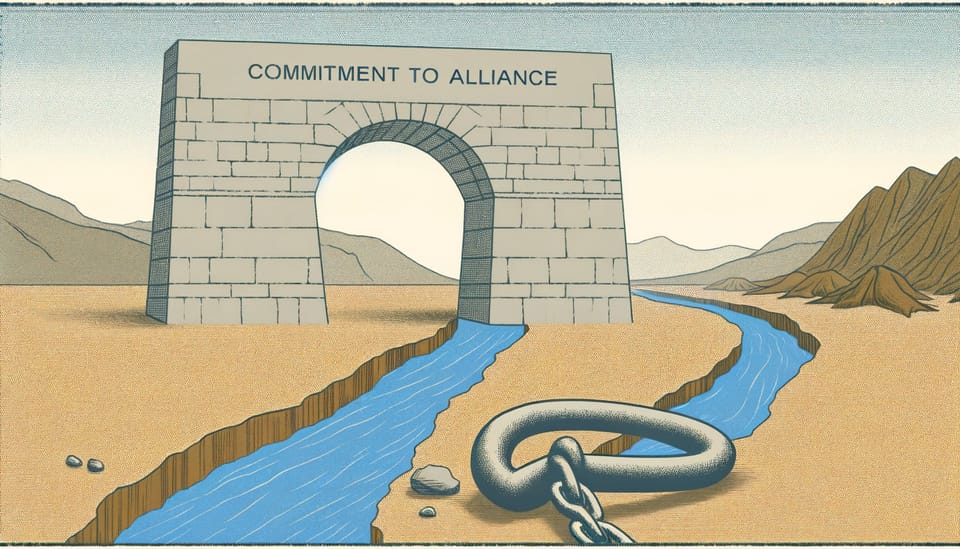
The Pacific Auction: How Micro-States Learned to Sell Sovereignty
Pacific Island nations with populations smaller than provincial towns have discovered their geography commands superpower attention. The bidding war between Beijing and Washington delivers resources—but at what cost to the states caught between?
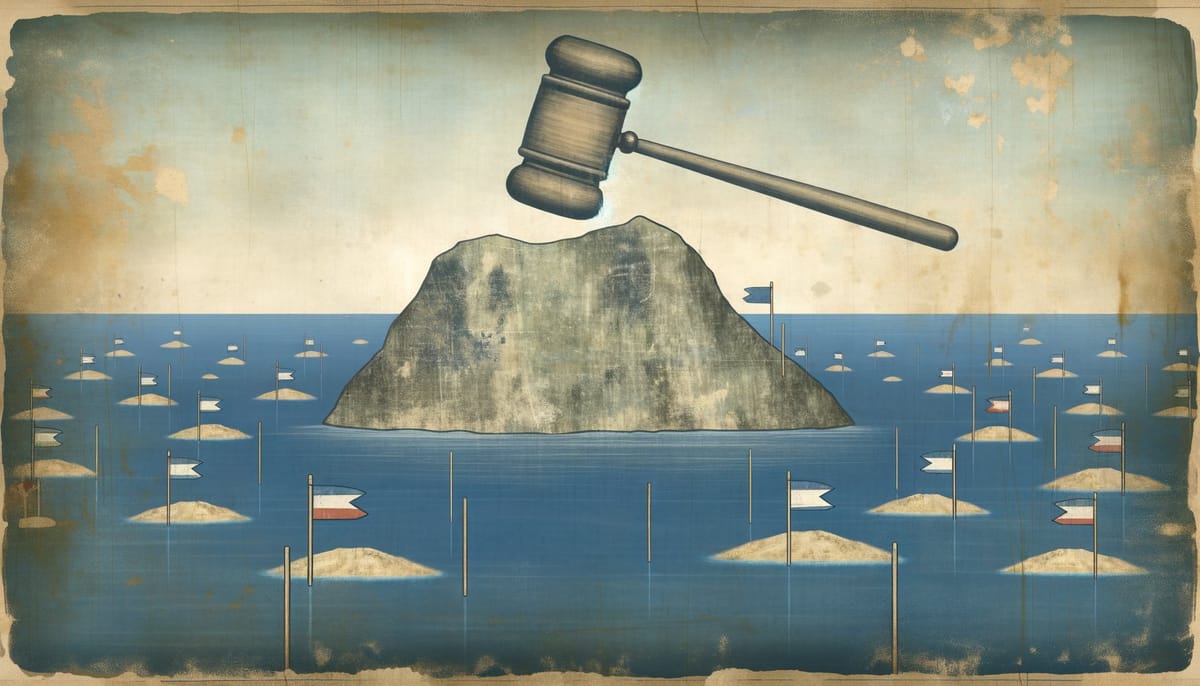
The Art of the Auction
Nauru, a speck of phosphate-depleted rock in the central Pacific, switched diplomatic recognition from Taiwan to China in January 2024. The timing was exquisite. Taiwan’s presidential election was days away. The asking price, reportedly $125 million for detention center funding, had been rejected by Taipei. Beijing paid.
This was not desperation. It was leverage.
Pacific micro-states—Tuvalu, Nauru, Palau, the Marshall Islands, the Federated States of Micronesia—have populations smaller than most provincial towns. Tuvalu has 12,000 people. Nauru, the same. Their land areas barely register on maps. Yet these specks command exclusive economic zones spanning millions of square kilometers, votes in international forums, and something both Washington and Beijing crave: presence.
The conventional wisdom holds that great power competition crushes small states. History offers ample evidence: buffer states absorbed, client regimes toppled, sovereignty bartered away. But something different is happening in the Pacific. The smallest states are learning to conduct auctions. The question is whether the bidding enriches them or hollows them out.
Sovereignty as Currency
The Pacific micro-states occupy a peculiar position in international relations. They possess juridical sovereignty—formal equality with China and the United States under international law—but lack almost everything that makes sovereignty meaningful in practice. No military. Minimal bureaucracy. Economies dependent on fishing licenses, remittances, and foreign aid. Climate change threatens their physical existence.
This combination should produce weakness. Instead, it has produced a tradeable asset.
Recognition of Taiwan versus China represents the purest form of this trade. Only twelve countries worldwide still recognize Taipei. Four are Pacific Island states: Tuvalu, Palau, and the Marshall Islands (Taiwan lost Nauru in 2024). Each recognition carries weight precisely because the supply is finite. Taiwan cannot afford to lose more. China wants them all.
The bidding reflects this scarcity. Taiwan provides development assistance, medical missions, scholarships, and infrastructure. China offers larger sums, faster disbursement, and fewer conditions. As analysts at CSIS have noted, Taiwan’s Pacific allies receive “threefold support” spanning economic, diplomatic, and technical domains—but China can simply outspend.
Yet the auction extends far beyond Taiwan recognition. The China-Solomon Islands security agreement of April 2022 demonstrated that security partnerships themselves can be commodified. The pact allows Solomon Islands to request Chinese police, armed police, or military personnel to maintain order and protect Chinese projects. More provocatively, it permits China to deploy forces “according to its own needs” with Solomon Islands’ consent.
Washington panicked. Australian officials flew to Honiara. The Biden administration announced its first-ever Pacific Partnership Strategy, committing over $810 million in new assistance. The United States reopened its embassy in Solomon Islands after a 29-year absence.
Prime Minister Manasseh Sogavare had discovered something valuable: the threat of Chinese security presence converts directly into American attention.
The Hedging Game
Strategic hedging—maintaining relationships with competing powers to maximize benefits—is not new. Singapore has practiced it for decades. What distinguishes Pacific micro-states is the asymmetry involved. These are not middle powers balancing carefully. They are entities of a few thousand people extracting concessions from superpowers.
The mechanism works through what might be called positional scarcity. Pacific geography matters to great powers in ways that have nothing to do with the islands themselves. American military planners see potential Chinese bases that would complicate operations across the Pacific. Chinese strategists see opportunities to break the “island chain” containment. Both see telecommunications chokepoints, fishing rights, and votes at the United Nations.
The micro-states did not create this value. Geography did. But they have learned to monetize it.
Consider Palau. President Surangel Whipps Jr. has maintained unwavering support for Taiwan while simultaneously leveraging American anxiety about Chinese influence to secure better terms under the Compact of Free Association. When China allegedly “weaponized tourism” against Palau—encouraging Chinese tourists to visit competitors instead—Whipps used the pressure to demonstrate loyalty and extract American sympathy. The coercion became a credential.
The Compacts of Free Association themselves reveal how this works institutionally. After prolonged negotiations, the United States signed amended agreements with the Marshall Islands, Federated States of Micronesia, and Palau in 2023, providing approximately $7.1 billion over twenty years. The delays in congressional approval created leverage: each month of uncertainty allowed micro-states to hint that Chinese alternatives existed.
This is not passive victimhood. It is active arbitrage.
The Limits of Leverage
But leverage has boundaries. The same structural conditions that create bargaining power also constrain how it can be used.
First, the auction requires credible alternatives. Tuvalu’s persistent recognition of Taiwan—despite obvious economic incentives to switch—suggests that diplomatic loyalty can function as a form of social obligation resistant to pure commodification. Research on Tuvalu’s diplomacy indicates that kinship-scale relationships with Taiwan, built over decades, create commitments that cannot simply be bought out. When external rents remain within scales manageable by traditional redistribution systems, the community can absorb them without destabilization. Nauru’s switch may reflect the opposite: demands exceeding what traditional systems could process.
Second, the bidding generates dependencies that limit future options. Chinese infrastructure loans, even when concessional, create obligations. American security arrangements, even when welcomed, constrain sovereignty. The Solomon Islands discovered this when Australia and the United States responded to the China security pact not with acceptance but with intensified pressure. Sogavare won attention but also scrutiny.
Third, domestic politics cannot be insulated from external competition. Great powers do not merely offer incentives to governments; they cultivate factions, fund civil society, and shape information environments. Vanuatu’s experience illustrates the tension: officials describe the country as “non-aligned” while accepting Chinese development assistance that carries ideological implications. The rhetoric of sovereignty coexists with the reality of penetration.
The deepest constraint is institutional. Pacific micro-states lack the bureaucratic capacity to manage complex relationships simultaneously. Governments of 50-200 people cannot maintain sophisticated hedging strategies across multiple domains. When consulting firms become the administrative substrate—providing “strategic guidance,” “technical advice,” and “performance improvement”—sovereignty itself becomes outsourced.
The Climate Wildcard
Climate change introduces a variable that scrambles conventional calculations. For low-lying atolls, the competition between Beijing and Washington is not merely about influence. It is about survival.
The Marshall Islands, Tuvalu, and Kiribati face existential threats from sea-level rise. This creates both leverage and desperation. Micro-states can position themselves as moral authorities on climate, extracting commitments from great powers seeking legitimacy. But they cannot actually solve the problem through bilateral deals. No amount of Chinese infrastructure or American aid stops the ocean from rising.
This produces a peculiar dynamic. Climate vulnerability enhances bargaining power in the short term—both Beijing and Washington want to be seen as responsive partners—while undermining the foundation on which that power rests. What happens to exclusive economic zones when the land that generates them disappears? International law provides no clear answer.
The Compact of Free Association offers one pathway. COFA migration rights allow citizens of the Marshall Islands, Federated States of Micronesia, and Palau to live and work in the United States. This is not “managed retreat” in the conventional sense but activation of pre-existing rights established through Cold War strategic bargaining. The United States secured military access; the micro-states secured escape routes.
Climate finance negotiations reveal another dimension. Pacific Island states have pushed for loss and damage funding tied to GDP percentages of wealthy nations. If successful, this would transform atmospheric debt from moral claim into structured financial obligation. The micro-states lack the capacity to access complex climate finance mechanisms—but this incapacity paradoxically strengthens their position. Nations that efficiently navigate bureaucratic requirements appear less victimized than those that struggle.
Incompetence, in this context, becomes authenticity.
Digital Chokepoints
The newest arena of competition involves telecommunications infrastructure. Undersea cables, mobile networks, and data sovereignty have become strategic priorities for both Beijing and Washington.
Huawei has built mobile towers across the Pacific, including in Solomon Islands. The United States and allies have responded with alternative cable projects, including the East Micronesia Cable connecting Palau, the Federated States of Micronesia, and elsewhere to systems backed by Australia, Japan, and the United States.
The infrastructure creates dependencies that outlast any particular government. Unlike diplomatic recognition, which can be switched, telecommunications systems embed themselves in daily life. The choice between Huawei and Western alternatives is not merely technical but architectural—it determines whose standards, whose security protocols, and whose surveillance capabilities become normalized.
Pacific micro-states lack the capacity to audit either option. They cannot verify whether Chinese equipment contains backdoors or whether American systems do. The legal void—most Pacific Island nations lack comprehensive cyberlaw frameworks—functions as strategic ambiguity. By not codifying data sovereignty laws, micro-states avoid being forced into binary alignment while maintaining optionality.
But optionality has limits. Cable systems require interoperability. Security requirements for landing stations force choices. The East Micronesia Cable’s tri-nation funding creates dependencies as binding as any treaty.
What Breaks First
The current trajectory is unsustainable. Not because micro-states will collapse—they have survived worse—but because the auction model contains internal contradictions.
The bidding works only if both sides keep bidding. Should either Beijing or Washington conclude that the Pacific Islands are not worth the investment, leverage evaporates. American domestic politics, with its short attention spans and shifting priorities, poses the greater risk. China’s interest appears more durable, driven by strategic geography rather than electoral cycles.
The bidding also assumes that micro-state governments can capture and distribute rents effectively. But great power competition intensifies domestic factionalism. When Chinese money flows to one political network and American money to another, the state becomes a site of proxy conflict rather than sovereign arbitrage.
Climate change accelerates everything. The physical substrate of sovereignty—land—is eroding. Maritime boundaries under international law move with coastlines. As territory shrinks, so does jurisdiction. This creates perverse incentives for terminal-period extraction: maximize rents now because the future is truncated.
The most likely scenario is not dramatic collapse but gradual hollowing. Micro-states will continue to extract concessions, but the concessions will increasingly benefit narrow elites rather than populations. External powers will gain footholds—military, economic, digital—that constrain future choices. Sovereignty will persist as legal fiction while substantive autonomy diminishes.
Paths Not Taken
Alternative trajectories exist but require coordination that has proven elusive.
Regional institutions offer one avenue. The Pacific Islands Forum provides a mechanism for collective bargaining that could strengthen micro-state positions. United, the Pacific Islands present a more formidable negotiating bloc than any individual member. The 2024 forum demonstrated both the potential and the limits: a Taiwan-related communiqué was withdrawn after Chinese objection, revealing that consensus can be vetoed retroactively.
Climate solidarity offers another. If Pacific Island states maintained unified positions on loss and damage, emissions reductions, and adaptation finance, they could extract more from both Beijing and Washington than any bilateral deal provides. But unity requires sacrificing bilateral opportunities. The temptation to defect—to cut a separate deal with China or the United States—undermines collective action.
Institutional capacity building represents a third path. Micro-states that develop genuine bureaucratic competence can manage complex relationships more effectively than those dependent on consultants and external advisors. But capacity building is slow, expensive, and often captured by the very external powers it is meant to counterbalance.
The most realistic intervention is also the most modest: transparency. When the terms of Chinese loans, American security arrangements, and Taiwanese aid packages become public, domestic accountability improves. Transparency does not prevent exploitation but makes it costlier. Both Beijing and Washington prefer opacity; both can be pressured to accept disclosure.
The Auction Continues
Nauru’s switch to China was neither the first nor the last. Kiribati switched in 2019. Solomon Islands the same year. The pattern is clear: recognition is for sale, and the price keeps rising.
But the auction reveals something deeper than transactional diplomacy. It shows that sovereignty, in its juridical form, has become a derivative—a financial instrument whose value derives from underlying strategic assets rather than intrinsic worth. Pacific micro-states trade recognition the way investors trade options: the value lies not in the underlying asset but in the volatility.
This is empowerment of a sort. States with no military, minimal economy, and existential climate vulnerability have found a way to matter. They have learned to conduct auctions in which superpowers bid.
Whether this empowers or destabilizes depends on the timeframe. In the short term, the bidding delivers resources that would otherwise never arrive. In the medium term, it fragments domestic politics and embeds dependencies. In the long term, it may accelerate the very conditions—climate change, institutional decay, loss of autonomy—that make the islands vulnerable.
The Pacific micro-states have mastered a game they did not design, playing on a board they cannot control, for stakes that may ultimately consume them. The auction continues. The hammer has not yet fallen.
Q: Which Pacific Island countries still recognize Taiwan? A: As of early 2025, three Pacific micro-states maintain diplomatic relations with Taiwan: Tuvalu, Palau, and the Marshall Islands. Nauru switched recognition to China in January 2024, reducing Taiwan’s Pacific allies and its global diplomatic partners overall.
Q: What is the Compact of Free Association and why does it matter? A: COFA agreements between the United States and three Pacific nations—the Marshall Islands, Federated States of Micronesia, and Palau—provide economic assistance in exchange for exclusive US military access and defense responsibilities. The 2023 renewals committed approximately $7.1 billion over twenty years, making these agreements the foundation of American presence in the region.
Q: Can China build military bases in the Pacific Islands? A: The 2022 China-Solomon Islands security agreement permits Chinese police and military deployment with Solomon Islands’ consent, raising concerns about potential base construction. However, no confirmed Chinese military base exists in the Pacific Islands as of early 2025. Regional pressure and American countermeasures have constrained but not eliminated this possibility.
Q: How does climate change affect Pacific Island diplomacy? A: Climate vulnerability gives micro-states moral authority and bargaining leverage in international forums while simultaneously threatening their physical existence. Sea-level rise may eventually eliminate the land that generates maritime jurisdiction, creating urgency to extract maximum concessions while leverage remains.
Sources & Further Reading
The analysis in this article draws on research and reporting from:
- CSIS: Taiwan’s Pacific Island Allies - Analysis of Taiwan’s “threefold support” strategy in the Pacific
- The Lowy Institute: Nauru’s Diplomatic Switch - Assessment of the 2024 recognition change and its regional implications
- The Guardian: China-Solomon Islands Security Pact - Reporting on the agreement’s terms and regional reactions
- Congressional Research Service: Compact of Free Association - Official analysis of COFA funding and provisions
- White House: Indo-Pacific Strategy - Primary document outlining US Pacific priorities
- Australian Army: Tuvalu Diplomacy - Background on Tuvalu’s foreign relations and Taiwan ties
- Utah State University: Why Vanuatu Matters - Analysis of Vanuatu’s strategic position
- FAPA: US Support for Taiwan Against China Coercion - Documentation of Chinese pressure on Palau