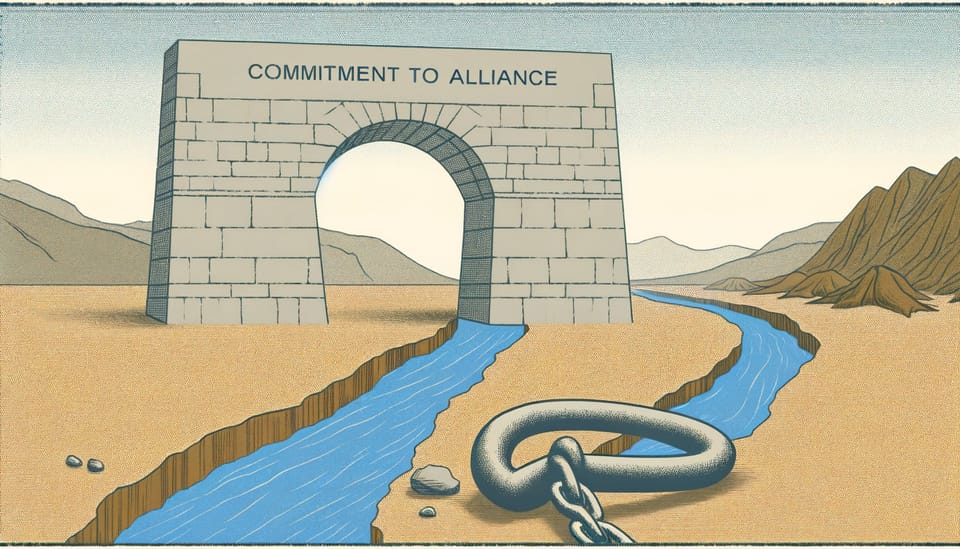
The Nuclear Mirage: Why Australia Can't Actually Maintain Nuclear Submarines
Three years after AUKUS, Australia lacks the dry docks, workforce, and industrial base to service nuclear submarines. The gap between political promises and physical reality grows wider each year.
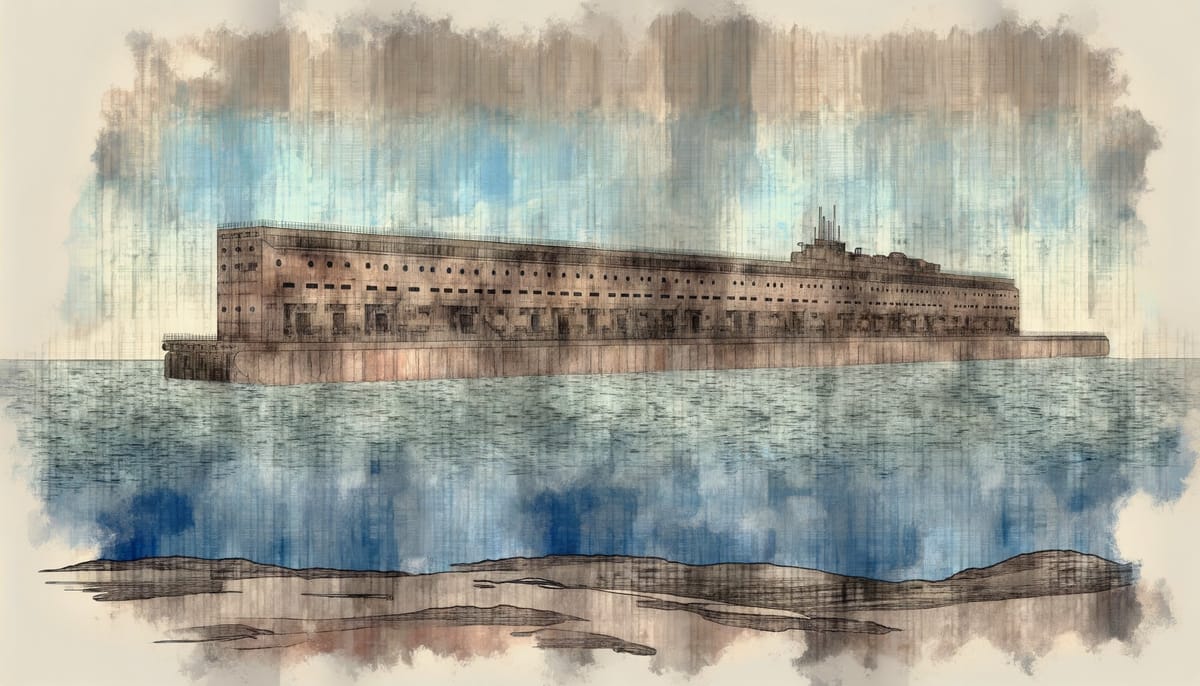
The Nuclear Mirage
Australia’s nuclear submarine maintenance capabilities exist only on paper. Three years after AUKUS, the country lacks the dry docks, certified workforce, and industrial base to service the submarines it expects to receive. Yet Canberra continues announcing delivery timelines that assume capabilities it cannot build.
The gap between promise and physics is stark. Virginia-class submarines require depot maintenance every seven to nine years in specialized dry docks with nuclear-certified facilities. Australia’s first submarines arrive in 2032. Its first nuclear-capable dry dock might be ready by 2037—if construction begins immediately and encounters no delays.
This isn’t a scheduling problem. It’s a structural impossibility disguised as a logistics challenge.
The Concrete Reality
Nuclear submarine maintenance requires more than political commitment. It demands infrastructure that takes decades to build and a workforce that takes generations to develop.
Start with the basics: dry docks. Virginia-class submarines are 115 meters long and require graving docks capable of handling nuclear contamination protocols. Australia currently has one facility at Henderson that could theoretically accommodate these dimensions, but it lacks nuclear certification, radiation monitoring systems, or waste handling infrastructure.
The Australian Submarine Agency acknowledges Australia needs “submarine maintenance infrastructure able to host deep maintenance availabilities for US Virginia-class and future SSN-AUKUS boats, including dry docks/maintenance berths, shipyard construction and sustainment yards, nuclear-certified tooling and equipment.” Translation: Australia has none of these things.
Construction timelines reveal the scale of the challenge. Nuclear-grade concrete requires specialized curing protocols—maintaining temperatures above 40°F during extended thermal cycling. The chemical bond formation process cannot be accelerated. Even with unlimited funding, physics imposes a temporal floor on infrastructure development.
Meanwhile, the workforce gap yawns wider. Nuclear submarine maintenance requires personnel certified under the US Naval Nuclear Propulsion Program—a closed system that Admiral Rickover designed to prevent contamination by outside practices. Every technician who touches nuclear components must complete US certification, which requires physical presence at US facilities for extended periods.
The numbers are unforgiving. Australia needs approximately 3,000 nuclear-qualified personnel by 2040. Current pipeline: zero. Training a nuclear technician requires four years of apprenticeship with a 45% failure rate, followed by five to ten years building operational expertise. Starting from 2025, workers entering apprenticeships now will barely achieve competency by 2040—assuming 55% complete training and 54% remain in the workforce against 9% annual attrition.
The Certification Trap
Australia faces a sovereignty paradox embedded in nuclear certification. The country can build physical infrastructure, but operational control resides in certification authority—and that authority remains permanently American.
The US Naval Nuclear Propulsion Program operates as a closed guild system. Personnel certification cannot be transferred, reciprocated, or independently validated. Australian workers must complete US training at US facilities under US supervision. Even Australian instructors require US certification to teach nuclear procedures.
This creates epistemic dependency disguised as capability transfer. Australia will own the facilities but cannot authorize their use. Every maintenance operation requires US-certified personnel following US procedures under US oversight. Physical sovereignty becomes meaningless when operational authority resides elsewhere.
The Australian Naval Nuclear Power Safety Act 2024 acknowledges this reality indirectly. The legislation creates the Australian Naval Nuclear Power Safety Regulator but grants it authority only over activities “consistent with” US and UK practices. Translation: Australia’s regulator can enforce compliance with foreign standards but cannot establish independent ones.
Consider the implications for a sovereign submarine capability. If diplomatic relations deteriorate, the US could effectively ground Australia’s fleet by withdrawing certification authority. No Australian technician could legally perform nuclear maintenance without US approval.
The Timeline Collision
AUKUS timelines assume parallel development of infrastructure, workforce, and submarines. Reality suggests serial dependencies that make the announced schedule impossible.
Australia expects to receive its first Virginia-class submarines in 2032-2033. These boats will require their first depot maintenance by 2040-2042—exactly when Australia hopes to have domestic maintenance capability. The margin for error is zero.
But infrastructure development has already slipped. The Osborne Naval Shipyard expansion continues, but no authoritative source confirms dry dock construction has begun. Even optimistic projections suggest nuclear-capable facilities won’t be operational until 2037-2038.
This creates a maintenance gap during the most critical period. Australia’s submarines will need depot-level maintenance before domestic facilities are ready. The boats will return to US shipyards—assuming capacity is available—while Australia’s expensive infrastructure sits incomplete.
The workforce timeline is even more problematic. Nuclear certification requires not just training but cultural indoctrination into what practitioners call “nuclear safety culture”—a behavioral system that treats procedures as sacred commandments requiring absolute fidelity. This culture develops through years of high-stakes operational experience, not classroom instruction.
Australia is attempting to compress a generational knowledge transfer process into a decade-long crash program. The US nuclear workforce itself faces a retirement cliff, with 50% of submarine industrial workers eligible for retirement by 2030. The teachers are leaving before the students arrive.
The Industrial Base Illusion
AUKUS assumes Australia can integrate into US and UK submarine supply chains while building independent maintenance capability. The assumption ignores how nuclear supply chains actually work.
Nuclear submarine components require specialized manufacturing under strict quality assurance protocols. Suppliers must achieve nuclear certification—a process that takes years and requires demonstrated operational history. Australia cannot simply designate local manufacturers as nuclear suppliers.
The Joint ASC-BAE ICN Portal promises to expand Australian industry participation in submarine supply chains. But metabolic scaling theory suggests growth constraints emerge equally from waste removal capacity as from resource supply. Adding Australian suppliers to existing networks may create bottlenecks rather than redundancy.
Meanwhile, global submarine production faces its own crisis. The US Navy requested only one Virginia-class submarine for FY2025 instead of two due to budget constraints and production backlogs. Britain’s submarine construction capacity has atrophied after decades of reduced orders. Both countries need AUKUS to rebuild their own industrial bases.
Australia isn’t buying from existing capacity—it’s funding the reconstruction of capacity that may deliver submarines decades later. The “opportunity to transform” rhetoric reveals that partners cannot deliver without using AUKUS as industrial policy for their own struggling shipyards.
The Physics of Failure
Nuclear submarine maintenance operates according to thermodynamic principles that political announcements cannot suspend. Specialized expertise naturally diffuses from high-concentration environments (nuclear facilities) to general labor markets unless energy is continuously expended to maintain the gradient.
The US nuclear industry achieves workforce stability through institutional capture mechanisms: retention bonuses with 3-year minimum commitments, service obligations that prevent departure, and specialized benefits that lose value outside nuclear work. These create artificial barriers to thermodynamic diffusion—temporarily holding workers in place through financial dependency.
Australia lacks these institutional capture mechanisms. Nuclear-qualified workers will be highly mobile, commanding premium salaries across multiple industries. Without coercive retention structures, Australia’s expensively trained workforce will naturally diffuse to higher-paying opportunities elsewhere.
The 6-7% annual attrition rate in the US nuclear workforce represents thermodynamic equilibrium—the minimum energy expenditure needed to maintain concentration against natural diffusion forces. Australia must achieve this equilibrium while simultaneously building capacity from zero—a thermodynamically impossible task without massive, sustained energy input.
Property value stigma compounds the workforce challenge. Nuclear facilities create documented property value depression in surrounding areas, even before construction begins. Workers must relocate and purchase property during the construction phase when stigma is highest but facility safety is unproven. The premium wages nuclear work commands are offset by inability to convert income into appreciating residential assets.
The Cascade Effect
Infrastructure delays propagate nonlocally through submarine maintenance networks. A delayed maintenance period in one facility creates scheduling pressure throughout the system, forcing other boats into accelerated maintenance cycles or extended operational periods beyond design limits.
This cascading failure dynamic explains why submarine maintenance backlogs are so difficult to resolve. Each delayed maintenance creates pressure elsewhere in the network, potentially hundreds of boats and thousands of maintenance hours distant from the original delay. Australia’s infrastructure shortfall doesn’t just affect Australian boats—it removes maintenance capacity from the entire allied submarine network.
The temporal mismatch between Australian infrastructure development and submarine delivery creates a structural bottleneck in allied submarine maintenance. US facilities must absorb Australian maintenance requirements during the gap period, adding pressure to already strained capacity.
Meanwhile, technological obsolescence accelerates. AI-enabled anti-submarine warfare systems achieve operational maturity in the 2030s—exactly when Australia’s submarine infrastructure comes online. The facilities designed to service submarines may become operational just as submarine survivability faces its greatest challenge in decades.
The Quiet Surrender
Australia’s nuclear submarine maintenance strategy represents a carefully managed retreat from sovereign capability disguised as capability enhancement. The country will build expensive infrastructure that provides the appearance of independence while ensuring permanent dependence on foreign certification and oversight.
This isn’t policy failure—it’s policy success within constrained options. AUKUS offers Australia access to advanced submarine technology in exchange for hosting US strategic assets in the Indo-Pacific. The maintenance infrastructure serves alliance burden-sharing more than sovereign capability development.
The dry dock delays, workforce shortages, and certification dependencies are features, not bugs. They ensure Australia cannot operate its submarines independently while providing political cover for what amounts to US submarine basing with Australian characteristics.
Canberra understands this reality but cannot acknowledge it publicly. Political legitimacy requires maintaining the fiction of sovereign capability while operational reality demands accepting permanent dependence. The gap between promise and physics provides necessary ambiguity for both sides.
FAQ: Key Questions Answered
Q: When will Australia actually be able to maintain nuclear submarines domestically? A: Realistically, not before 2040-2045, assuming infrastructure construction begins immediately and workforce development accelerates dramatically. Current timelines assume capabilities that don’t exist and ignore physical constraints on development.
Q: Could Australia maintain submarines at existing facilities with modifications? A: No. Nuclear submarine maintenance requires specialized dry docks with radiation monitoring, contaminated waste handling, and nuclear-certified tooling. Conventional shipyards cannot be retrofitted for nuclear operations without complete reconstruction.
Q: What happens if the dry dock delays continue? A: Australia’s submarines will require maintenance at US facilities indefinitely, making the boats effectively US assets operated by Australian crews. This may be the intended outcome, providing alliance integration while maintaining political fiction of sovereign capability.
Q: How many nuclear-qualified workers does Australia actually need? A: Approximately 3,000 personnel by 2040 for full maintenance capability, based on US Navy staffing ratios. This requires training 6,000+ workers to account for attrition and failure rates—a pipeline that should have started years ago.
The Reckoning
Nuclear submarine maintenance cannot be wished into existence through political announcements or funding commitments. It requires decades of infrastructure development, generational workforce cultivation, and institutional knowledge that Australia lacks and cannot quickly acquire.
The dry dock delays are symptoms of a deeper structural problem: Australia is attempting to compress a 50-year capability development process into a 15-year political timeline. Physics doesn’t negotiate.
AUKUS will likely succeed as an alliance integration mechanism while failing as a sovereign capability program. Australia will host submarines it cannot independently maintain, operated by workers it cannot independently certify, using facilities that require permanent foreign oversight.
The question isn’t whether Australia can maintain nuclear submarines on home soil. It’s whether Australian politics can acknowledge the permanent dependence that nuclear submarine operations require. The dry dock delays may provide convenient cover for a reality that was always inevitable: Australia’s nuclear submarines will be American submarines with Australian crews.
The mirage of sovereign capability serves its purpose—providing political legitimacy for what amounts to alliance integration. But mirages disappear when examined closely. Australia’s nuclear submarine maintenance capabilities exist only as long as nobody looks too hard at the concrete, the workforce, or the physics.
Sources & Further Reading
The analysis in this article draws on research and reporting from:
- Australian Naval Nuclear Power Safety Act 2024 - Primary legislation establishing Australia’s nuclear submarine regulatory framework
- Fighting Submarine Maintenance Bottlenecks | Proceedings - US Navy analysis of submarine maintenance challenges and capacity constraints
- The U.S. Navy Has a Nuclear Workforce Problem - Council on Foreign Relations assessment of nuclear workforce shortages
- HMAS Stirling Naval Base Expansion - Infrastructure Pipeline - Official infrastructure development timelines and requirements
- Safeguarding Naval Nuclear Propulsion in Non-Nuclear Weapon States - Academic analysis of nuclear submarine safeguards and certification requirements
- IAEA Safeguards, the Naval “Loophole” and the AUKUS Proposal - Vienna Center analysis of nuclear submarine exemptions and oversight challenges