The Killer Instinct: What Made Donald Trump
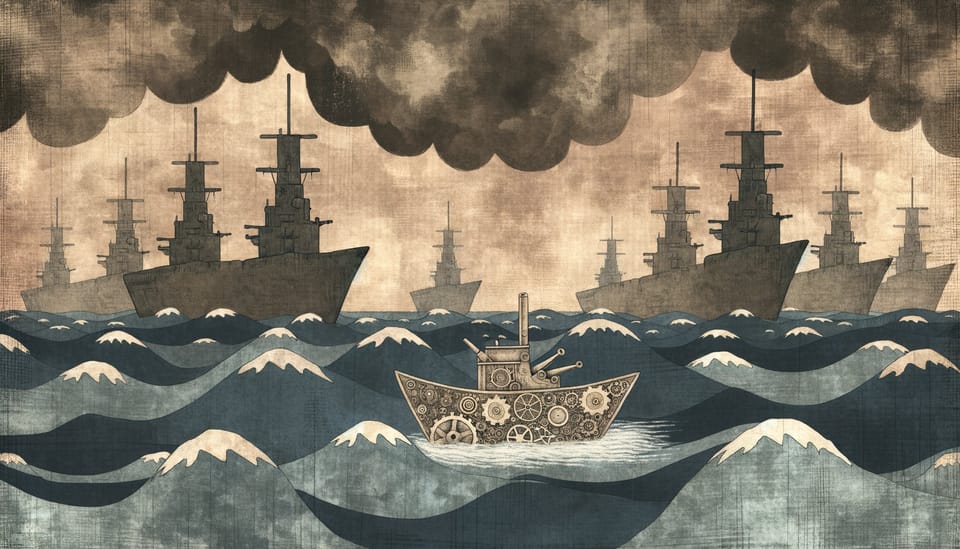
Roy Cohn taught him to sue. Fred Trump taught him that love was leverage. Military academy taught him that institutions betray. The survival system that emerged from these crucibles explains the leader—and his limits.
The Killer Instinct
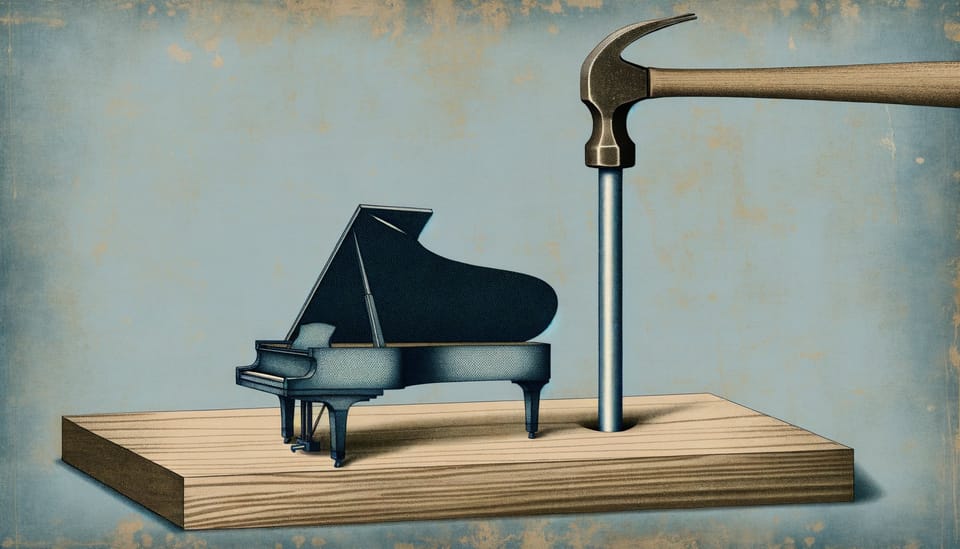
Roy Cohn taught Donald Trump to sue. Not to litigate—that implies process, patience, resolution. To sue: to weaponize the legal system as an instrument of psychological warfare. When the Justice Department charged the Trump Organization with housing discrimination in 1973, the young developer was 27, terrified, and facing the first real threat to his family’s empire. Cohn’s response was not to defend but to attack. He filed a $100 million countersuit against the government. The suit went nowhere. It didn’t need to. The message—that any assault would be met with overwhelming, disproportionate force—became the template for a career.
This wasn’t strategy learned from business school. It was survival behavior, forged in a household where kindness was weakness and love was transactional. Understanding Trump’s decision-making requires tracing not his policy positions, which shift like sand, but the deeper architecture of belief that emerged from Queens in the 1950s and calcified in Manhattan’s legal trenches of the 1970s.
The Crucible of Jamaica Estates
Fred Trump Sr. ran his household like a construction site. His children were assets to be deployed or liabilities to be discarded. Dinner was a performance of hierarchy, not communion. As Mary Trump’s psychological memoir documents, the patriarch “expected obedience, that was all.” The second son learned early that approval came through dominance, not affection.
The family operated on what might be called a Nietzschean maintenance schedule. Master morality—the belief that strength creates its own justification—wasn’t inherited essence but required continuous ritual labor. Daily dinner performances, constant surveillance of children’s behavior, systematic punishment for weakness: these weren’t parenting choices but training regimens. The Trump household functioned as what sociologists call a Züchtung system, the German term Nietzsche used for disciplined cultivation of character through repetition.
Fred Jr., the eldest son, couldn’t survive it. He became an airline pilot—a profession his father dismissed as “nothing but a bus driver in the sky.” His alcoholism and early death at 42 served as the family’s cautionary tale, a demonstration of what happened when you couldn’t perform strength convincingly. Donald absorbed the lesson with brutal clarity: weakness kills.
But there was a second, more subtle lesson in Fred Jr.’s destruction. The family triangle operated as what systems theorists call an anxiety redistribution mechanism. When tension between father and heir became unbearable, Fred Jr. was triangulated not to resolve the anxiety but to absorb it. He became the designated failure, the container for the family’s unacceptable emotions. Donald’s survival required not just strength but the strategic deflection of family dysfunction onto others.
By age 13, Donald’s behavioral problems had escalated to the point where his parents shipped him to New York Military Academy. The official story frames this as character-building. The reality was closer to exile. A knife incident—the details remain murky—triggered the decision. The boy who couldn’t be controlled at home would be controlled by Prussian-model discipline.
The Academy of Dominance
New York Military Academy targeted the precise neurobiological window when the prefrontal cortex is maximally plastic for social dominance hierarchy encoding. This wasn’t coincidental. The cadet entry age of 13-14 and the rank progression system mapped onto adolescent brain development with almost surgical precision. What looks like arbitrary military tradition was, in effect, a technology for programming young men to experience hierarchy as natural law.
Trump thrived. He advanced from private to captain. The academy taught him that status could be performed, that uniform and posture and bearing communicated power before a word was spoken. More importantly, it taught him that the rules governing advancement were legible and manipulable. Work the system, and the system rewards you.
Then came the hazing incident. Details remain contested, but the outcome is clear: Trump was demoted from his captain’s position despite believing he was performing well. The lesson landed hard. You can master the rules, demonstrate competence, achieve rank—and still be stripped of status through processes beyond your control. The experience bred a permanent suspicion of institutional legitimacy. If the system could take away what you’d earned, the system was the enemy.
Wharton came next, and Trump absorbed a different kind of education. “Perhaps the most important thing I learned at Wharton,” he later wrote, “was not to be overly impressed by academic credentials.” The Ivy League degree became a credential to brandish, not a worldview to internalize. He learned to speak the language of elite business while maintaining contempt for its pretensions.
The Cohn Curriculum
Roy Cohn was dying of AIDS when he met Donald Trump, though he denied it until the end. He was also the most feared lawyer in New York, a man who had helped send the Rosenbergs to the electric chair at age 24 and survived the collapse of Joseph McCarthy’s crusade by learning to operate in shadows rather than spotlights. Cohn’s mother had dominated him so completely—he lived with her until her death when he was 42—that his need to dominate others became pathological.
The 1973 housing discrimination case brought them together. The Justice Department had evidence. The Trumps had been marking rental applications with codes—“C” for colored—to steer Black applicants away from their properties. A conventional lawyer would have negotiated a settlement, minimized exposure, moved on.
Cohn attacked. The countersuit was theater, but theater with purpose. As one analysis of Trump’s legal strategies documents, Cohn’s method transformed the lawsuit itself into raw material for alchemical transformation. The facts of discrimination became irrelevant; the procedural posture of being sued became the thing to be transmuted. Never settle. Never apologize. Always counterattack.
The case eventually settled—the Trumps agreed to list vacancies with the Urban League—but the outcome mattered less than the education. Trump learned that litigation was not about truth but about exhaustion. That the costliness of filing lawsuits paradoxically authenticated the signal rather than undermining it. Like a peacock’s tail, the expense proved resource abundance and commitment. Lawsuits that went nowhere still worked if they made future adversaries calculate the cost of conflict.
Cohn’s influence extended beyond courtroom tactics. He modeled a particular form of compartmentalization: the ability to maintain contradictory positions without cognitive dissonance. A closeted gay man who persecuted homosexuals. A Jew who worked for anti-Semites. The lesson was that identity itself was instrumental, a tool to be deployed rather than a truth to be lived.
The Transactional Theology
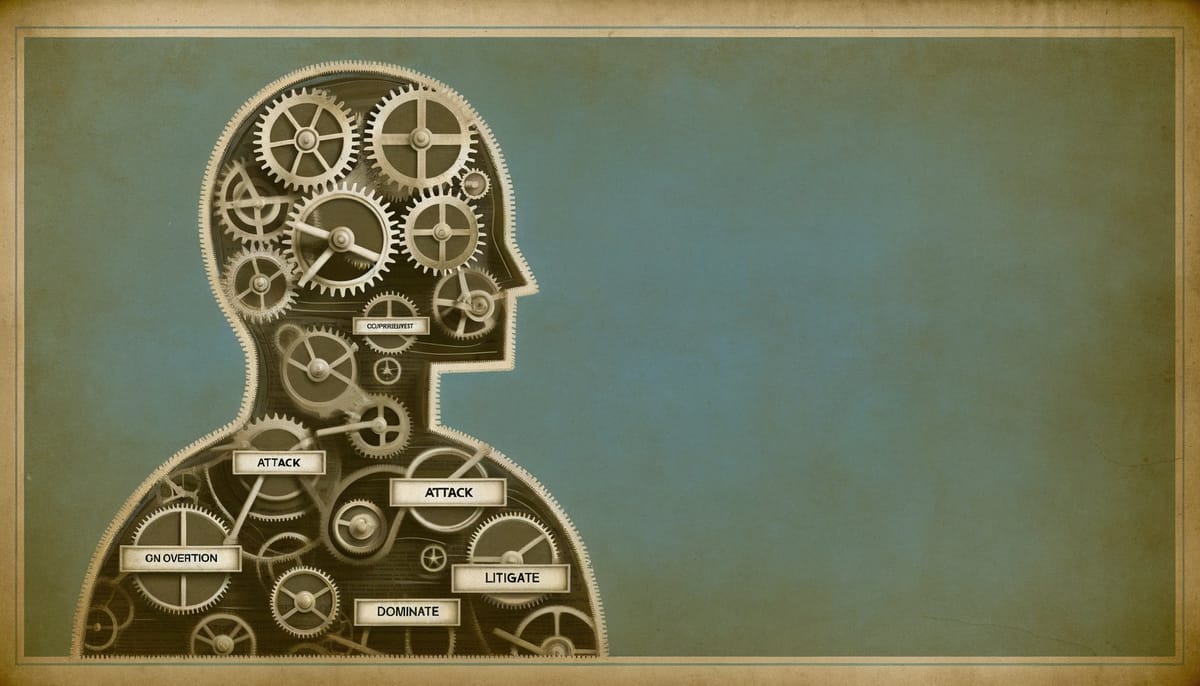
What emerged from these crucibles was not a political philosophy but an operating system. Trump’s core beliefs can be stated simply: Every relationship is a transaction. Every transaction has a winner and a loser. The goal is to win, and winning means the other party loses.
This sounds like cynicism, but it functions more like faith. The prosperity gospel that would later embrace Trump operates through the same structure: faith as tool for material gain, blessing measured in bank balances. Both systems treat the universe as fundamentally transactional, responsive to correct technique rather than moral worth.
Fred Trump taught this theology through practice. The New York Times tax investigation revealed that Donald “was a millionaire by age 8” and “received the equivalent today of at least $413 million from his father’s real estate empire.” The self-made narrative was always fiction. But the transactional logic was real: Fred’s money came with strings, with expectations, with the constant threat of withdrawal. Love was leverage.
This produced a decision-making style that mystifies conventional analysts. Trump appears simultaneously impulsive and calculated, chaotic and strategic. The confusion dissolves once you understand that he’s not optimizing for policy outcomes but for transactional advantage in the immediate moment. Long-term consequences matter less than winning the current exchange.
His approach to negotiation, as outlined in The Art of the Deal, emphasizes “thinking big,” maximizing leverage, and protecting downside risk. But the deeper principle is simpler: never let the other party know your actual position. Maintain optionality. Keep them guessing. The strategic unpredictability that drives foreign policy analysts to distraction isn’t a bug; it’s the core feature.
The Brand as Fortress
By the 1980s, Trump had discovered something more powerful than real estate: the value of the name itself. The shift from developer to brand was partly accidental—his casinos failed, his marriages failed, his airline failed—but the brand survived and grew. The lesson was that image could be decoupled from underlying reality.
This wasn’t mere marketing. It was a form of what Baudrillard called hyperreality: the simulation becoming more real than the thing it simulates. The Trump brand didn’t represent Trump properties; Trump properties existed to validate the brand. When the casinos went bankrupt, the brand remained valuable precisely because it had achieved independence from the assets.
The Apprentice completed the transformation. For fourteen seasons, millions of Americans watched Trump perform decisive leadership. The boardroom was a stage set. The decisions were edited for drama. None of it mattered. What mattered was the weekly ritual of a man saying “You’re fired” with absolute authority. The show didn’t reflect Trump’s business acumen; it created the perception of business acumen that became more consequential than any actual deal.
Reality television established a psychological architecture where real-time audience response—ratings, applause, social media—became the primary validation mechanism for decision-making. Not outcome quality. Not expert assessment. Audience reaction. This would prove consequential when the audience became the American electorate.
The Permanent Campaign Mind
Trump’s political evolution defies conventional ideological mapping. He was a registered Democrat, then Republican, then Reform Party member, then Republican again. His positions on trade, healthcare, and foreign policy shifted with apparent randomness. Analysts searching for a coherent worldview found only contradiction.
But the consistency was never ideological. It was attentional. Trump’s political instincts tracked what generated response, what dominated news cycles, what made opponents react. His 1990 Playboy interview articulating economic grievances became, decades later, required reading for German and Japanese officials—not because the positions were sophisticated but because they had achieved temporal stability. The mask had not changed expressions since being carved.
The formative political experience was not policy study but media manipulation. Trump learned in the 1980s tabloid wars that controversy was currency, that being talked about mattered more than being praised. He planted stories, created personas, staged conflicts. The skills transferred directly to political campaigns, where $2-3 billion in free media coverage substituted for traditional organizing.
This created what might be called governance by permanent campaign. The distinction between campaigning and governing—between performing for audiences and managing institutions—collapsed. Every decision became a media event. Every policy became a negotiating position. The feedback loop between Trump’s statements and audience reaction became the primary input to decision-making.
The Architecture of Attack
Trump’s strategic repertoire is narrow but effective. When challenged, he counterattacks immediately. When accused, he accuses louder. When caught, he denies and deflects. These aren’t tactical choices made in the moment; they’re trained reflexes, grooves worn deep by decades of repetition.
The refusal to apologize deserves particular attention. In honor cultures, apology structurally dismantles combat-readiness. Apologizing signals acceptance of the frame that you were wrong, which means you weren’t defending legitimate honor but were actually guilty. The system requires perpetual combat readiness because any acknowledgment of fault cascades into status collapse.
This explains behavior that appears self-defeating to conventional analysis. Why deny obvious facts? Why attack accusers rather than address accusations? Because within the honor-culture logic Trump absorbed from Cohn and his father, any concession is existential threat. The goal is not to be right but to never be seen as weak.
The pattern extends to institutional relationships. Trump treats every institution—courts, Congress, intelligence agencies, the press—as an adversary to be dominated rather than a partner to be managed. This isn’t paranoia; it’s the logical extension of transactional thinking. If every relationship has a winner and loser, then institutions that constrain presidential power are enemies by definition.
What Made the Leader
The question of what “made” Trump into his current form implies a linear developmental narrative. The reality is more recursive. The child who couldn’t be controlled became the military cadet who learned to perform control. The cadet became the developer who learned to attack rather than defend. The developer became the brand who learned that image trumps reality. The brand became the candidate who learned that audience reaction trumps expert assessment.
Each stage didn’t replace the previous; it layered atop it. The fear of abandonment that drove the child’s behavioral problems still operates beneath the adult’s need for constant validation. The rage at institutional betrayal that followed military academy demotion still fuels attacks on any institution that constrains him. The transactional theology learned at Fred Trump’s dinner table still structures every relationship.
What emerges is not a strategic genius but a survival system. Trump’s decision-making optimizes for immediate dominance in the current transaction, for audience response in the current news cycle, for attack rather than defense in the current conflict. Long-term consequences, institutional relationships, policy coherence—these are secondary at best.
The system works, within its own terms. Trump has survived bankruptcies, scandals, investigations, and impeachments that would have destroyed conventional politicians. The very behaviors that seem self-destructive to outside observers—the attacks, the denials, the constant escalation—are precisely what the system is designed to produce.
Understanding this doesn’t predict what Trump will do. The system is too reactive, too dependent on immediate circumstances, too oriented toward the current transaction. But it does explain why he does what he does, and why expecting different behavior is to misunderstand the architecture entirely.
Q: Did Trump’s father really hide their German ancestry? A: Yes. Fred Trump actively concealed the family’s German origins, particularly during and after World War II, sometimes claiming Swedish heritage. This was rational market adaptation—hiding German identity helped retain Jewish tenants in New York real estate—and taught Donald that identity itself was instrumental, a tool for business rather than an inherited truth.
Q: How much money did Trump actually receive from his father? A: The New York Times investigation documented that Trump received the equivalent of at least $413 million from his father’s real estate empire, beginning with trust fund payments that made him a millionaire by age 8. The self-made billionaire narrative was always a brand construction rather than biographical fact.
Q: What was Roy Cohn’s most lasting influence on Trump? A: Cohn taught Trump to treat litigation as psychological warfare rather than legal process. The core lessons—never settle, never apologize, always counterattack—became reflexive behaviors that Trump applies not just to lawsuits but to all conflicts, from business disputes to political campaigns to presidential governance.
Q: Why does Trump refuse to apologize even when it would help him politically? A: Within the honor-culture logic Trump absorbed from Cohn and his father, any apology is existential threat. Apologizing signals acceptance that you were wrong, which cascades into status collapse. The system requires perpetual combat readiness; concession equals weakness equals destruction.
The Mask and the Man
There is a final irony in Trump’s formation. The survival system that emerged from Jamaica Estates and military academy and Roy Cohn’s tutelage was designed to protect against abandonment and weakness. It succeeded. But systems optimized for survival are not optimized for flourishing. The man who cannot apologize cannot learn. The man who sees every relationship as transaction cannot build trust. The man who attacks every institution cannot govern through them.
Fred Trump Sr. died in 1999, his empire divided among his children, his methods encoded in his most successful son. Roy Cohn died in 1986, disbarred and disgraced, denying his AIDS diagnosis to the end. The men who shaped Trump are gone. The architecture they built remains, still running its original programming: attack, dominate, never show weakness, never admit fault.
Whether this architecture can sustain presidential power is a question the American system is still answering. What is clear is that expecting Trump to behave differently—to suddenly become reflective, or strategic, or institutionally minded—is to expect the survival system to override itself. The man was made by forces that rewarded exactly the behaviors that now define him. He learned his lessons well.
Sources & Further Reading
The analysis in this article draws on research and reporting from:
- The New York Times Tax Investigation (2018) - Comprehensive documentation of Trump family wealth transfers and the gap between self-made narrative and financial reality
- Mary Trump’s “Too Much and Never Enough” Coverage - Psychological analysis of Trump family dynamics by a clinical psychologist family member
- Time Magazine: Trump Legal Strategies - Analysis of Roy Cohn’s lasting influence on Trump’s approach to litigation
- The Art of the Deal Business Philosophy - Trump’s self-described negotiation principles and business worldview
- Inc. Magazine: Negotiation Tactics from The Art of the Deal - Detailed breakdown of Trump’s stated strategic approach
- PBS Frontline: Military School and Childhood - Investigation of Trump’s formative years and behavioral issues leading to military academy
- NPR: New York Military Academy - Reporting on Trump’s military school experience and advancement to captain
- Weber’s Three Types of Authority - Theoretical framework for understanding charismatic versus institutional legitimacy