The Highway Through Paradise: How Drug Trafficking Is Remaking the Pacific
International drug cartels have transformed Pacific Island nations from transit points into consumption markets. As methamphetamine flows through ancient kinship networks and overwhelms fragile institutions, communities face threats their governments cannot defeat alone.
The Highway Through Paradise
Methamphetamine arrives in Tonga the same way Polynesian ancestors once did: by sea, following ancient currents, exploiting the vast emptiness between islands. The irony cuts deep. The Pacific Ocean, whose crossing represented humanity’s greatest navigational achievement, now serves as a 7,000-nautical-mile corridor for cocaine and synthetic drugs flowing from South America and Asia to the lucrative markets of Australia and New Zealand. What happens along the way is transforming some of the world’s smallest nations into something their founders never imagined.
The numbers tell one story. Drug-related arrests in Fiji leapt from 148 cases in 2009 to nearly 1,400 by 2018. Methamphetamine cases specifically jumped from 2 to 113 over the same period. But statistics obscure the deeper shift. As the UNODC’s landmark 2024 report documents, Pacific Island states “have confirmed the transformation of their countries from solely transit sites along drug trafficking routes to destination markets for synthetic drugs.” The drugs that once passed through now stay. The transit corridor is becoming a consumption market. And the communities caught in between face pressures their institutions were never designed to withstand.
Where Geography Becomes Destiny
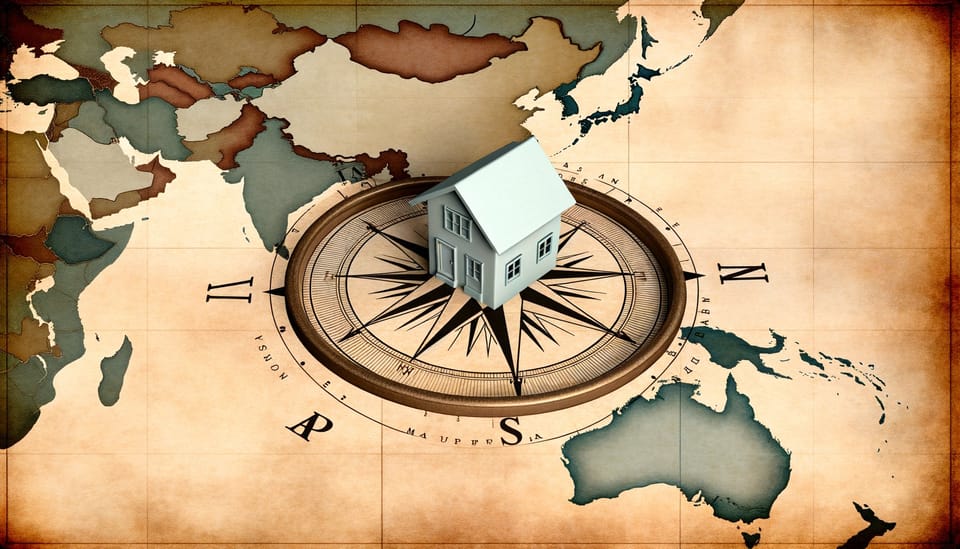
Understanding the Pacific drug trade requires grasping a fundamental geographic asymmetry. Australia and New Zealand represent some of the world’s most profitable drug markets—isolated, wealthy, with prices that dwarf those in source countries. A kilogram of cocaine that costs $2,000 in Colombia fetches $200,000 in Sydney. Methamphetamine shows similar markups. This price differential creates an economic gravity that pulls trafficking networks across the Pacific with the inevitability of water flowing downhill.
The routes themselves exploit what makes the Pacific ungovernable. Fourteen sovereign nations scattered across an ocean area larger than Africa, with combined exclusive economic zones exceeding 30 million square kilometers but populations smaller than many cities. Fiji, the largest, has fewer than a million people. Tuvalu has 11,000. The mathematics of enforcement become absurd: Samoa’s entire police force could not patrol its waters for a single day.
Foreign crime syndicates—primarily from Asia and the Americas—have learned to read this landscape. According to UNODC analysis, they exploit “the Pacific’s strategic location to traffic illicit drugs and other contraband,” using island nations as staging points, refueling stops, and increasingly, as markets. The same remoteness that once protected these communities now makes them vulnerable. Surveillance is impossible. Interdiction is rare. When drugs do get seized—as Samoa Police documented in recent border operations—it represents the visible fraction of a much larger flow.
The trafficking methods have evolved with brutal efficiency. Vacuum-sealing defeats sniffer dogs. Submersible containers evade surface patrols. Semi-submersible vessels—once confined to Colombian waters—now appear in Pacific shipping lanes. Traditional detection infrastructure becomes obsolete faster than it can be deployed. The dogs trained at great expense to detect cocaine cannot smell what they cannot access.
When Transit Becomes Destination
The transformation from transit route to consumption market follows a predictable but devastating logic. Drugs leak from shipments. Traffickers pay local accomplices in product rather than cash. A market forms. Demand grows. Supply follows.
Former traffickers interviewed by ABC News described the mechanism with clinical precision: methamphetamine enters Tonga and Samoa through family connections, fishing vessels, and legitimate shipping containers. The same kinship networks that enabled Polynesian settlement—what anthropologists call the “wantok” system—now provide criminal organizations with pre-existing trust architectures. You do not need to build a distribution network when one already exists, refined over three thousand years of inter-island trade.
The community impacts defy easy measurement. In Fiji, methamphetamine has moved from ports to schools. Reports document children as young as twelve involved in distribution—not as victims of coercion but as rational economic actors in communities where legitimate opportunities have contracted. The drug economy offers what the formal economy cannot: immediate returns, clear advancement paths, and status.
Family structures fracture under the strain. Methamphetamine’s particular pharmacology—the extended wakefulness, the paranoia, the violence—destroys the extended family systems that have historically provided Pacific communities their resilience. When the stigmatized “pathogen” originates from within the community, from children and cousins and neighbors, the social immune response cannot expel the threat without destroying itself. Tight social bonds that once enabled collective resilience now transmit collective trauma.
The temporal dimension matters too. Methamphetamine functions as what one researcher called “a chemical prosthetic for populations experiencing structural waiting”—communities positioned as perpetually “not yet modern,” stuck in development timelines that never arrive. The drug doesn’t just accelerate individual metabolism; it offers an escape from the suspended animation of underdevelopment. This is not excuse-making. It is mechanism-tracing.
Institutions Under Siege
The Pacific Islands Forum recognized transnational crime as one of four “paramount challenges” facing the region in its 2018 Boe Declaration. Baron Waqa, Secretary-General of the Pacific Islands Forum Secretariat, stated plainly that “transnational organized crime has become a significant security threat in the Pacific, raising serious concerns for the region and its people.” The diagnosis is accurate. The treatment remains elusive.
The problem is structural. Pacific Island governments operate with bureaucracies designed for populations of tens of thousands, now confronting criminal organizations with global reach and resources exceeding many national budgets. Customs services lack equipment. Police lack training. Courts lack capacity. Prisons lack space. Each weakness compounds the others.
Corruption flows through these gaps like water through cracked concrete. The same social proximity that makes small communities functional—everyone knows everyone—simultaneously destroys formal accountability mechanisms. Exposing corruption means destroying personal relationships across entire social networks. Whistleblowing becomes socially impossible precisely where it is most needed.
The Global Initiative Against Transnational Organized Crime documented how foreign criminal enterprises exploit these vulnerabilities systematically. They do not merely bribe officials; they embed themselves in legitimate business structures, creating hybrid entities that blur the line between licit and illicit commerce. A fishing company that occasionally transports drugs. A construction firm that launders money. A politician whose campaign contributions come from untraceable sources. The corruption becomes structural, invisible, deniable.
Deportation policies from Australia, New Zealand, and the United States compound the problem. When these countries expel residents with criminal records—often people who left the Pacific as children and have no remaining connections—they inject sophisticated criminal knowledge into communities unprepared to absorb it. The deportees arrive with skills in drug distribution, money laundering, and violence that took years to acquire in metropolitan criminal ecosystems. They transmit these capabilities in months, bypassing the generational apprenticeship that normally governs cultural transmission. It is horizontal gene transfer applied to criminal enterprise.
The Regional Response and Its Limits
The Pacific Islands Forum launched its Regional Transnational Organised Crime Disruption Strategy for 2024-2028 with an ambitious goal: making the Pacific “the world’s hardest region for organized crime networks” to operate. The strategy emphasizes a “whole-of-society and whole-of-region approach.” The language is correct. The resources are not.
The Lowy Institute’s Pacific Aid Map reveals the underlying arithmetic. Development assistance to the Pacific has increased, but security-specific funding remains fragmented across bilateral programs with inconsistent priorities. Australia’s Pacific Maritime Security Program provides patrol boats to twelve nations—but the annual sustainment costs ($27 million or more) often exceed the vessels’ capital value, creating permanent dependency rather than capability. The boats function less as enforcement tools than as ritualized symbols of a relationship that never quite delivers what it promises.
The Pacific Transnational Crime Coordination Centre and the TSOC Pacific Taskforce represent genuine attempts at regional coordination. But coordination without capacity produces meetings, not outcomes. The mutual legal assistance treaties proliferate—the UK alone has over forty such agreements—while actual response rates remain a “persistent problem requiring dedicated training.” The architecture of cooperation exists. The substance often does not.
External powers view Pacific security through their own strategic lenses. Australia sees Chinese influence and responds with increased engagement. The United States sees competition and responds with military partnerships. China sees opportunity and responds with infrastructure investment. None of these framings center what Pacific Island communities actually need: functional institutions capable of protecting their citizens from criminal predation. The security assistance that flows to the region optimizes for donor priorities, not recipient vulnerabilities.
The Stakes of Inaction
The default trajectory leads somewhere specific. Without intervention, the Pacific’s role in global drug trafficking will deepen. Transit routes will mature into distribution networks. Consumption markets will expand. Institutional capacity will erode further as corruption becomes normalized. The communities caught in between will bear costs that never appear in strategic assessments.
The cascade effects extend beyond drugs. Criminal organizations that establish themselves through drug trafficking diversify into other illicit economies: human trafficking, illegal fishing, money laundering, fraud. Each activity reinforces the others. The fishing vessel that moves drugs can also move people. The money laundering network that cleans drug profits can clean any profits. The corrupted official who ignores drug shipments will ignore other shipments too.
Regional security suffers in ways that matter to external powers. Ungoverned spaces attract actors with interests beyond profit. The same geographic features that enable drug trafficking—remoteness, weak surveillance, fragmented jurisdiction—enable other activities that major powers find concerning. The Pacific’s strategic value lies precisely in what it lacks: the capacity to prevent its exploitation.
The human costs compound generationally. Children who grow up in communities saturated with methamphetamine face developmental challenges that will shape their entire lives. Families fractured by addiction do not reconstitute when the drugs stop flowing. Trust destroyed between communities and institutions does not rebuild automatically. The damage accumulates in ways that statistics cannot capture but that determine whether these societies remain viable.
Intervention Points and Their Trade-offs
Three genuine leverage points exist. Each requires resources, political will, and acceptance of costs that donors have historically been unwilling to bear.
First, demand reduction in Australia and New Zealand. The Pacific drug trade exists because Australian and New Zealand markets pay premium prices. Reducing demand in destination markets reduces the economic gravity pulling drugs across the Pacific. This requires sustained investment in treatment, harm reduction, and prevention—politically unpopular expenditures that compete with enforcement for funding and attention. The trade-off is explicit: resources spent on treatment cannot be spent on patrol boats. But treatment addresses the root cause while patrol boats address symptoms.
Second, genuine capacity building in Pacific institutions. Not the performative capacity building that produces workshops and reports, but the sustained investment that produces functional customs services, trained investigators, and courts capable of processing complex cases. This requires donors to accept timelines measured in decades, not electoral cycles. It requires embedding advisers in ways that build local capacity rather than substituting for it. It requires accepting that some investments will fail. The trade-off: slower visible results in exchange for durable outcomes.
Third, addressing the deportation pipeline. Australia, New Zealand, and the United States export criminal capacity to the Pacific through deportation policies that prioritize domestic convenience over regional consequences. Reforming these policies—through rehabilitation before deportation, support for reintegration, or simply not deporting people to countries where they have no connections—would reduce the flow of criminal expertise into vulnerable communities. The trade-off: domestic political costs in exchange for regional stability.
None of these interventions will happen at sufficient scale. Australia and New Zealand face their own political constraints. The United States barely acknowledges the Pacific exists outside strategic competition with China. Pacific Island governments lack the leverage to demand different treatment. The most likely scenario is continuation of current patterns: incremental increases in assistance, periodic high-profile seizures, and steady deterioration of community wellbeing beneath the threshold of international attention.
Questions That Demand Answers
Q: Why do drugs transit through the Pacific rather than going directly to Australia? A: Geography and enforcement create the logic. Direct routes from South America face intensive surveillance. The Pacific offers 30 million square kilometers of ocean with minimal patrol capacity, allowing traffickers to stage shipments, transfer cargo between vessels, and approach Australia from unexpected directions.
Q: Are Pacific Island nations becoming major drug markets themselves? A: Yes, and this represents a fundamental shift. What began as spillage from transit operations has become deliberate market development. Methamphetamine consumption in Fiji, Tonga, and Samoa has increased dramatically, with the UNODC confirming these nations have transformed “from solely transit sites to destination markets.”
Q: What role do deportees play in Pacific drug trafficking? A: Deportees from Australia, New Zealand, and the United States inject sophisticated criminal knowledge into Pacific communities. Many left as children, have no remaining connections, and arrive with skills in drug distribution and money laundering acquired in metropolitan criminal ecosystems. They accelerate capability development in local networks.
Q: Can increased patrol boats and surveillance solve the problem? A: Not alone. The Pacific’s scale defeats enforcement-only approaches—the ocean area exceeds Africa’s landmass while combined populations remain under 3 million. Patrol boats address symptoms while demand in destination markets and institutional weakness in transit nations address causes.
The Ocean Remembers
The Pacific has survived previous disruptions. Colonial extraction. Nuclear testing. Climate change. Its communities possess resilience that outsiders consistently underestimate. But methamphetamine differs from previous threats in its intimacy. It does not arrive on warships or fall from the sky. It comes through family networks, corrupts from within, and leaves damage that does not wash away with the tide.
The international community will likely continue treating Pacific drug trafficking as a law enforcement problem requiring better boats and more training. This framing is not wrong, but it is incomplete. The drugs flow because markets demand them, because institutions cannot stop them, and because communities lack alternatives to the economies they create. Addressing any one factor while ignoring the others produces the illusion of action without the substance of change.
The Pacific deserves better than being a highway. Whether it receives better depends on choices that will be made—or not made—in Canberra, Wellington, Washington, and the capitals of nations that have historically treated these islands as strategic real estate rather than communities of people facing threats they did not create and cannot defeat alone.
Sources & Further Reading
The analysis in this article draws on research and reporting from:
- UNODC Transnational Organized Crime in the Pacific 2024 - Comprehensive 180-page assessment of organized crime expansion in the Pacific region
- Global Initiative Against Transnational Organized Crime - Analysis of foreign criminal enterprises and illicit practices in Pacific nations
- ABC News Investigation - Former traffickers reveal methods for importing meth and cocaine through Tonga and Samoa
- Lowy Institute Pacific Aid Map 2025 - Key findings on development assistance flows to Pacific Island nations
- INCB Annual Report 2023 Oceania Chapter - International Narcotics Control Board assessment of Pacific drug trends
- Samoa Observer - Local reporting on drug cartel route concerns in Samoa
- UNODC Press Release October 2024 - Official statement on escalating organized crime threat