The Hierarchy of the Ungrievable: Why Sudan Burns Alone
With over 150,000 dead and famine gripping multiple states, Sudan's civil war has become the world's largest humanitarian crisis. The West's near-total absence reveals not hypocrisy but something more structural: a new hierarchy of geopolitical concern that operates according to rules rarely...
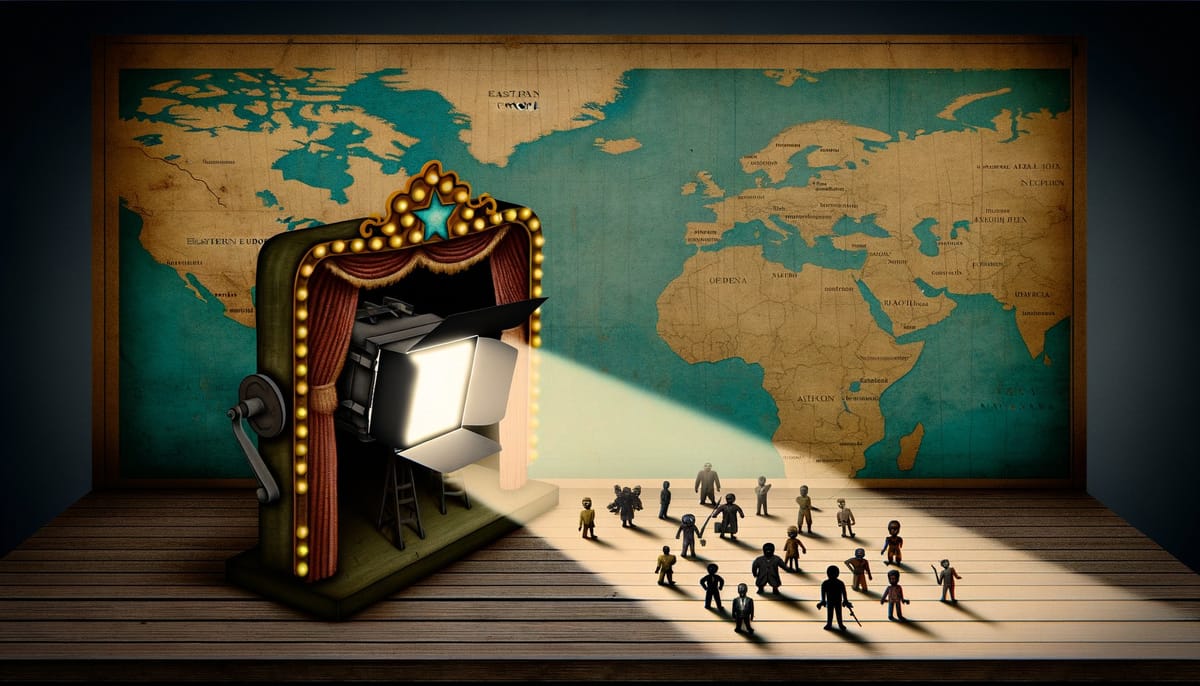
The Hierarchy of the Ungrievable
Sudan burns while the world looks elsewhere. Since April 2023, a war between two generals has killed at least 61,000 people in Khartoum state alone—and that figure, from the London School of Hygiene and Tropical Medicine, counts only one region of a vast country. The true toll likely exceeds 150,000. More than 12 million have fled their homes. Famine stalks multiple states, with 755,000 people in the most catastrophic phase of food insecurity. The United Nations calls it the world’s largest humanitarian crisis.
The Western response? Sanctions that don’t bite. Mediation that doesn’t convene. Aid that doesn’t arrive. No peacekeepers. No no-fly zone. No serious diplomatic pressure on the conflict’s external patrons. The contrast with Ukraine—where Western nations mobilized $175 billion in support within eighteen months—is not merely stark. It is diagnostic.
What Sudan reveals is not Western hypocrisy, though hypocrisy exists. It reveals something more structural: the emergence of a new hierarchy of geopolitical concern, one that operates according to rules rarely spoken aloud but rigorously applied.
The Invisible War
Understanding Sudan’s invisibility requires understanding what makes conflicts visible in the first place. Three conditions must align: strategic relevance to major powers, media saturation that sustains public attention, and a narrative frame that makes intervention seem both morally obligatory and practically feasible. Sudan fails all three tests.
Start with strategy. Ukraine matters to Western capitals because Russia’s invasion threatens the European security order that has underwritten American hegemony since 1945. Gaza commands attention because it sits at the intersection of American domestic politics, Gulf state calculations, and Iranian regional ambitions. Taiwan looms because semiconductor supply chains and Pacific primacy hang in the balance.
Sudan offers none of these hooks. It produces no critical minerals the West cannot source elsewhere. Its Red Sea coastline matters, but the Houthi disruption of shipping routes has concentrated Western naval attention on Yemen, not Sudan. Its collapse generates refugees, but they flow toward Egypt and Chad, not Europe—at least not yet. The strategic calculus yields a simple answer: Sudan’s fate does not alter the balance of power.
Then there is visibility. Ukraine became what one analyst called “the first TikTok war,” with high-definition combat footage flooding social media platforms optimized for engagement. Ukrainian civilians spoke languages Western audiences could understand or that AI could translate with 74% accuracy. Journalists embedded with relative safety. The visual grammar of the conflict—drone strikes, urban rubble, defiant civilians—matched templates Western viewers recognized from video games and action films.
Sudan offers the opposite. The Rapid Support Forces seized telecommunications infrastructure in the war’s opening days, capturing Sudan TV and the Sudatel Data Centre. This was not collateral damage but strategic architecture: disabling civilian communication while eliminating the technical means for real-time atrocity documentation. Internet blackouts persist across swathes of the country. According to human rights lawyers, the blackouts serve to hide coup atrocities from the world. When connectivity exists, machine translation for Sudanese Arabic achieves roughly 45% accuracy—a 29-percentage-point gap from European languages that compounds into algorithmic obscurity. Content that cannot be accurately translated cannot be amplified. Conflicts that cannot be amplified cannot sustain attention.
The third failure is narrative. Western publics can process Ukraine as democracy versus autocracy, plucky underdog versus imperial aggressor. The frame is clean. Sudan offers no such clarity. Two military factions—the Sudanese Armed Forces under General Abdel Fattah al-Burhan and the Rapid Support Forces under Mohamed Hamdan Dagalo, known as Hemedti—battle for control of a state both helped destroy. Neither represents democracy. Neither commands sympathy. The conflict resists the moral binaries that mobilize Western opinion.
These three failures compound. Low strategic relevance means low political investment. Low visibility means low public pressure. Low narrative clarity means low moral urgency. The result is a feedback loop of neglect.
The Architecture of Inaction
The international system possesses tools for responding to mass atrocities. It has chosen not to use them.
The Responsibility to Protect doctrine, adopted by the UN General Assembly in 2005, was designed precisely for situations like Sudan. When states manifestly fail to protect their populations from genocide, war crimes, ethnic cleansing, and crimes against humanity, the international community bears responsibility to act—up to and including military intervention authorized by the Security Council.
R2P is functionally dead. Libya killed it.
In 2011, the Security Council authorized intervention to protect Libyan civilians from Muammar Gaddafi’s forces. NATO interpreted “all necessary measures” to include regime change. Gaddafi fell. Libya collapsed into chaos that persists today. Russia and China, feeling deceived, vowed never again to permit such resolutions. The intervention that was “hailed as a model” simultaneously generated permanent structural barriers to future R2P invocations.
Russia’s veto power now operates as a standing prohibition. In 2024, Moscow blocked Security Council action on Sudan, demonstrating that R2P’s death was not caused by its 2013 Syria failure but was structurally predetermined by the veto itself. The veto transforms R2P from a universal humanitarian principle into a discretionary tool available only when great powers consent—which means, in practice, almost never.
Beyond the Security Council, Western governments possess unilateral tools. The United States issued Executive Order 14098 in May 2023, authorizing sanctions against those destabilizing Sudan. The European Union established its own sanctions framework in October 2023. Congress passed the Sudan Accountability Act, requiring regular reports on whether atrocities constitute genocide or war crimes.
These measures share a common feature: they impose costs without changing behavior. Sanctions against RSF-linked entities have not stopped the fighting. They have rerouted financial flows through jurisdictions specializing in opacity. The UAE has emerged as the critical node, importing Sudanese gold that increased 70% during active civil war—from 17 tonnes in 2023 to 29 tonnes directly, plus an estimated 81 tonnes routed through neighboring countries in 2024. Dubai’s corporate registration infrastructure functions as opacity-as-a-service, systematically degrading Western sanctions enforcement.
The Biden administration issued a genocide determination for Sudan on January 7, 2025—days before leaving office. The timing reveals genocide determination as an exit ritual: a moral declaration made when it can no longer obligate action. UAE arms transfers to the RSF continued throughout the conflict. The determination changed nothing.
The Gulf Dimension
To understand why Western pressure fails, follow the gold.
Hemedti’s RSF controls Sudan’s artisanal mining sector, which produces gold worth billions annually. In 2017, Hemedti seized the Jebel Amer gold mine, becoming “Sudan’s biggest gold trader overnight.” He built a network of over fifty companies generating revenue streams that made formal state control economically irrational. When war erupted, the RSF seized $150 million in gold bars from Khartoum’s national refinery.
This gold flows to the UAE, where it enters the global financial system laundered of its origins. Investigative reporting has mapped the RSF’s corporate network in the Emirates, documenting how conflict gold becomes legitimate commodity. The UAE simultaneously hosts humanitarian conferences on Sudan while arming and financing one of its belligerents. Western diplomats have invited the UAE to participate in ceasefire talks as an “observer”—a structural choice to include the primary RSF backer rather than confront them.
The UAE’s interest is straightforward. Gold provides a hedge against dollar-denominated assets. Sudan provides a client. The RSF provides plausible deniability. Western nations, dependent on Gulf capital and strategic partnerships, decline to force the issue. The Biden administration’s special envoy for Sudan reportedly clashed with colleagues over whether to pressure the UAE more aggressively. The pressure never materialized.
Russia maintains its own stake. Wagner Group—now reorganized under different branding—established gold mining operations in Sudan before 2022, creating sanctions-proof commodity access that became critical after Western financial isolation. A Russian naval base agreement at Port Sudan, though not yet operational, signals Moscow’s long-term interest in Red Sea access. Analysts note that this positions Russia to project power into a critical maritime chokepoint.
Wagner’s presence transforms Sudan from a potential intervention target into a guaranteed escalation zone. Unlike Ukraine, where Russia invaded, or Taiwan, where Russia has no assets, Sudan presents a scenario where Western military action would directly confront Russian economic and strategic interests in a theater Moscow has already invested in defending.
The Intervention That Won’t Come
Western military planners, if asked to design a Sudan intervention, would face daunting parameters. The country spans 780 by 860 miles of terrain ranging from desert to savanna. The conflict is urbanized, with Khartoum’s metropolitan area of seven million people serving as the primary battleground. Neither the SAF nor RSF can achieve decisive concentration of force—a stalemate that would persist even with external intervention.
What would “success” look like? Protecting civilians would require forces capable of controlling territory across multiple cities against two hostile armies, neither of which would welcome foreign troops. Enforcing a ceasefire would require leverage over both parties and their external patrons—leverage the West has declined to develop. Humanitarian access would require security corridors through active combat zones.
The UN has estimated that a meaningful peacekeeping force would require over 10,000 troops. But UN planning models, as research from Mali demonstrates, systematically exclude the temporal dimension of legitimacy erosion. International interventions that begin with local acceptance often end with local resentment. The African Union’s experience in Somalia and the French experience in the Sahel offer cautionary templates.
More fundamentally, Western publics and politicians have lost appetite for military intervention in Africa. Iraq, Afghanistan, Libya, Mali—each failure compounds the next, creating what might be called a hyperactive immune response. The initial intervention triggers a cascade of secondary crises that sensitize the system against future action. Western foreign ministries now treat African conflicts as problems to be managed, not solved.
The honest assessment: no Western government will deploy significant military force to Sudan. The strategic stakes are too low, the operational challenges too high, the political risks too certain, and the lessons of past interventions too fresh.
What the Hierarchy Reveals
Sudan’s abandonment is not an aberration. It is the system working as designed.
The post-Cold War promise of universal human rights and humanitarian intervention was always aspirational rather than operational. When Western interests aligned with humanitarian imperatives—Kosovo, perhaps Libya initially—intervention occurred. When they diverged—Rwanda, Syria, now Sudan—intervention did not. The Responsibility to Protect was a doctrine for a unipolar moment that has passed.
What has emerged is a three-tier hierarchy of geopolitical concern. The first tier comprises conflicts that threaten the core interests of major powers: Ukraine, Taiwan, potentially the South China Sea. These receive unlimited attention and resources. The second tier comprises conflicts that affect secondary interests or generate significant domestic political pressure: Gaza, where American electoral politics and Gulf relationships intersect. These receive inconsistent attention calibrated to political cycles.
The third tier comprises conflicts that threaten no major power interests and generate no sustained domestic pressure: Sudan, Ethiopia, Myanmar, the Democratic Republic of Congo. These receive rhetorical concern, modest humanitarian aid, and diplomatic initiatives designed to demonstrate activity rather than achieve outcomes. The implicit message is clear: some lives matter less.
This hierarchy operates through mechanisms that obscure its logic. Bureaucratic processes—sanctions designations, special envoy appointments, UN resolutions—create the appearance of response without the substance. The terminology of “complex emergency” transforms what should be a moment demanding moral choice into a technical category requiring expert management. The language itself defers decision.
Western governments do not announce that Sudanese lives are worth less than Ukrainian lives. They do not need to. The allocation of resources announces it for them.
The Path Not Taken
Could different choices produce different outcomes? Perhaps.
Serious pressure on the UAE would require Western governments to prioritize Sudanese civilians over Gulf partnerships. This would mean conditioning arms sales, financial access, and diplomatic support on verifiable cessation of RSF backing. It would mean treating Emirati gold imports as sanctions evasion rather than commerce. It would mean accepting that Abu Dhabi might respond by tilting further toward China. No Western government has shown willingness to pay this price.
Sustained diplomatic engagement would require treating Sudan as a first-tier priority rather than a third-tier afterthought. The Wilson Center has documented what has been missing from ceasefire talks: high-level sustained attention, credible pressure on external patrons, and realistic frameworks that acknowledge neither party will accept unconditional surrender. The Jeddah process, led by Saudi Arabia and the United States, has produced multiple failed ceasefires. It has not produced peace.
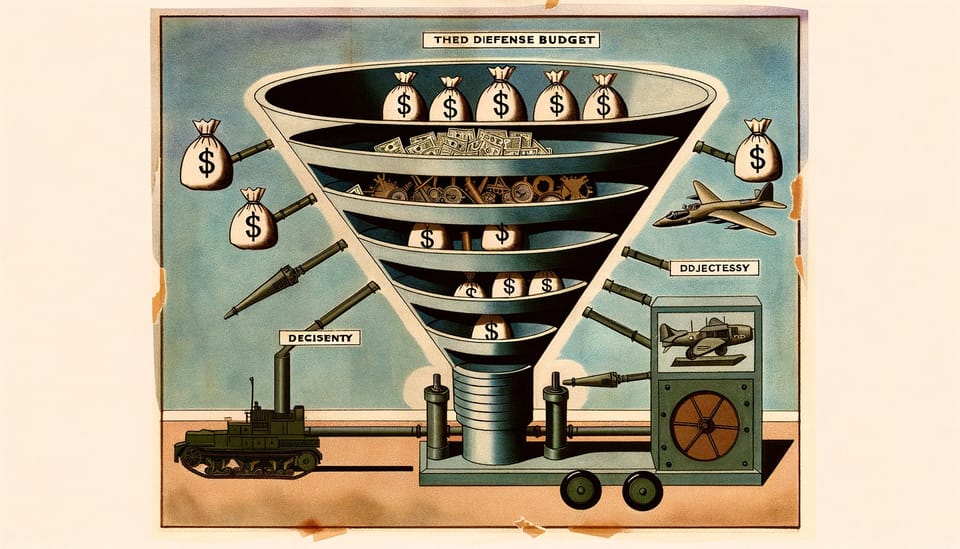
Humanitarian access could be expanded through creative logistics—airdrops, cross-border operations from Chad and South Sudan, negotiations with local commanders who control specific corridors. The UN and NGOs have frameworks for operating in contested environments. What they lack is funding: global humanitarian aid fell 9.3% in real terms in 2024, and the proposed 2026 US budget would cut it by 73%. Military budgets expanded after Ukraine and became politically locked in; humanitarian budgets, lacking domestic constituencies, became the residual variable.
The African Union possesses legal authority that Western institutions lack. Article 4(h) of its Constitutive Act permits intervention without state consent in cases of genocide, war crimes, and crimes against humanity—a more expansive framework than R2P. But the AU lacks capacity to act on its authority. Its Peace Fund covers only 25% of deployment costs, creating structural dependency on Western financing that Western powers use to block precisely the missions that would exceed AU self-funding capacity.
The most likely scenario is continuation: a grinding war that neither side can win, punctuated by humanitarian catastrophe, documented by the few journalists who manage access, and addressed by international actors through mechanisms designed to manage rather than resolve. Sudan will remain invisible until it generates consequences—refugee flows, terrorist safe havens, regional destabilization—that force attention. By then, the damage will be irreversible.
Frequently Asked Questions
Q: Why hasn’t the UN sent peacekeepers to Sudan? A: The UN terminated its Sudan mission (UNITAMS) in December 2023, and Russia has vetoed Security Council resolutions that might authorize new peacekeeping operations. Without great power consensus, the UN lacks both mandate and capacity to deploy.
Q: What is the UAE’s role in Sudan’s war? A: The UAE has provided financial support, weapons, and a gold-laundering infrastructure to the Rapid Support Forces. Sudanese gold imports to the UAE increased 70% during active conflict, financing continued RSF operations despite Western sanctions.
Q: Could the US military intervene in Sudan? A: Theoretically yes, but practically no. Sudan’s size, urban combat environment, and the presence of Russian-linked forces make intervention operationally complex and politically unpalatable. No serious proposal for US military action has emerged from any quarter of the policy establishment.
Q: What would it take to end the war? A: A negotiated settlement would require sustained pressure on both parties’ external backers—the UAE and others supporting the RSF, Egypt and others supporting the SAF—combined with credible security guarantees and power-sharing arrangements. None of these conditions currently exist.
The Quiet Sorting
The international system has always sorted conflicts by importance. What has changed is the explicitness of the sorting and the collapse of pretense that humanitarian need alone commands response.
Sudan tests whether the post-1945 architecture of human rights and humanitarian protection retains any meaning beyond rhetoric. The evidence suggests it does not—or rather, that it retains meaning only when aligned with strategic interest. The Universal Declaration of Human Rights proclaimed that all human beings are born free and equal in dignity. The allocation of international attention proclaims otherwise.
This is not a call for intervention. Military action in Sudan would be costly, risky, and uncertain of success. It is a call for honesty. Western governments should acknowledge that they have chosen not to prioritize Sudan, that this choice reflects strategic calculation rather than humanitarian assessment, and that the language of universal human rights poorly describes a world in which some humans matter more than others.
The Sudanese people already know this. They have known it since Darfur, since the international community’s failure to prevent genocide in the 2000s, since the ICC indictment of Omar al-Bashir that went unenforced for a decade. What Sudan reveals is not new. It is merely newly undeniable.
Somewhere in Khartoum, in El Fasher, in the camps of North Darfur, people are dying in a war the world has decided not to see. The hierarchy of concern has rendered its verdict. The rest is silence.
Sources & Further Reading
The analysis in this article draws on research and reporting from:
- Sudan | Emergency Telecommunications Cluster - Documentation of communications infrastructure collapse
- Wilson Center analysis of Sudan ceasefire talks - Assessment of diplomatic process failures
- SWISSAID investigation on UAE gold imports - Tracking conflict gold flows
- Evidencity mapping of RSF corporate networks - Documentation of UAE-based RSF entities
- Human rights lawyer on internet blackouts - Analysis of deliberate communications disruption
- IPC famine classification for Sudan - Authoritative food security assessment
- White House Executive Order 14098 - US sanctions framework
- Le Monde diplomatique on smuggled gold - Investigation of gold financing war