The Cave and the Crown: What Made Xi Jinping
The most powerful Chinese leader since Mao was forged not by privilege but by persecution. His seven years in a cave village during the Cultural Revolution—and the destruction of his family—created a ruler who fears the Party's weakness more than its strength.
The Cave and the Crown
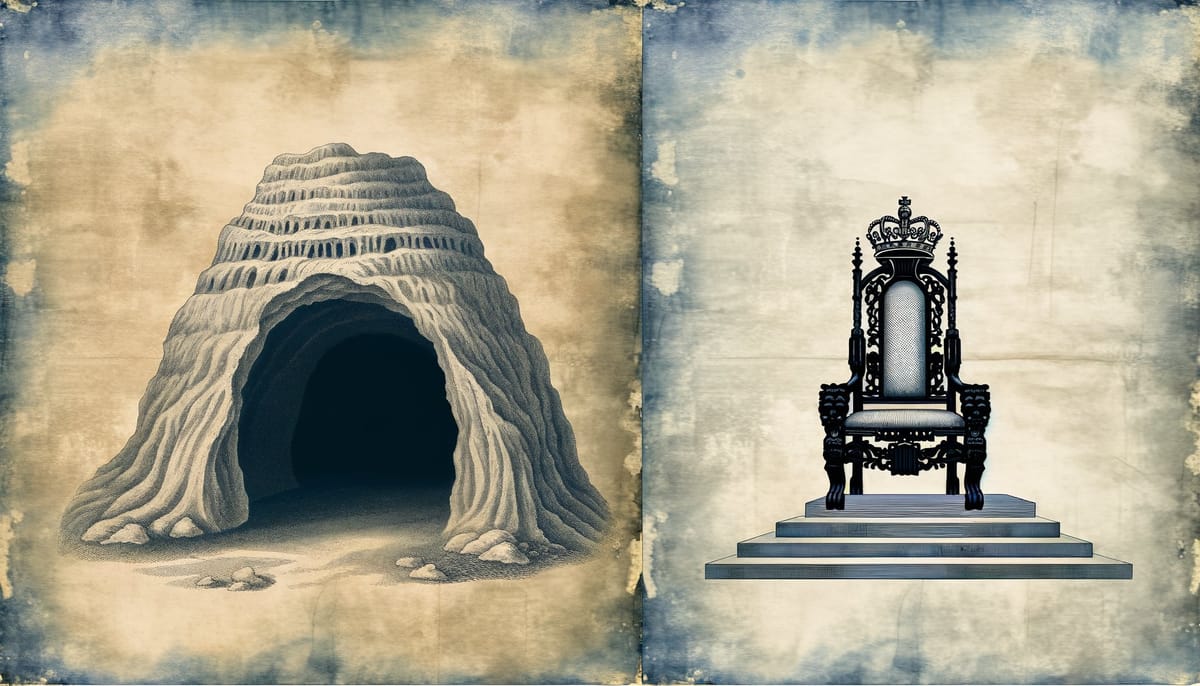
In 1969, a fifteen-year-old boy arrived in Liangjiahe, a village so poor that peasants lived in caves carved into loess cliffs. He carried a single suitcase. His father, once a revolutionary hero, had been paraded through Beijing streets with a placard around his neck. His mother had been forced to denounce her husband publicly. The boy himself had been labeled a “black gang” element—a class enemy at an age when most children worry about school exams.
Seven years later, Xi Jinping left that village. He had learned to carry two hundred pounds of wheat up mountain paths. He had eaten the same coarse grain as peasants who had never seen a city. He had applied to join the Communist Party ten times before being accepted. The cave dweller would become the most powerful Chinese leader since Mao Zedong.
Understanding Xi Jinping requires grasping a paradox: the man who has concentrated more power than any Chinese leader in decades was forged not by privilege but by persecution. His formative years taught him that the Party could destroy his family, and that only the Party could restore it. This dual consciousness—fear of the system and faith in it—explains decisions that otherwise seem contradictory.
The Princeling Who Wasn’t
Xi belongs to China’s “princeling” class—descendants of revolutionary veterans who fought alongside Mao. His father, Xi Zhongxun, was a guerrilla commander at fifteen and a senior leader by his thirties. The family enjoyed the privileges of Communist aristocracy: access, connections, a Beijing compound. Young Xi attended elite schools with the children of other revolutionary families.
But princelings are not a monolith. They divide into factions, compete for resources, and—crucially—experienced the Cultural Revolution differently depending on where their fathers stood when Mao unleashed chaos. Xi Zhongxun fell early. In 1962, he was purged for allegedly supporting a novel that criticized Mao. He spent sixteen years in political limbo, much of it in prison or under house arrest.
This timing matters enormously. Xi Jinping was nine when his father fell. He was old enough to understand what was happening but too young to protect himself or his family. He watched his mother forced to denounce his father at a public struggle session. He saw his half-sister die—officially by suicide, though the circumstances remain murky. He was beaten by Red Guards and briefly imprisoned himself.
The lesson was brutal and clear: in Chinese politics, there is no safety in virtue. Xi Zhongxun had been a loyal revolutionary, a man who had risked his life for the Party. It saved him nothing. His son learned that survival requires not just loyalty but power—the kind of power that makes you the one holding the struggle session, not the one being struggled against.
The Education of Loess
Liangjiahe sits in Shaanxi province, in terrain so eroded that villages nestle into cliff faces. When Xi arrived as a “sent-down youth” in 1969, the village had no electricity, no running water, and a population of roughly three hundred people who survived on millet and corn. The cave dwelling he shared with other sent-down youth was infested with fleas so numerous that, according to his own later accounts, his skin became desensitized to their bites.
Most sent-down youth despised the experience. They were urban teenagers forced into manual labor by a political movement that had already destroyed their families. Many became cynical, treating their rural exile as a prison sentence to be endured until they could return to the cities.
Xi took a different path. He applied repeatedly to join the Communist Party—and was rejected each time because of his father’s political status. He applied again. On the tenth attempt, he was accepted. He became a village Party secretary, organizing agricultural projects and building one of the village’s first biogas digestting systems. When he finally left in 1975 to attend Tsinghua University, villagers reportedly walked miles to see him off.
What did Liangjiahe teach him? Three things, primarily.
First, that the Chinese peasantry is not an abstraction. Xi spent seven years eating with them, working alongside them, sleeping in their caves. This gave him something most Chinese leaders lack: genuine familiarity with rural poverty. When he later spoke of “poverty alleviation” as a signature policy, he was drawing on lived experience, not briefing papers.
Second, that persistence overcomes obstacles. Ten applications to join the Party. Ten. Most people would have given up after three. Xi’s willingness to be rejected repeatedly—and to keep trying—reveals a personality trait that would define his political career: strategic patience combined with absolute determination.
Third, that the Party is the only path to redemption. Xi could have emerged from Liangjiahe bitter, alienated, convinced that the system that destroyed his family deserved destruction in return. Instead, he emerged more committed to the Party than ever. The institution that had persecuted his father was also the institution that had finally accepted him. It was both the disease and the cure.
The Long March Through Provinces
Between 1975 and 2007, Xi climbed the Chinese political ladder with a methodical patience that distinguished him from flashier rivals. He served in Hebei, Fujian, Zhejiang, and Shanghai—a portfolio that exposed him to every major challenge facing Chinese governance.
In Fujian, he spent seventeen years in various positions, including overseeing economic zones that attracted Taiwanese investment. He learned how to work with foreign capital without being captured by it. He developed relationships with Taiwanese businessmen that would later inform his approach to cross-strait relations. He saw how economic opening could strengthen the Party’s legitimacy rather than undermine it.
In Zhejiang, he governed one of China’s most dynamic provincial economies. The “Zhejiang model” emphasized private entrepreneurship, export manufacturing, and a relatively light regulatory touch. Xi didn’t create this model, but he presided over its success. He saw how market forces could generate wealth while the Party maintained political control.
These experiences shaped his economic thinking in ways that confuse Western observers. Xi is neither a Maoist who wants to abolish markets nor a liberal reformer who wants to unleash them. He believes the Party should direct economic development toward national goals while allowing private enterprise to generate the wealth that makes those goals achievable. The market is a tool, not a master.
His provincial years also taught him about corruption. Every level of Chinese government he passed through was saturated with it. Officials took bribes, sold appointments, and enriched their families through insider deals. Xi saw how corruption weakened the Party’s legitimacy and created networks of mutual protection that made reform impossible.
The question was what to do about it. Previous leaders had launched anti-corruption campaigns that fizzled into selective prosecutions of political enemies. Xi would try something different.
The Ideology of Survival
When Xi became General Secretary in 2012, he inherited a Party that many observers believed was in terminal decline. Corruption had reached epidemic levels. The economy was slowing after decades of double-digit growth. Factional conflicts had paralyzed decision-making. Bo Xilai, a charismatic princeling, had just been purged after his wife murdered a British businessman—a scandal that exposed the rot at the system’s core.
Xi’s response was comprehensive and ruthless. He launched an anti-corruption campaign that has prosecuted over a million officials, including dozens of generals and several members of the Politburo Standing Committee. He created new supervisory organs with constitutional authority to investigate anyone exercising public power. He eliminated term limits, ensuring he could rule indefinitely.
Western analysts often describe Xi as a power-hungry autocrat who crushed collective leadership to aggrandize himself. This interpretation captures something real but misses the deeper logic.
Xi believes the Soviet Union collapsed because the Communist Party lost its will to power. Gorbachev’s reforms, in this reading, didn’t fail because they went too far but because they revealed a Party that no longer believed in itself. When challenged, Soviet leaders capitulated. They allowed the system to dissolve rather than fight for it.
Xi is determined not to repeat that mistake. His concentration of power is not merely personal ambition—though ambition certainly plays a role. It reflects a theory of institutional survival: that the Party can only endure if it is led by a strong core who can impose discipline, eliminate rivals, and project unified purpose.
This explains the apparent contradiction between Xi’s anti-corruption campaign and his own family’s wealth. (Various investigations have documented extensive holdings by Xi’s extended family, though Xi himself maintains a modest public image.) The campaign is not about eliminating corruption as such. It is about ensuring that corruption serves the Party’s interests rather than undermining them. Officials who steal while remaining loyal may survive. Officials who build independent power bases will not.
The Thought That Binds
In 2017, “Xi Jinping Thought on Socialism with Chinese Characteristics for a New Era” was enshrined in the Communist Party’s constitution. A year later, it was written into the state constitution as well. Xi became only the third leader—after Mao and Deng—to have his ideology canonized while still in power.
What does Xi Jinping Thought actually contain? The doctrine sprawls across hundreds of pages of speeches, directives, and theoretical elaborations. But its core can be summarized in a few propositions.
The Party leads everything. Not just politics—everything. The economy, the military, culture, education, civil society. There is no sphere of Chinese life that should operate independently of Party guidance.
China is engaged in a struggle for national rejuvenation. The “century of humiliation” that began with the Opium Wars and ended with the Communist victory in 1949 left wounds that are not yet healed. China’s rise is not merely economic development but historical vindication.
The West is in decline and cannot be trusted. Liberal democracy is a failed model that produces chaos, inequality, and weakness. China offers an alternative path that other developing nations should emulate.
Security is comprehensive. Xi has expanded the concept of national security to encompass sixteen distinct domains, including political security, economic security, cultural security, and ecological security. Everything is potentially a security issue, which means everything requires Party vigilance.
These beliefs are not merely rhetorical. They drive policy. The crackdown on private technology companies reflects the conviction that no economic actor should accumulate power that rivals the Party’s. The Belt and Road Initiative reflects the ambition to reshape global infrastructure around Chinese interests. The militarization of the South China Sea reflects the determination to establish regional hegemony as a foundation for global influence.
The Taiwan Obsession
No issue reveals Xi’s worldview more clearly than Taiwan.
The island has been governed separately from mainland China since 1949, when Chiang Kai-shek’s Nationalists fled there after losing the civil war. For decades, both sides maintained the fiction that they represented the legitimate government of all China. Taiwan democratized in the 1990s and has developed a distinct identity that increasingly rejects any notion of unification with the mainland.
Xi has made “reunification” a central goal of his leadership. He has stated that the Taiwan issue “cannot be passed down generation after generation.” He has overseen a massive military buildup clearly designed to give China the capability to invade the island. He has intensified pressure on Taiwan’s international space, poaching diplomatic allies and excluding it from international organizations.
Why does Taiwan matter so much?
The strategic arguments are real. Taiwan sits astride critical shipping lanes. Its semiconductor industry produces the advanced chips that power the global economy. An independent Taiwan aligned with the United States represents a permanent American presence on China’s doorstep.
But the emotional logic runs deeper. For Xi, Taiwan represents the unfinished business of the Chinese revolution. His father’s generation fought a civil war to unify China under Communist rule. They succeeded everywhere except Taiwan. Completing that unification would vindicate their sacrifice and establish Xi as the leader who finally closed the circle.
There is also a personal dimension that analysts rarely discuss. Xi’s formative experience was watching the Party destroy his family over an ideological deviation—support for a novel that allegedly criticized Mao. He learned that the Party’s legitimacy depends on ideological coherence, on the appearance of unified purpose. Taiwan’s existence as a successful Chinese democracy represents an ideological challenge that cannot be tolerated indefinitely. It suggests that Chinese people can thrive without Communist rule.
What the Caves Taught
The fifteen-year-old who arrived in Liangjiahe in 1969 and the seventy-one-year-old who rules China today are connected by a continuous thread of experience. The thread runs through persecution and redemption, through caves and palaces, through rejection and absolute power.
Xi learned in the Cultural Revolution that the Party could destroy anyone. He learned in Liangjiahe that the Party was nonetheless the only path to restoration. He learned in the provinces that China’s problems—corruption, inequality, environmental degradation—were severe but manageable if the Party maintained discipline. He learned from the Soviet collapse that discipline required strong leadership, not collective muddle.
These lessons produced a leader who combines genuine nationalism with ruthless pragmatism, who believes in the Party’s mission while understanding its fragility, who pursues economic development while insisting on political control.
Western observers often ask whether Xi is a reformer or a hardliner, a pragmatist or an ideologue. The question misses the point. Xi is a survivor who has concluded that the Party’s survival requires both reform and repression, both economic opening and political closure. He does not see these as contradictions because his formative experience taught him that survival requires whatever works.
The cave dweller became an emperor. But he never forgot the caves.
Frequently Asked Questions
Q: Why did Xi Jinping remove presidential term limits in 2018? A: Xi views term limits as a structural weakness that enabled the factional competition and policy drift he believes nearly destroyed the Party. The 2018 constitutional amendment, passed with only two opposing votes out of nearly 3,000, allows him to rule indefinitely and signals that the post-Mao era of collective leadership has ended.
Q: What is “Xi Jinping Thought” and why does it matter? A: Xi Jinping Thought is the official ideology enshrined in both Party and state constitutions, making Xi only the third leader after Mao and Deng to receive such canonization while alive. It emphasizes absolute Party leadership, national rejuvenation, and comprehensive security—and its constitutional status means challenging Xi’s policies means challenging the constitution itself.
Q: How did Xi’s experience during the Cultural Revolution shape his leadership? A: The Cultural Revolution taught Xi that political survival requires power, not just loyalty. Watching his father—a revolutionary hero—destroyed by political campaigns convinced Xi that the Party’s internal discipline mechanisms must be controlled from the top. His anti-corruption campaign and power consolidation reflect this lesson.
Q: What does Xi Jinping want for China’s future? A: Xi seeks to complete what he calls “national rejuvenation” by mid-century: a China that is economically dominant, militarily powerful, technologically self-sufficient, and reunified with Taiwan. He believes this requires sustained Party control and resistance to Western liberal influence, which he views as a source of chaos rather than strength.
The Weight of History
Xi Jinping will turn seventy-two in 2025. He has no obvious successor. The system he has built depends on his personal authority to a degree unprecedented since Mao. When he eventually leaves power—whether through death, incapacity, or some unforeseeable political crisis—China will face a succession challenge for which it has made no institutional preparation.
This is the final paradox of Xi’s leadership. The man who consolidated power to save the Party from weakness has created a new weakness: a system that cannot function without him. The caves of Liangjiahe taught him that survival requires strength. They did not teach him how to build institutions that outlast their builders.
The Party that destroyed his father and then accepted him, that sent him to the countryside and then elevated him to supreme power, now depends entirely on his judgment. He has made himself indispensable. Whether that saves the Party or dooms it remains the central question of Chinese politics.
In Liangjiahe, the cave where Xi once lived has become a pilgrimage site. Officials visit to demonstrate loyalty. Tourists come to understand the leader. The village has electricity now, and running water, and a museum dedicated to Xi’s years there.
The boy who arrived with one suitcase left his mark. The question is what mark he will leave on China.
Sources & Further Reading
The analysis in this article draws on research and reporting from:
- Anti-corruption campaign under Xi Jinping - Wikipedia - comprehensive overview of the scale and targets of Xi’s signature domestic initiative
- An Interview with Xi, Long Before He Was China’s Leader - New York Times - rare 2004 interview revealing Xi’s perspective on his Liangjiahe years
- China’s Xi Allowed to Remain ‘President for Life’ - New York Times - reporting on the 2018 constitutional amendments
- Xi Jinping Thought enshrined in Party constitution - New York Times - analysis of the ideological canonization
- Capitalism with Zhejiang Characteristics - Cambridge University Press - academic study of the provincial economic model Xi governed
- Factional-Ideological Conflicts in Chinese Politics - JSTOR - scholarly analysis of elite competition within the CCP
- How China’s Political Clans Might Determine Its Future - The Economist - examination of princeling networks and succession dynamics