
The Amber of American Strategy: What the 2025 NDAA Reveals About American Strategy
The 2025 National Defense Authorization Act was shaped by Biden but will be implemented by Trump. Its $895 billion framework reveals what American strategic culture has decided to preserve regardless of who holds power—and what remains dangerously unresolved.
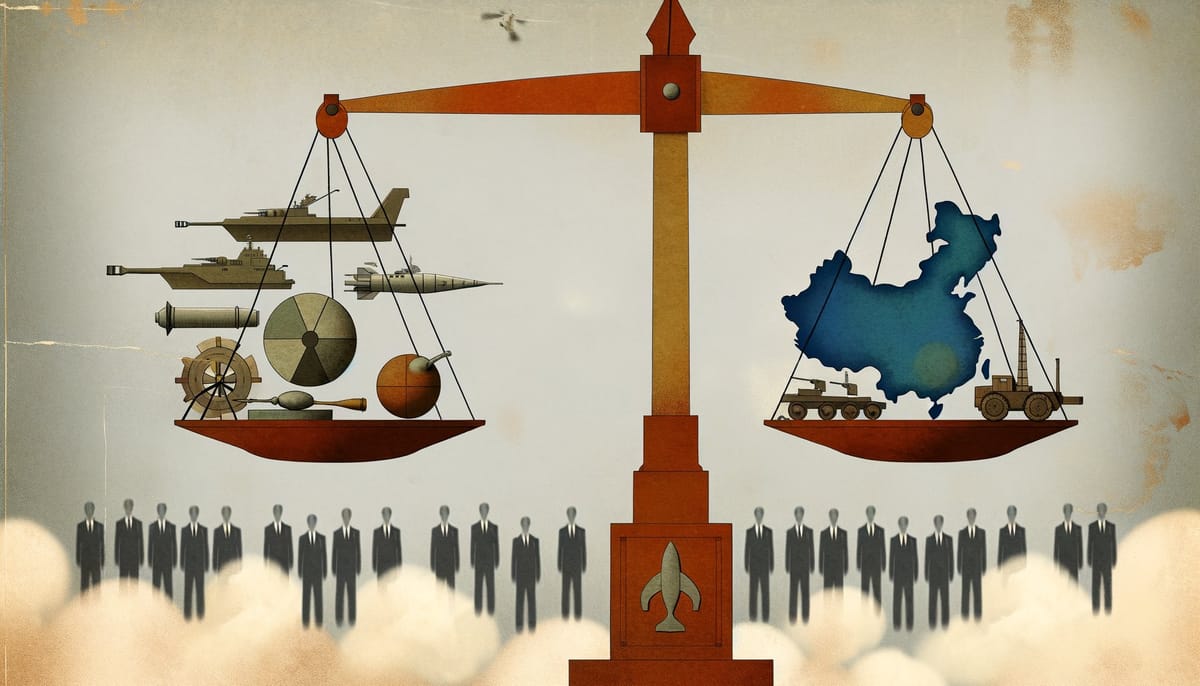
The Amber of American Strategy
The 2025 National Defense Authorization Act arrived on President Biden’s desk like a time capsule addressed to someone else. Signed on December 23, 2024, it authorizes $895.2 billion in national defense spending—but the administration that shaped it will not implement it. Donald Trump inherits a legislative framework that simultaneously constrains his ambitions and reveals bipartisan consensus about what America fears most.
This temporal dislocation matters. The NDAA is not a Trump document. It is a Congressional document, forged through compromise between a Democratic White House and a Republican-controlled House, that Trump must now inhabit. Read correctly, it reveals less about what the second Trump administration wants than about what American strategic culture has decided it cannot do without—regardless of who occupies the Oval Office.
The answer is striking in its clarity: China dominates everything.
The China Consensus
Strip away the legislative boilerplate and the 2025 NDAA reads like a 1,600-page anxiety attack about the Indo-Pacific. The Pacific Deterrence Initiative receives $9.9 billion. Taiwan’s defense cooperation expands through new authorities. Indo-Pacific allies—Japan, Australia, the Philippines—receive priority access to weapons systems. The message is unmistakable: whatever else divides Washington, China unites it.
This consensus runs deeper than headline numbers suggest. The NDAA mandates assessments of Chinese influence in Panama Canal operations, requires reporting on Beijing’s Belt and Road infrastructure adjacent to American interests, and expands authorities for countering Chinese technology acquisition. These provisions passed with overwhelming bipartisan support. They will survive any Trump administration skepticism about alliance commitments because they address a threat both parties have decided is existential.
The unanimity is historically unusual. During the Cold War, strategic consensus often fractured along partisan lines—détente versus confrontation, arms control versus buildup. Today’s China consensus resembles something closer to the immediate post-Pearl Harbor moment: a shared recognition that a peer competitor has emerged, and that American primacy requires active defense.
But consensus on the threat does not mean consensus on the response. Here the NDAA reveals its first strategic tension.
The Alliance Paradox
Trump’s 2024 campaign promised to demand greater burden-sharing from allies. His first administration withdrew from multilateral agreements, questioned NATO’s value, and treated alliance relationships as protection rackets requiring payment. The 2025 NDAA, by contrast, doubles down on alliance architecture.
Section after section strengthens security cooperation authorities. Ukraine receives continued support through the Ukraine Security Assistance Initiative, with new oversight mechanisms but no fundamental reduction in commitment. NATO interoperability requirements expand. The Indo-Pacific partnership framework deepens through enhanced training programs and technology sharing.
Congress has effectively pre-committed American resources to alliance maintenance regardless of executive branch preferences. The NDAA’s $849.9 billion for the Department of Defense includes embedded obligations—multiyear procurement contracts, training pipeline commitments, infrastructure investments in allied territory—that cannot be unwound without legislative action.
This creates a curious dynamic. Trump enters office promising transactional relationships with allies while inheriting statutory commitments to institutional ones. The NDAA functions as a Congressional constraint on presidential discretion, encoding alliance obligations into law rather than leaving them to executive preference.
The constraint is real but not absolute. Trump retains significant authority over how security assistance is delivered, which exercises are prioritized, and what diplomatic signals accompany military cooperation. He can hollow out alliance commitments without formally abandoning them. The NDAA provides the skeleton; the administration controls the muscle.
The Industrial Awakening
If China consensus and alliance architecture represent continuity, the NDAA’s industrial base provisions signal something new: bipartisan recognition that America cannot fight the war its strategy envisions.
The numbers are damning. American artillery shell production before the Ukraine conflict stood at 240,000 rounds annually—roughly forty days of Ukrainian consumption at peak rates. Precision munitions stockpiles have been depleted by transfers to Kyiv. Shipbuilding capacity has atrophied to the point where the Navy cannot maintain its current fleet, let alone expand to meet Indo-Pacific requirements.
The 2025 NDAA responds with the most aggressive industrial policy in defense legislation since the Cold War. Domestic nonavailability determinations must now be publicly catalogued and shared across agencies. Supply chain resilience requirements expand. Multiyear procurement authorities—which allow manufacturers to make capital investments against guaranteed future orders—receive new emphasis.
These provisions align with Trump’s economic nationalism but did not originate with it. They reflect a Congressional awakening to industrial fragility that predates the second Trump administration and will outlast it. The defense industrial base has become a bipartisan concern because the alternative—strategic insolvency—is unacceptable to both parties.
Yet the NDAA’s industrial provisions reveal a deeper tension. Building domestic production capacity requires exactly the kind of long-term planning that American political cycles discourage. Manufacturers need decade-long demand signals to justify factory construction. Workers need years of training to acquire specialized skills. Supply chains need consistent policy to relocalize.
The NDAA provides two-to-five-year authorization windows. The gap between strategic requirement and political attention span remains unbridged.
The Technology Race
Buried within the NDAA’s procurement tables lies a quiet revolution in how America thinks about military advantage. The legislation prioritizes five technology domains: artificial intelligence, hypersonic weapons, quantum computing, space systems, and biotechnology. Each receives expanded research funding, accelerated acquisition authorities, and new organizational mandates.
The Space Force, barely five years old, receives authorities that consolidate its role as a warfighting service rather than a support function. Cyber operations gain new legal frameworks for offensive action. AI integration into command systems advances through pilot programs that compress decision timelines from hours to minutes.
Trump’s campaign promised an “Iron Dome-style missile defense shield” covering the entire continental United States. The NDAA provides no funding for such a system—it would cost hundreds of billions and face formidable technical obstacles—but it does expand existing missile defense programs and authorities. The gap between campaign rhetoric and legislative reality is instructive: even a Republican Congress declined to fund Trump’s signature defense promise.
This suggests the NDAA functions as a reality check on executive ambition. The legislation reflects what defense professionals believe is achievable, not what politicians promise. Trump inherits a technology modernization program shaped by Pentagon priorities and Congressional oversight, not campaign slogans.
The AI provisions deserve particular attention. The NDAA authorizes systems that generate tactical options faster than human commanders can evaluate them—what defense planners call “decision superiority.” This creates a temporal sovereignty problem that the legislation acknowledges but does not resolve: when machines recommend actions in seconds that humans require hours to assess, who actually commands?
The question is not academic. China’s People’s Liberation Army has integrated AI into command systems more aggressively than American forces, accepting risks that Pentagon lawyers and ethicists have counseled against. The NDAA’s AI authorities represent an attempt to close this gap without abandoning human oversight. Whether that balance is sustainable remains unclear.
The Ukraine Question
No issue better illustrates the NDAA’s temporal dislocation than Ukraine. The legislation continues security assistance authorities, maintains oversight mechanisms, and provides no indication that American support should diminish. Yet Trump has promised to end the war within days of taking office, presumably through a negotiated settlement that would require reduced American involvement.
The NDAA does not prevent Trump from pursuing such a settlement. It does not mandate specific levels of weapons transfers or require continued support regardless of diplomatic developments. What it does is maintain the legal architecture for assistance, ensuring that if Trump’s diplomatic gambit fails, the mechanisms for renewed support remain operational.
This represents Congressional hedging against executive unpredictability. Legislators who supported Ukraine assistance recognized they could not bind a future president to continue it. Instead, they preserved optionality—keeping the door open without forcing anyone through it.
The approach reflects a broader pattern in how Congress manages strategic uncertainty. Unable to predict which threats will materialize or which presidents will respond appropriately, legislators build flexible authorities rather than rigid mandates. The NDAA is less a strategic plan than a strategic toolkit, assembled by one administration and handed to another.
The Constraint Architecture
Trump’s first administration demonstrated creative approaches to statutory limitations. Border wall funding came from military construction accounts through emergency declarations. Personnel decisions bypassed normal channels. Reporting requirements went unfulfilled without consequence.
The 2025 NDAA shows Congress learning from that experience. New oversight mechanisms require more detailed reporting on fund transfers. Inspector general authorities expand. Organizational protections—particularly for offices that might investigate executive branch activities—receive statutory reinforcement.
Section 919 prohibits the disestablishment of certain defense organizations without Congressional notification and waiting periods. This provision targets Trump’s known hostility to bureaucratic structures he considers obstructive. It cannot prevent reorganization, but it can delay and publicize it.
The constraint architecture reveals Congressional anxiety about executive overreach without confidence in Congressional capacity to prevent it. Legislators know Trump may ignore reporting requirements, circumvent organizational protections, and interpret authorities creatively. They have built speed bumps, not walls.
Whether these constraints matter depends on factors the NDAA cannot control: judicial willingness to enforce statutory limits, media attention to violations, and political costs for defiance. The legislation assumes an institutional context that Trump’s first administration actively degraded and his second may further erode.
The Burden-Sharing Gambit
Trump’s demand for greater allied contributions finds unexpected support in the NDAA’s structure. The legislation’s emphasis on interoperability—ensuring allied forces can operate alongside American ones—implicitly assumes allies will contribute more forces. Technology sharing provisions reduce American costs by distributing development expenses across partners. Training programs build allied capacity that substitutes for American deployment.
Read generously, the NDAA enables burden-sharing rather than obstructing it. Trump could interpret its alliance provisions as frameworks for demanding greater contributions rather than commitments to American largesse. The legislation provides authorities; the administration determines how to use them.
This interpretation requires ignoring the NDAA’s tone, which emphasizes reassurance over pressure. But tone is not law. Trump inherits flexible authorities that his administration can deploy toward objectives Congress did not intend. The NDAA’s alliance provisions are tools, and tools serve the hands that wield them.
The question is whether burden-sharing pressure strengthens or weakens deterrence. If allies increase contributions in response to American demands, deterrence improves. If they hedge against American unreliability by accommodating adversaries, deterrence collapses. The NDAA cannot determine which outcome materializes. It can only provide the instruments for either.
The Default Trajectory
Absent dramatic intervention, the 2025 NDAA points toward a specific strategic future: continued great-power competition with China as the organizing principle, maintained alliance architecture with increasing friction over burden-sharing, gradual industrial base expansion insufficient to meet wartime requirements, and technology modernization that narrows but does not close gaps with peer competitors.
This trajectory is neither victory nor defeat. It is managed competition—sustainable indefinitely but decisive never. America remains the world’s preeminent military power while lacking the capacity to guarantee outcomes in its most important theater. Allies remain committed while doubting American reliability. Adversaries remain deterred while probing for weakness.
The NDAA encodes this equilibrium. It provides enough resources to maintain current advantages without enough to establish new ones. It preserves alliance relationships without resolving their contradictions. It acknowledges industrial fragility without mobilizing the political will to overcome it.
Trump inherits this equilibrium and may choose to disrupt it. His campaign promises suggest impatience with managed competition and preference for decisive action—whether through diplomatic deals that accept adversary gains or military buildups that restore American dominance. The NDAA provides authorities for either approach while endorsing neither.
The Amber Preserved
The 2025 NDAA ultimately reveals what American strategic culture has decided to preserve regardless of electoral outcomes: the China threat assessment, the alliance architecture, the technology modernization trajectory, and the industrial base concern. These priorities survived the transition from Biden to Trump because they reflect institutional consensus rather than partisan preference.
What the NDAA does not reveal is how these preserved elements will be wielded. The legislation provides instruments; the administration provides intent. Trump inherits a strategic toolkit assembled by his predecessor and may use it for purposes that predecessor would reject.
This is the NDAA’s fundamental limitation and its fundamental purpose. As a statutory framework, it cannot compel strategic wisdom. It can only preserve strategic options. The 2025 legislation hands the second Trump administration a military establishment oriented toward great-power competition, embedded in alliance relationships, and gradually rebuilding industrial capacity.
What Trump does with this inheritance will determine whether the NDAA’s preserved priorities become the foundation for American strategic success or the fossilized remnants of a consensus that arrived too late to matter. The amber has been poured. Whether it preserves something living or merely entombs something dead remains to be seen.
Frequently Asked Questions
Q: Does the 2025 NDAA increase military spending compared to previous years? A: Yes. The $895.2 billion authorization represents a nominal increase over fiscal year 2024, though inflation-adjusted growth is modest. The legislation continues a pattern of gradual spending increases that has persisted across administrations since 2017.
Q: Can Trump redirect NDAA funds to border security as he did in his first term? A: The legal authorities remain available, but the 2025 NDAA includes enhanced oversight mechanisms for fund transfers. Military construction account diversions would face more scrutiny, though not necessarily more effective prevention, than in 2019.
Q: What does the NDAA mean for Taiwan? A: The legislation expands security cooperation authorities with Taiwan, accelerates weapons deliveries, and strengthens deterrence signaling. It does not commit American forces to Taiwan’s defense—that decision remains with the president—but it improves Taiwan’s capacity to resist coercion.
Q: How does the NDAA address military recruitment challenges? A: The legislation’s full title—“Servicemember Quality of Life Improvement and National Defense Authorization Act”—signals Congressional concern about recruitment and retention. Pay increases, housing improvements, and family support programs receive expanded funding, though whether these measures reverse recruiting shortfalls remains uncertain.