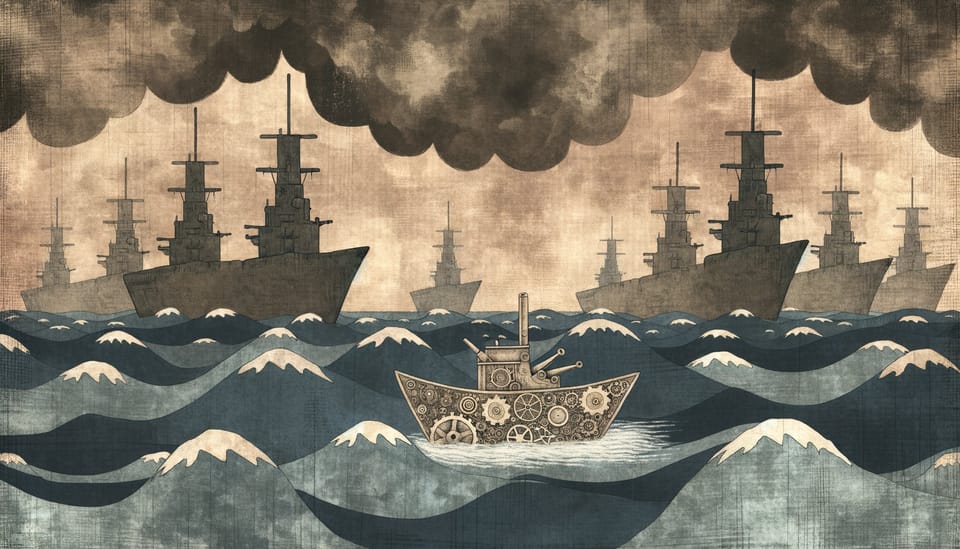
The Alliance That Cannot Win
Mali, Burkina Faso, and Niger have formed a mutual defense pact, expelled Western forces, and invited Russian contractors. The result is not victory over jihadists but accelerating state failure—and that may be precisely the point.
The Alliance That Cannot Win
Three military juntas, three mutual defense pacts, one shared enemy—and no path to victory. The Alliance of Sahel States, formed in September 2023 when Mali, Burkina Faso, and Niger signed the Liptako-Gourma Charter, represents the most ambitious indigenous security architecture the Sahel has produced. It also represents the most complete rejection of Western counterterrorism doctrine since the region’s crisis began over a decade ago. The juntas have expelled French forces, terminated UN peacekeeping missions, withdrawn from ECOWAS, and invited Russian military contractors to fill the void.
The results speak for themselves. In the two years since the alliance formed, jihadist attacks have increased. Civilian casualties have surged. Territory under government control has shrunk. Yet the juntas proclaim success, and their populations appear to believe them. This paradox reveals something important: the AES was never primarily designed to defeat jihadists. It was designed to survive.
Sovereignty as Strategy
The conventional reading of the Sahel crisis frames it as a counterterrorism problem. Jihadist groups—primarily Jama’at Nusrat al-Islam wal-Muslimin (JNIM), al-Qaeda’s Sahelian affiliate, and the Islamic State Sahel Province—control vast swathes of territory. States lack capacity. External partners failed. Military governments seized power promising to do better.
This reading is incomplete. The juntas face a legitimacy crisis that predates the jihadist threat and will outlast it. They came to power through coups. International law denies them recognition. ECOWAS imposed sanctions. The African Union suspended their membership. Every institution designed to constrain illegitimate governments has been deployed against them.
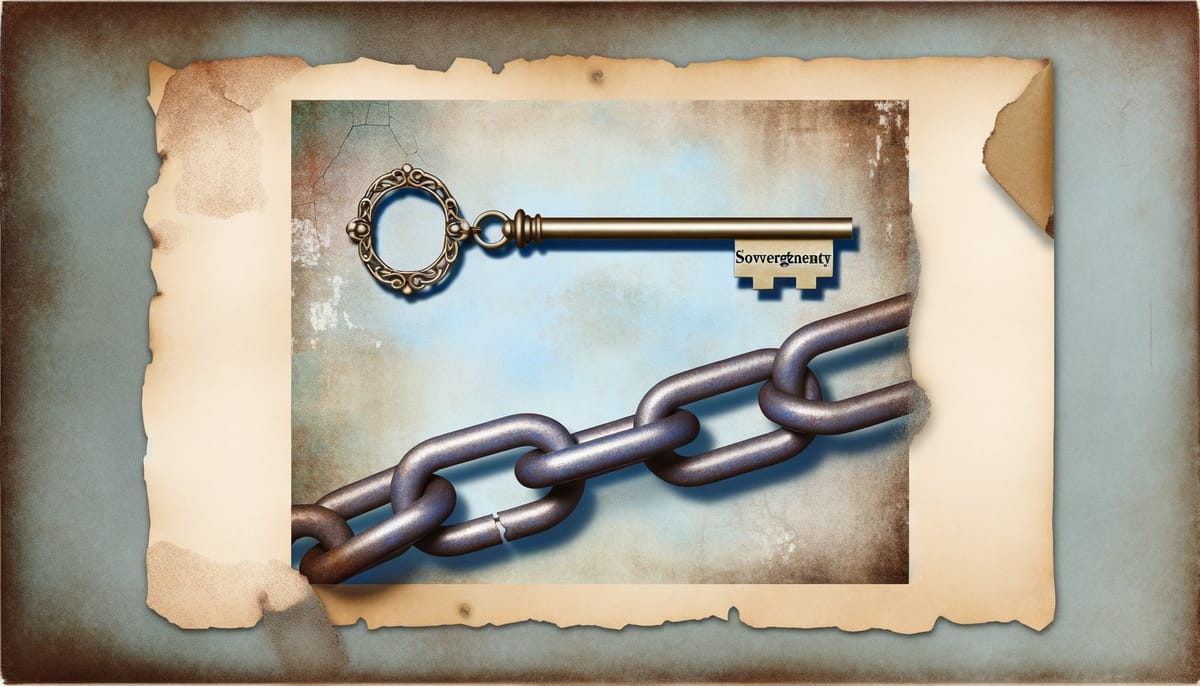
The AES solves this problem elegantly. By creating their own regional architecture, the juntas transform themselves from pariah states into founding members of an alternative order. The Liptako-Gourma Charter explicitly commits members to “assist one another—including militarily—in the event of an attack on any one of them.” This language deliberately echoes NATO’s Article 5, but with a crucial difference: the charter defines sovereignty as the supreme value, placing no conditions on how member states govern internally.
This is not accidental. The juntas require an international framework that legitimizes military rule without demanding democratic transition. ECOWAS, with its Protocol on Democracy and Good Governance, cannot provide this. The AES can.
The withdrawal from ECOWAS, announced in January 2024 and completed in January 2025, follows the same logic. The three countries cited ECOWAS’s “illegal, illegitimate, inhumane and irresponsible sanctions” and its failure to support their fight against terrorism. But the deeper motivation was jurisdictional. ECOWAS courts could hear human rights cases against member governments. The ECOWAS Community Court of Justice had standing to rule on violations. By leaving, the juntas eliminated external legal accountability entirely.
This creates what one analysis termed a “structural trap”: the alliance cannot admit more stable members because each existing member has veto power over expansion, and no stable government would voluntarily join an organization designed to insulate military regimes from accountability. The AES is locked into its current composition by design.
The Counterterrorism Illusion
If the AES exists primarily to legitimize its members rather than defeat jihadists, how should we evaluate its military performance? The evidence is damning.
According to Human Rights Watch, Burkina Faso experienced its deadliest year on record in 2024. Armed Islamist groups killed over 2,300 civilians, while government forces and allied militias killed at least 439 civilians in counterterrorism operations. The Nondin and Soro massacres alone saw 223 civilians executed. In Mali, the situation is comparable: jihadist attacks increased after MINUSMA’s withdrawal, and the government now controls perhaps 20% of its nominal territory.
The numbers reveal a brutal arithmetic. Insurgent forces operate on regeneration rates—approximately 2.5% monthly attrition can be sustained indefinitely through recruitment. Government forces, by contrast, operate on territorial metrics that insurgents can simply ignore. French forces in Algeria won nearly every tactical engagement while losing the war. The AES appears headed toward the same outcome.
The joint force announced in December 2024—5,000 troops across three countries—illustrates the scale mismatch. This force is too small to achieve operational independence from external support, yet large enough to require coordination capabilities that exceed current institutional capacity. It creates dependency rather than autonomy.
Russia has promised to help. According to Reuters, Moscow has “committed to helping military governments in Mali, Burkina Faso and Niger acquire arms and training” for the joint force. Africa Corps personnel—successors to the Wagner Group—now operate alongside government forces in all three countries. Nuclear cooperation agreements have been signed with Mali and Burkina Faso, despite the fact that only 20% of their populations have grid access.
This is not counterterrorism assistance. It is entrenchment.
The Russian Calculation
Russia’s Sahel strategy operates on a different logic than Western counterterrorism ever did. France and the United States sought to stabilize governments, contain jihadist expansion, and eventually withdraw. They measured success by security metrics. Russia measures success by access.
The Africa Corps model requires failed states. Functional governments with legitimate authority can negotiate terms, demand accountability, and ultimately expel unwanted partners. Governments that depend on Russian contractors for survival cannot. Every jihadist attack that the AES fails to prevent deepens this dependency.
Consider the economic architecture Russia is building. Gold mining operations now run through Russian-controlled refineries. Nuclear cooperation agreements create obligations spanning millennia—waste management commitments that will outlast any current regime, any current constitution, any current conception of the Malian or Burkinabè state. These are not development projects. They are sovereignty mortgages.
The information dimension reinforces the structural dependency. Russian Houses—cultural centers operating across the Sahel—function as real-time testing grounds for narrative effectiveness. Language courses, journalist training programs, and cultural events create feedback loops that refine anti-Western messaging. Graduates of Russian universities staff these centers, building networks that will persist regardless of who governs in Bamako or Ouagadougou.
This represents an inversion of traditional patron-client dynamics. Normally, clients evade costly patron demands through stalling and slow-rolling. The AES juntas appear to be accelerating Russian entrenchment deliberately, creating sunk costs that make future Western re-engagement prohibitively expensive. They are not being captured by Russia. They are capturing Russia—locking Moscow into commitments that validate their sovereignty claims regardless of battlefield outcomes.
Fragmentation’s Feedback Loops
The regional consequences extend far beyond the three AES members. The G5 Sahel—once the primary indigenous security architecture—collapsed in December 2023 after the withdrawals of Mali, Burkina Faso, and Niger. ECOWAS, already weakened by its inability to prevent or reverse coups, now faces an existential question: if members can simply leave when they dislike the rules, what purpose does the organization serve?
The legal analysis from the African Human Rights Yearbook identifies a one-year withdrawal notice period under Article 91 of the ECOWAS Treaty. This creates what might be called an “institutional zombie state”—a period where countries are simultaneously inside and outside the organization, legally bound by treaty obligations while politically committed to exit. The AES members exploited this ambiguity, continuing to participate in some ECOWAS mechanisms while rejecting others.
The precedent matters more than the specific case. Every ECOWAS member now knows that sanctions for unconstitutional government changes can be escaped through withdrawal. The coup in Niger prompted ECOWAS to threaten military intervention; the threat was never executed, and Niger’s junta remains in power. Future coup plotters will draw the obvious lesson.
Humanitarian consequences follow institutional collapse. The Human Rights Watch analysis notes that withdrawal “undermines accountability” for human rights violations. ECOWAS mechanisms for civilian protection, however imperfect, no longer apply. The AES Charter contains no human rights provisions. Civilians in these three countries now exist in an accountability vacuum—subject to government violence, jihadist violence, and militia violence, with no regional institution empowered to investigate or adjudicate.
Displacement patterns reveal the human cost. Over two million people have been displaced across the three countries. Traditional migration routes—pastoral movements, seasonal labor, family networks—now cross international boundaries that have hardened into barriers. ECOWAS free movement provisions no longer apply to AES citizens. The economic consequences compound: agricultural supply chains disrupted, livestock markets fragmented, remittance flows interrupted.
The Jihadist Adaptation
While governments fragment, jihadist organizations adapt. JNIM operates as a loose franchise coalition where constituent groups—Ansar Dine, Katibat Macina, al-Mourabitoun, and AQIM’s Sahara branch—maintain independent identities and operational autonomy within the al-Qaeda brand umbrella. This structure proves remarkably resilient to decapitation strikes and territorial clearing operations.
The Islamic State Sahel Province follows different organizational logic but achieves similar durability. Both groups have learned to exploit the governance vacuums that military operations create. When government forces clear an area, jihadists disperse. When forces withdraw—as they must, given limited capacity—jihadists return.
More troubling, both organizations now provide governance services that states cannot match. Islamic courts adjudicate disputes. Taxation systems, however coercive, create predictable economic relationships. Schools operate. The contrast with government-controlled areas, where services have collapsed and security forces commit atrocities, shapes civilian calculations about allegiance.
This creates a grim dynamic. Each clearing operation that involves civilian casualties—and the evidence suggests many do—validates jihadist narratives about government illegitimacy. Each governance vacuum that follows military withdrawal allows jihadist institutions to mature. The juntas are not losing because they lack firepower. They are losing because their theory of victory requires eliminating an enemy that regenerates faster than it can be destroyed.
Three Futures
The current trajectory leads toward state failure. Not the dramatic collapse of capitals falling to insurgent forces, but the quieter erosion of effective sovereignty until governments control only urban cores while jihadist and militia governance dominates the periphery. This is already the reality in large portions of all three countries. The question is whether the trend accelerates or stabilizes.
Acceleration seems likely. The AES has eliminated the external constraints—French forces, UN peacekeepers, ECOWAS oversight—that previously limited both government atrocities and jihadist expansion. Nothing has replaced them. Russian contractors optimize for regime survival, not territorial control. The joint force lacks capacity for sustained operations. Each year that passes without decisive military success weakens government legitimacy further.
A second scenario involves negotiated accommodation with jihadist groups. This is already happening informally in some areas, where local commanders reach tacit understandings with JNIM elements about zones of control. The taboo against formal negotiation may erode as military options exhaust themselves. Algeria followed this path in the 1990s. The result was not peace but managed violence—a reduction in spectacular attacks traded for de facto jihadist governance in peripheral areas.
The third scenario—genuine counterterrorism success—would require capabilities the AES does not possess and cannot acquire from Russia. Effective counterinsurgency demands not just military force but legitimate governance, economic development, and political inclusion of marginalized communities. The juntas came to power by rejecting these approaches as Western impositions. They cannot now adopt them without undermining their own legitimacy claims.
The Sovereignty Paradox
The deepest irony of the AES project is that its pursuit of sovereignty accelerates its loss. By expelling external partners, the juntas eliminated the constraints on their own behavior—but also the capabilities that partially compensated for their weaknesses. By inviting Russian contractors, they acquired new dependencies that will prove harder to escape than French ones ever were. By withdrawing from ECOWAS, they gained freedom from accountability while losing access to the markets and institutions that functional sovereignty requires.
The juntas understand this, at least partially. Their rhetoric emphasizes sovereignty precisely because their actions undermine it. The performative declarations—the confederation announcement, the joint force launch, the nuclear cooperation agreements—substitute for the substantive capacity they lack. They are not building states. They are staging sovereignty for domestic audiences while mortgaging it to external patrons.
Russia understands this too. The nuclear agreements with states that cannot manage their own electricity grids create obligations designed to outlast current governments. The mining deals extract resources through infrastructure that Russia controls. The military training builds dependencies that no future government can easily sever. Moscow is playing a longer game than the juntas themselves.
The jihadists understand it best of all. They have watched external powers come and go—French, American, UN, now Russian. They have learned that patience defeats firepower. They have built governance structures that can survive military pressure and expand when it recedes. Their timeline is generational. The juntas’ timeline is the next coup attempt.
What Comes After
The question is not whether the AES can defeat jihadists. It cannot. The question is what replaces the current trajectory when it exhausts itself.
Three possibilities merit consideration. First, the juntas may consolidate power sufficiently to survive indefinitely as authoritarian regimes governing rump states—urban cores and resource extraction zones, while ceding the periphery to jihadists and militias. This is the most likely outcome. It is also the worst for civilian populations, who would face perpetual violence without prospect of resolution.
Second, one or more juntas may fall to internal coups or popular uprisings, creating opportunities for political transition. The track record suggests new military governments would simply join the AES and continue current policies. Genuine democratic transition would require external pressure that no longer exists and internal movements that current repression prevents.
Third, regional or international intervention may eventually occur—not the ECOWAS military action that was threatened but never executed, but some future response to humanitarian catastrophe or terrorist attacks that spread beyond current boundaries. This would require political will that does not currently exist in any relevant capital.
The most honest assessment is that the Sahel’s crisis has no solution available to current actors. The juntas lack capacity for military victory. Jihadists lack capacity for state-building at scale. Russia lacks interest in stability. The West lacks will for re-engagement. ECOWAS lacks credibility for intervention. The African Union lacks resources for anything.
What remains is management of decline. The question for external actors is not how to fix the Sahel but how to contain its consequences—migration flows, terrorist networks, Russian influence, humanitarian emergencies. These are defensive objectives, not transformative ones. They accept that the AES project will run its course, that millions will suffer, and that the outcome will be determined by dynamics no external intervention can now alter.
The juntas, for their part, have achieved their primary objective. They remain in power. Their sovereignty claims are recognized by Russia, China, and enough African states to provide diplomatic cover. Their populations, fed a steady diet of anti-Western rhetoric, appear to support them. By the metrics that matter to military rulers, the AES is succeeding.
By every other metric, it is accelerating catastrophe.
Frequently Asked Questions
Q: What is the Alliance of Sahel States (AES)? A: The AES is a mutual defense pact formed in September 2023 by the military governments of Mali, Burkina Faso, and Niger. It commits members to assist each other militarily if attacked and has evolved into a political confederation that withdrew from ECOWAS in January 2025.
Q: Why did the Sahel countries leave ECOWAS? A: The three junta-led governments cited ECOWAS sanctions imposed after their coups and the bloc’s failure to support their counterterrorism efforts. The deeper motivation was escaping ECOWAS oversight mechanisms that could challenge their legitimacy and hold them accountable for human rights violations.
Q: What is Russia’s role in the Sahel? A: Russia provides military contractors (Africa Corps, successor to Wagner Group), arms, training, and economic deals including gold mining operations and nuclear cooperation agreements. Moscow has committed to supporting the AES joint force of 5,000 troops and operates cultural centers that spread pro-Russian messaging.
Q: Are the Sahel juntas winning against jihadists? A: No. Despite claims of progress, terrorism deaths and attacks have increased since the coups. Burkina Faso experienced its deadliest year on record in 2024, with over 2,300 civilians killed by armed Islamist groups. Government forces control diminishing territory while jihadist organizations continue to expand.
Sources & Further Reading
The analysis in this article draws on research and reporting from:
- Human Rights Watch World Report 2025: Burkina Faso - documentation of civilian casualties and human rights violations in counterterrorism operations
- Human Rights Watch on ECOWAS Withdrawal - analysis of accountability implications from regional exit
- Reuters on Russian Military Backing - reporting on Russia’s commitment to arm and train the AES joint force
- Legal Africa on ECOWAS Withdrawal - legal analysis of treaty withdrawal provisions and implications
- Nuclear Business Platform on Sahel Nuclear Gambit - examination of Russian nuclear cooperation agreements with Sahel states
- ACLED Conflict Watchlist 2024: Sahel - data and analysis on conflict trends and jihadist group activities
- Clingendael Institute on Sahel Uncertainty - strategic analysis of AES formation and regional dynamics