


The Franchise That Governs: Why the Sahel's Jihadists Are Building States While Africa's States Collapse
The Sahel has become the world's deadliest region for terrorism, accounting for half of global terror deaths. But the real story is not violence—it is governance. Jihadist groups now tax, adjudicate, and administer territories that nominal states cannot reach. As this parallel order expands...
The Arithmetic of Abandonment
America's 60% humanitarian aid cut forces a brutal question: who loses most—fragile states facing immediate mortality, China struggling to fill the vacuum, or American soft power bleeding out across generations? The answer is all three, but the damage operates on different timescales with...
The Speed Trap: North Korea's Hypersonic Weapons and the Limits of Missile Defense
Pyongyang's successful hypersonic tests reveal how advanced strike technology spreads to states the international order was designed to contain—and why defensive systems cannot keep pace.
Runway Roulette: America's Pacific Dispersal Gamble
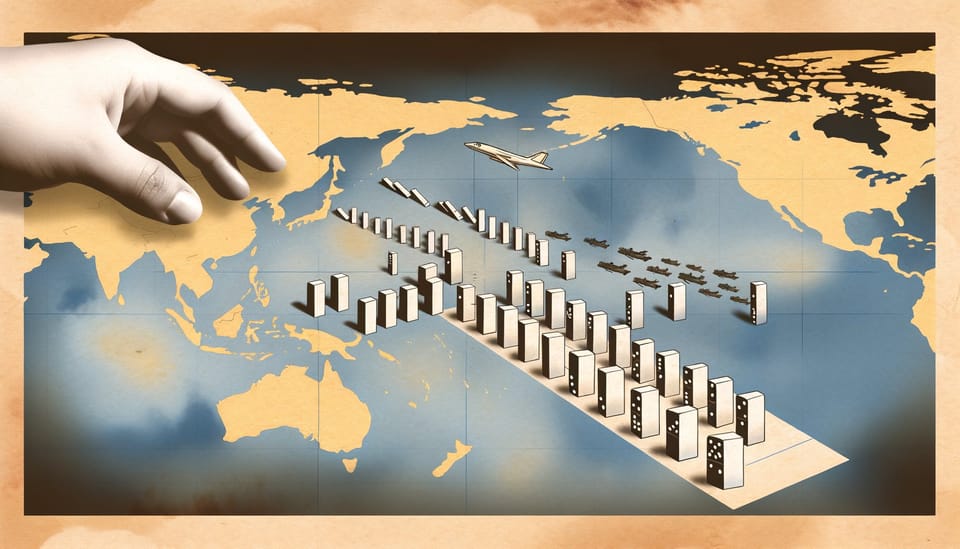
The United States is spending $40 billion to rebuild World War II-era Pacific airfields as a hedge against Chinese missiles. The strategy assumes dispersal complicates targeting. But satellites see everything, logistics constrain everything, and coral crumbles unpredictably. Is Washington...

The Precision Paradox: Why NATO Keeps Buying Weapons Russia Has Learned to Defeat
GPS-guided munitions have failed catastrophically against Russian jamming in Ukraine. Yet Western militaries continue building doctrine around these vulnerable systems. The explanation lies not in ignorance but in institutional structures that profit from fragility.
The Submarine That Bends Everything
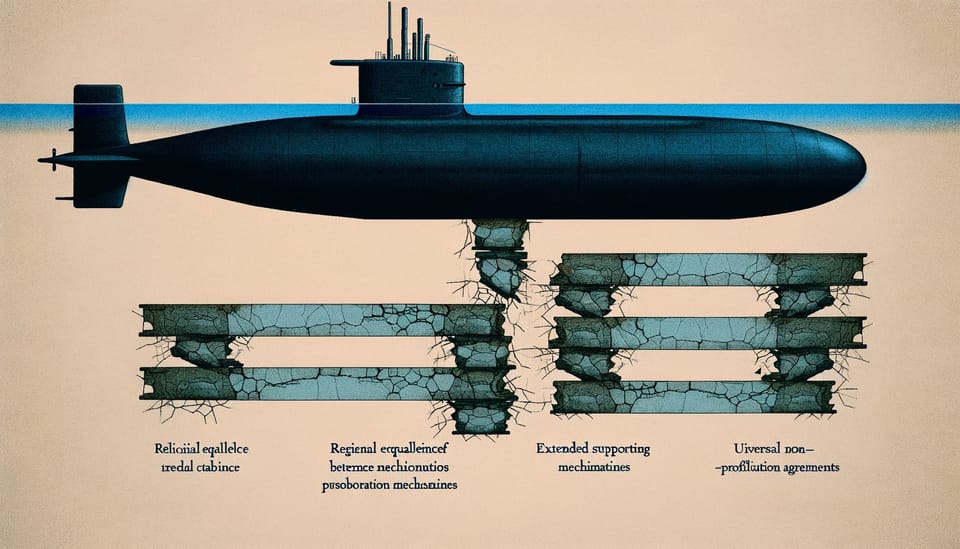
North Korea's first nuclear-powered submarine sits at Sinpo, its reactor status unknown and missiles untested. Yet the strategic calculations it forces in Seoul, Tokyo, and Washington reveal that regional stability, extended deterrence, and the nonproliferation regime were never as separate as...
The Dictator's Dilemma: Why Xi's Taiwan Problem Has No Good Solutions
The 2027 'invasion window' misunderstands China's Taiwan calculus. Xi Jinping's political survival does not require taking the island—it requires ensuring no one can challenge him for not taking it. The system he built to guarantee his power may guarantee escalation instead.
Daily Brief: 06 January 2026
US spends $409M reviving Pacific airfields that China's precision strikes could destroy in hours. Meanwhile, $500M in Sahel counterterrorism aid coincides with soaring civilian massacres.
The Hierarchy of the Ungrievable: Why Sudan Burns Alone
With over 150,000 dead and famine gripping multiple states, Sudan's civil war has become the world's largest humanitarian crisis. The West's near-total absence reveals not hypocrisy but something more structural: a new hierarchy of geopolitical concern that operates according to rules rarely...
The 2027 Question: What Breaks First Over Taiwan
China's military readiness deadline approaches as American deterrence, semiconductor supply chains, and allied resolve in Tokyo and Seoul each show stress fractures. The question is not whether the system holds—but which component fails first, and whether the failure propagates before anyone...

Trump's Nigeria Strike: Precision Without Purpose
The Christmas Day Tomahawk strikes against ISIS in Nigeria demonstrated American reach but not American strategy. As ISWAP grows stronger and the Sahel slips toward Russia, tactical excellence continues to substitute for strategic coherence in U.S. counterterrorism.
