The Defibrillator Problem: Why American Counterterrorism Keeps Failing in the Sahel
The United States spent half a billion dollars training Sahelian security forces. Terrorism surged 2,000 percent. The correlation reveals a structural flaw in counterterrorism strategy that no amount of precision targeting can fix.
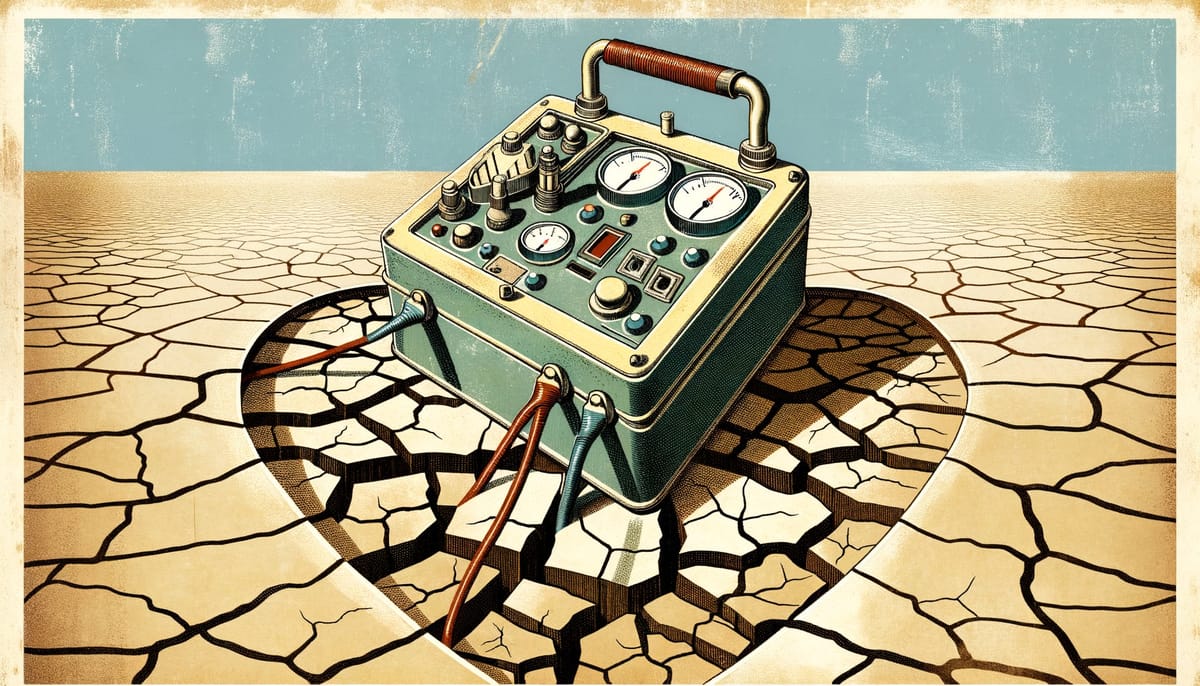
The Defibrillator Problem
Between 2013 and 2024, the United States spent approximately $500 million training and equipping security forces across the Sahel. In that same period, terrorism-related violence in the region surged by more than 2,000 percent. The correlation is not coincidental. It is structural.
American counterterrorism strategy in the Sahel operates on a seductive premise: that precision strikes and professional military training can degrade terrorist networks to the point where fragile states can consolidate control. The premise is wrong. Not because the strikes miss their targets—American ISR capabilities are formidable—but because the strategy mistakes symptom suppression for disease treatment. Killing jihadist leaders without addressing why populations tolerate or support them is like shocking a heart that has no blood left to pump.
The result is visible in body counts that never appear in Pentagon briefings. Since late 2019, Human Rights Watch, the United Nations, and other monitors have documented over 600 unlawful killings by the security forces of Burkina Faso, Mali, and Niger during counterterrorism operations—the very forces American programs trained and equipped. This is not mission creep. It is mission inversion.
Anatomy of an Architecture
Understanding why American intervention fails requires examining what it actually provides. The Trans-Sahara Counterterrorism Partnership, established in 2005, was designed as “a multi-year, multi-agency program aimed at defeating terrorist organizations by strengthening regional counterterrorism capabilities.” In practice, this meant upgrading what might be called the coercive modules of weak states: intelligence collection, special forces training, surveillance technology, equipment transfers.
What it did not provide—could not provide, given congressional funding structures and institutional incentives—was the administrative tissue that makes coercion legitimate. Courts that adjudicate disputes fairly. Tax systems that fund services. Local officials who respond to grievances before they metastasize. The gap between these two forms of state capacity is where massacres gestate.
Consider the mechanism. When American trainers enhance a military unit’s targeting capability without simultaneously strengthening the judicial oversight that constrains it, they create what one analyst termed a “defibrillator effect”—enhanced kinetic capacity applied to governance structures with necrotic peripheries. The shock restarts nothing. It merely accelerates decomposition.
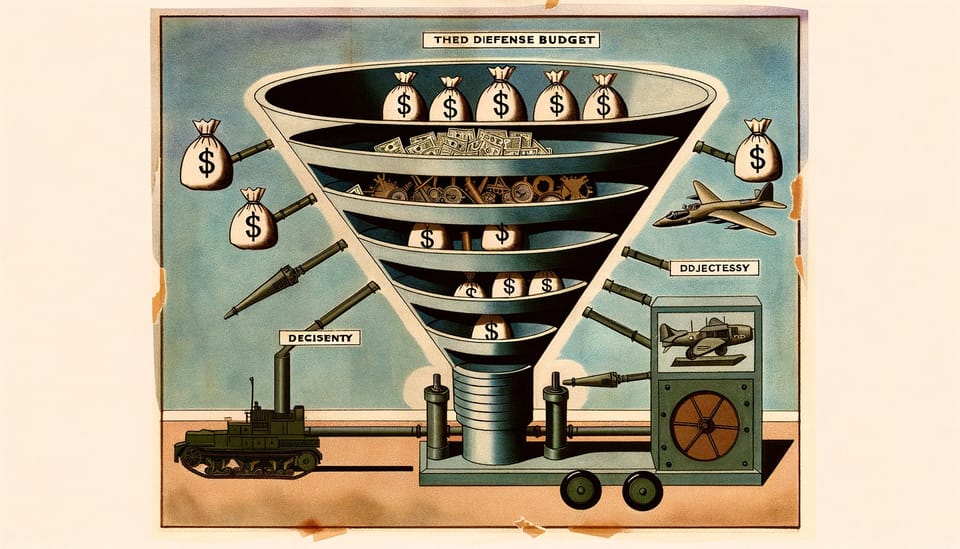
The 2008 GAO report on TSCTP found that program managers were “unable to readily provide data on the status of these funds” and lacked “day-to-day access to financial information.” By 2014, nearly half of allocated funds since 2009 had been disbursed, but persistent management challenges meant nobody could trace what outcomes the spending produced. The bureaucratic opacity was not a bug. It was the system’s operating logic: fund activities, not results.
This created a perverse accountability structure. Congressional reporting cycles demand attributable outputs—terrorists neutralized, soldiers trained, equipment delivered. Massacre prevention requires investments in judicial oversight, local dispute resolution, and administrative presence that produce measurable results only over 10-15 year horizons. The temporal mismatch is absolute. Programs optimized for quarterly metrics cannot address problems that unfold across generations.
The Ethnic Targeting Machine
The most damning evidence of strategic failure comes not from jihadist attacks but from state-sponsored violence against civilians. In Mali alone, between January 2024 and March 2025, security forces killed approximately 1,486 civilians—predominantly from Fulani communities perceived as jihadist sympathizers. The massacres follow a pattern that American intelligence sharing inadvertently enables.
High-resolution ISR data provides temporal precision: when to strike, where targets congregate, movement patterns across terrain. What it cannot provide is the granular social knowledge of which specific households harbor actual militants versus which merely share ethnic markers with them. That knowledge comes from local auxiliaries—the Volontaires pour la Défense de la Patrie in Burkina Faso, similar militias elsewhere—who overlay American-provided targeting grids with ethnic grievances accumulated across generations.
The Human Rights Watch investigation into Burkina Faso documented how army units direct ethnic massacres through these auxiliary forces. The VDP advisory committee structure creates permanent institutional markers of which communities have aligned with state protection. These committees make community allegiance visible to jihadist groups conducting governance assessments—and to state forces conducting reprisals. American ISR provides the “when.” Local militia knowledge provides the “who.” The synthesis produces mass graves.
The Leahy Laws theoretically prohibit American assistance to units credibly accused of gross human rights violations. In practice, implementation gaps documented across multiple regions over decades mean the production of gap-assessment reports itself becomes evidence of oversight functioning. The ritual of documenting failure substitutes for preventing it. Bureaucratic absolution through process.
Why Governance Cannot Be Airdropped
The conventional response to these critiques—that America should pair kinetic operations with governance programming—misunderstands the problem’s depth. Governance capacity is not a deliverable. It is an emergent property of sustained political bargains between rulers and ruled, enforced through institutions that take decades to develop legitimacy.
Mali, Burkina Faso, and Niger exhibit state fragility so profound that the concept of “strengthening governance” becomes almost meaningless. Military juntas control capitals. Jihadist groups control swaths of countryside. Democratic institutions have been suspended or abolished. The UNDP’s 2023 Sahel Human Development Report documents the depth of the crisis: populations with no access to functioning courts, no expectation of state services, no reason to believe that cooperation with government forces will produce anything other than exposure to retaliation from whichever armed group controls their village next month.
Into this vacuum, jihadist governance offers something American strategy cannot: predictability. JNIM’s Sharia enforcement is brutal—floggings, executions for prohibited behavior—but it operates through explicit rules that populations can learn and navigate. State counterterrorism, by contrast, produces violence that follows no discernible logic from the civilian perspective. The insurgency provides cruel order. The counterinsurgency provides random terror.
This dynamic explains the recruitment paradox that confounds American planners. State military atrocities against Fulani civilians become JNIM’s primary recruitment narrative, transforming ethnic grievances into jihadist mobilization. Each massacre produces the next generation of fighters. The violence is not incidental to counterterrorism failure. It is the mechanism of failure.
The Temporal Chasm
American counterterrorism operates on quarterly congressional reporting cycles. Sahelian subsistence communities evaluate armed group affiliation through multi-generational survival logic: will my grandchildren have access to land, water, and herds through the next twenty-year drought cycle? These temporal frameworks are incommensurable.
The Global Fragility Act, passed in 2019, represented an attempt to bridge this gap by mandating ten-year planning horizons for fragility-focused assistance. The CSIS assessment of its implementation found that the strategy’s 2024 refresh acknowledged persistent challenges in translating long-term frameworks into operational reality. Bureaucracies optimized for annual appropriations cannot sustain commitments across presidential administrations, let alone across the generational timescales that governance development requires.
The problem compounds through what might be called the coup-proofing paradox. American security sector assistance designed to enhance counterterrorism capabilities becomes raw material for authoritarian regimes constructing parallel military structures insulated from civilian oversight. The same training and equipment intended for protecting populations gets redirected toward protecting regimes from their own populations. Stimson Center analysis of Niger’s 2023 coup found this pattern clearly: American investment in elite units created precisely the concentrated capability that enabled the overthrow of the democratic government Washington had been supporting.
The Russian Alternative Is Not an Alternative
The juntas that now control Mali, Burkina Faso, and Niger have expelled French forces and welcomed Russian mercenaries—first Wagner, now the Africa Corps operating under Russian Ministry of Defense auspices. American analysts sometimes frame this as a strategic defeat requiring renewed competition. The framing misses the point.
Russian security assistance does not solve the governance problem. It monetizes the problem’s permanence. Wagner’s business model depends on sustained instability that justifies continued presence and resource extraction. The RAND analysis of Russian engagement documents how anti-colonial rhetoric provides legitimacy cover for arrangements that extract minerals while populations continue dying.
The Moura massacre of March 2022—where Malian forces and Wagner operatives killed hundreds of civilians—demonstrates the model’s logic. Wagner atrocities create localized civilian non-cooperation zones that function as incubators for jihadist recruitment. The “dirty work” generates involuntary recruitment pools for the very groups Wagner is ostensibly fighting. Permanent war becomes permanent revenue.
For the juntas, this arrangement offers something American partnerships cannot: regime security without reform conditionality. Western counterterrorism products require multi-year institutional development cycles to build professional security forces with accountability mechanisms. These mechanisms—civilian oversight, human rights compliance, professional military education—create precisely the institutional constraints that threaten junta tenure. Russian assistance comes with no such strings.
What the Failure Reveals
The Sahel’s trajectory illuminates a broader truth about counterterrorism strategy: kinetic capability without governance legitimacy does not degrade threats. It displaces them, transforms them, and ultimately amplifies them.
The displacement data tells the story. Around four million people have fled their homes across the Sahel, creating humanitarian catastrophe and political instability that spreads the crisis beyond any military containment perimeter. Each drone strike that eliminates a jihadist commander without addressing why he had followers produces a succession crisis that fragments organizations into harder-to-track cells while the underlying grievances remain unaddressed.
The strategic failure is not American incompetence. It is structural mismatch between the tools American institutions can deploy and the problems those tools are asked to solve. Congress can appropriate funds for equipment and training. It cannot appropriate legitimacy. The Pentagon can provide targeting intelligence. It cannot provide the local knowledge that distinguishes militants from civilians who share their ethnicity. USAID can fund governance programs. It cannot compress the decades required for those programs to produce functioning institutions.
The Sahel reveals the limits of what military power can achieve when divorced from political strategy. America can kill people from the sky with remarkable precision. It cannot, from the sky or from anywhere else, make populations believe their governments deserve loyalty.
The Uncomfortable Implications
If kinetic strikes without governance capacity produce strategic failure, what follows? Three paths present themselves, each with costs American policymakers have proven unwilling to accept.
The first is genuine long-term commitment—not the five-year strategy cycles mandated by the TSCTP Act, but generational investment in institution-building that survives changes in administration and accepts that measurable results will not appear within any single official’s tenure. This requires congressional appropriations structures that do not exist and political patience that American democracy does not reward.
The second is strategic triage—acknowledging that some regions cannot be stabilized through external intervention and focusing resources where success is plausible. This requires accepting that jihadist groups will control territory and populations in areas America abandons, with humanitarian consequences that will generate pressure for the interventions triage was meant to avoid.
The third is the current path: continued investment in kinetic capabilities that produce tactical successes and strategic failure, documented in GAO reports that identify the same problems decade after decade, while populations die and displacement spreads and the next generation of fighters emerges from the rubble of the last intervention.
The Sahel has chosen for America. In August 2024, the last American drone base in Niger closed. The juntas have made clear they prefer Russian partners who ask fewer questions about human rights. American influence in the region has collapsed not because of strategic miscalculation but because the strategy’s internal contradictions finally became undeniable.
What remains is the lesson. Counterterrorism conceived as threat elimination rather than grievance resolution will fail wherever governance is absent. The Sahel is not an exception. It is a preview.
Frequently Asked Questions
Q: Why did Sahelian countries expel US and French forces in favor of Russian mercenaries? A: The juntas that seized power in Mali, Burkina Faso, and Niger face a legitimacy problem that Russian partnerships solve and Western partnerships exacerbate. Western security assistance comes with reform conditionality—human rights vetting, civilian oversight requirements—that threatens authoritarian control. Russian assistance provides regime security without demanding institutional constraints that might enable future coups against current rulers.
Q: Has US counterterrorism training in the Sahel produced any successes? A: Tactical successes are documented—individual militant leaders eliminated, specific plots disrupted. Strategic success, measured by reduced terrorism and improved stability, has been negative. Terrorism-related violence increased over 2,000 percent during the period of American engagement. The trained forces have participated in coups against democratic governments and committed documented atrocities against civilian populations.
Q: What would effective counterterrorism in the Sahel actually require? A: Effective strategy would require sustained investment in governance capacity—functioning courts, responsive local administration, legitimate dispute resolution—over timescales of 20-30 years, combined with security operations conducted by forces with genuine accountability to civilian populations. No external actor has demonstrated willingness to commit resources at this scale and duration.
Q: Could the US have prevented the Sahel’s collapse with different policies? A: Different policies might have slowed the trajectory but could not have prevented it without addressing root causes beyond American control: colonial-era borders that divided ethnic groups, climate change accelerating resource competition, demographic pressures overwhelming weak institutions, and elite corruption that diverted resources from services to patronage. External intervention cannot substitute for internal political bargains that Sahelian societies have not achieved.
The Silence After the Drones
The MQ-9 Reapers that once circled above Niger’s Agadez region have departed. The intelligence feeds have gone dark. The training programs have ended. What remains is what was always there beneath the American presence: states that cannot govern, populations that cannot trust, and armed groups that offer the only order available.
The Sahel’s crisis will deepen. Displacement will spread. Coastal West African states will face spillover they are unprepared to absorb. And somewhere in Washington, planners will draft proposals for the next intervention, having learned nothing from the last one except that the metrics need better presentation.
The drones could see everything except what mattered. They could track movement across terrain but not grievance across generations. They could identify heat signatures but not the cold logic that drives populations toward whoever offers protection from the last protector’s violence. They provided perfect tactical awareness and perfect strategic blindness.
That blindness was not technological. It was conceptual. And until American strategy develops the capacity to see governance as the objective rather than the afterthought, the next Sahel awaits—somewhere the drones can reach but the state cannot.
Sources & Further Reading
The analysis in this article draws on research and reporting from:
- Human Rights Watch: Burkina Faso Army Directs Ethnic Massacres - Documentation of state-directed violence against civilian populations
- GAO-08-860: Combating Terrorism - Assessment of TSCTP management and accountability gaps
- UNDP Sahel Human Development Report 2023 - Comprehensive analysis of governance and development challenges
- Stimson Center: What Niger’s Coup Says About US Security Assistance - Analysis of security assistance and coup dynamics
- CSIS: The Global Fragility Strategy Gets a Refresh - Assessment of long-term fragility programming
- Open Society Foundations: What the Leahy Law Means for Human Rights - Examination of human rights vetting implementation
- RAND: Russia Is Riding an Anti-Colonial Wave Across Africa - Analysis of Russian engagement strategy
- Al Jazeera: Four Million Displaced Across Sahel - Humanitarian impact documentation