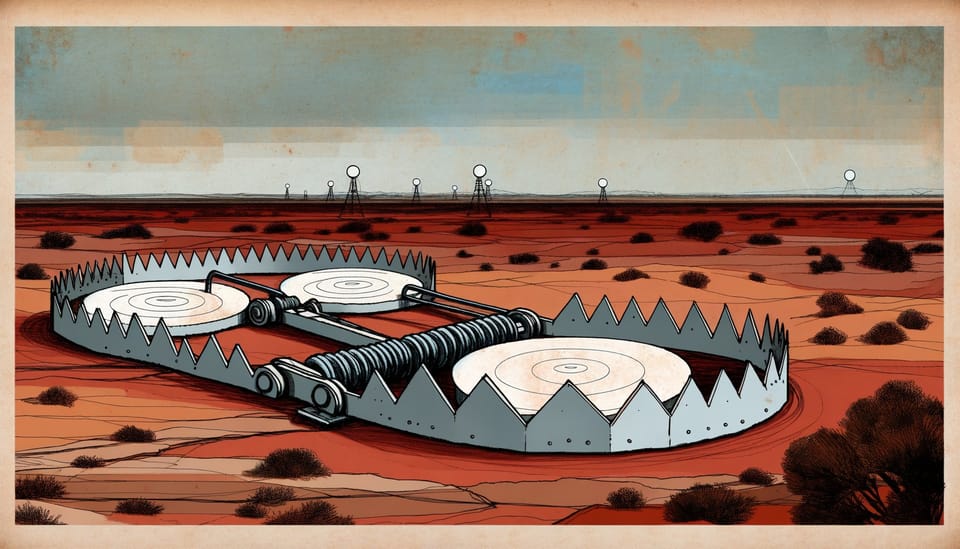
Dark Eagle arrives: Why America's first hypersonic weapon won't close the gap with China
The U.S. Army has declared its Long-Range Hypersonic Weapon operational, but with fewer than a dozen missiles against China's hundreds, the 'hypersonic gap' is being acknowledged rather than closed. Scale, not technology, will determine relevance.

🎧 Listen to this article
The Weapon That Arrived
In October 2024, the U.S. Army declared its first Long-Range Hypersonic Weapon battery operational. Dark Eagle, as the system is known, can strike targets 1,725 miles away at speeds exceeding Mach 5. Pentagon officials celebrated. The hypersonic gap, they suggested, was closing.
It isn’t. The gap is widening.
China has been fielding operational hypersonic weapons since 2019. Russia deploys three distinct systems. The United States has one battery with a handful of missiles. By the time Dark Eagle reaches meaningful scale—perhaps 300 units by 2030—China will have produced thousands. This is not a race where the finish line moves. It is a race where one competitor started five years late and runs at half speed.
The question is not whether LRHW represents a genuine capability. It does. The question is whether a genuine capability, arriving in boutique quantities against adversaries producing at industrial scale, changes anything that matters.
What Hypersonic Actually Means
The term “hypersonic” conjures images of revolutionary speed. The reality is more nuanced. Intercontinental ballistic missiles have traveled at hypersonic velocities since the 1960s. What distinguishes modern hypersonic weapons is not raw speed but maneuverability. A hypersonic glide vehicle rides the edge of the atmosphere, adjusting its trajectory throughout flight. A hypersonic cruise missile sustains powered flight at extreme speeds. Both evade traditional missile defenses designed to intercept predictable ballistic arcs.
Dark Eagle is a boost-glide system. A rocket accelerates the warhead to hypersonic speed, then releases it to glide unpowered toward its target. The Army’s FY2025 budget requested $744 million for a single battery’s ground support equipment and eight missiles. Eight missiles. The entire annual production run for one battery would sustain approximately four minutes of combat operations if fired in salvos.
China’s DF-17, operational since 2019, carries a similar hypersonic glide vehicle. Its range of 1,800-2,500 kilometers brackets Dark Eagle’s. But China produces the DF-17 at scale, integrated into a broader missile force that includes the DF-21D “carrier killer” and the DF-26 intermediate-range system. The People’s Liberation Army Rocket Force does not think in batteries. It thinks in brigades.
Russia’s approach differs again. The Kinzhal air-launched missile, operational since 2018, has seen combat use in Ukraine. The Avangard glide vehicle, mounted on intercontinental ballistic missiles since 2019, represents a strategic nuclear delivery system. The Zircon naval cruise missile entered serial production in 2024. Russia’s hypersonic arsenal is diverse, deployed, and tested in actual warfare.
The United States, by contrast, has conducted a handful of successful tests and declared one battery operational. The Government Accountability Office found that “difficulties discovered in flight testing” delayed delivery by at least a year. High unit costs “could result in DOD procuring fewer weapons, potentially at levels below those needed.”
Below those needed. The bureaucratic phrasing masks a stark reality: the Army is building a prestige weapon, not a warfighting inventory.
Scale Determines Relevance
Wars consume munitions at rates that peacetime procurement cannot imagine. Ukraine fires 6,000 artillery shells daily. Russia fires 20,000. Before the war, American annual production of 155mm shells stood at 240,000—barely forty days of Ukrainian consumption. The defense industrial base, optimized for efficiency rather than surge capacity, cannot rapidly scale.
Hypersonic weapons face the same constraint, magnified. Each Dark Eagle missile costs tens of millions of dollars. Each requires exotic materials, precision manufacturing, and extensive testing. The production process resembles medieval sword-making more than modern mass production—artisanal expertise, destructive testing, and irreducible labor intensity.
China’s defense industrial base operates on different principles. State direction, vertical integration, and tolerance for higher defect rates enable production volumes that American contractors cannot match. The Pentagon plans perhaps 300 Dark Eagle units by 2030. China could produce that many DF-17s in months.
This disparity compounds over time. A hypersonic weapon fired is a hypersonic weapon lost. In any sustained conflict, the side that can replenish faster wins. The United States would exhaust its hypersonic inventory in the opening weeks of a Taiwan scenario. China would still be firing in month six.
The cost-exchange ratio devastates American planning. If each Dark Eagle costs $40 million and each Chinese interceptor costs $4 million, China can afford ten defensive shots per American offensive shot. Even with imperfect interception rates, the numbers favor the defender with deeper magazines.
The Timing Paradox
Dark Eagle arrives in a strategic environment that has already adapted to hypersonic threats. China has invested heavily in early warning systems, space-based sensors, and layered defenses. Russia has combat-tested its hypersonic weapons and refined tactics accordingly. The window for hypersonic surprise—when these weapons could strike without warning against unprepared defenses—closed years ago.
This creates what analysts call a temporal mismatch. American procurement operates on decade-long cycles. Congressional appropriations, contractor timelines, testing protocols, and bureaucratic reviews stretch development from concept to deployment across administrations. China’s system, more centralized and less constrained by oversight, compresses these timelines dramatically.
The Congressional Research Service notes that “unlike programs in China and Russia, U.S. hypersonic weapons are to be conventionally armed.” This distinction matters. A conventional hypersonic weapon must hit its target precisely to be effective. A nuclear-armed hypersonic weapon need only arrive in the general vicinity. The precision requirement demands more testing, more refinement, more time.
Meanwhile, defensive technologies advance. Directed energy weapons, AI-enabled intercept systems, and improved sensor networks promise to erode hypersonic advantages. The weapon system that seemed revolutionary in 2015 may seem merely expensive by 2030. Dark Eagle could arrive fully operational just as countermeasures render it obsolete.
The Pentagon itself acknowledges this risk. Internal assessments suggest no operational hypersonic defense system until fiscal year 2034. But that timeline assumes adversaries stop innovating. They won’t.
What Dark Eagle Can Actually Do
Strip away the hype, and Dark Eagle offers genuine if limited utility. Its 1,725-mile range allows strikes from positions beyond most defensive umbrellas. Its speed compresses enemy decision timelines. Its maneuverability complicates interception. For specific target sets—command nodes, air defense radars, logistics hubs—a small number of precision strikes could prove decisive.
The Army has integrated LRHW into its Multi-Domain Task Force concept. Forward-deployed batteries in the Indo-Pacific could threaten Chinese military installations on the mainland. Rotational deployments to allies demonstrate commitment and complicate adversary planning. Even a few operational weapons create uncertainty that defenders must account for.
But these effects are marginal, not transformational. China’s anti-access/area denial architecture encompasses thousands of missiles, integrated air defenses, and hardened facilities designed to absorb exactly this kind of strike. Destroying one radar does not blind a network. Killing one command post does not decapitate a military. The target set that Dark Eagle can meaningfully affect is far smaller than the target set that would need destruction to achieve operational objectives.
The weapon’s real value may be psychological rather than kinetic. Adversaries must assume American hypersonic weapons work as advertised. They must plan for strikes they cannot reliably intercept. This planning burden consumes resources and attention. Deterrence operates through perceived capability, not demonstrated use.
Yet deterrence requires credibility. A handful of missiles that might work against defenses that might fail does not constitute a credible threat. China’s leadership, watching American test failures and production delays, has little reason to believe Dark Eagle changes their strategic calculus.
Alliance Complications
Hypersonic weapons require forward basing to maximize effectiveness. Dark Eagle’s 1,725-mile range means batteries in Guam could strike targets in eastern China. Batteries in Japan could reach further. Batteries in the Philippines could threaten the Taiwan Strait.
Each potential host nation faces its own political constraints. Japan’s constitution limits offensive military capabilities. The Philippines’ relationship with China involves complex economic dependencies. Australia, under AUKUS, has committed to hypersonic collaboration but faces domestic opposition to hosting American weapons. Even Guam, a U.S. territory, presents logistical challenges for sustaining forward-deployed units.
The Army conducted LRHW exercises in the Philippines in 2024, demonstrating the system’s deployability. But exercises are not permanent basing. Permanent basing requires host-nation agreements that survive changes in government. It requires infrastructure investments that take years to complete. It requires political will that fluctuates with public opinion.
China watches these developments carefully. Beijing has made clear that hosting American hypersonic weapons would constitute a hostile act. Allied governments must weigh American security guarantees against Chinese economic leverage. The calculation differs for each nation, and none has committed to permanent LRHW presence.
This creates a capability without a home. Dark Eagle works best when forward deployed. Forward deployment requires allied cooperation. Allied cooperation depends on political conditions that American military planners cannot control.
The Industrial Base Problem
Behind the operational questions lies a structural challenge. The American defense industrial base was not designed for hypersonic production at scale. It was designed for exquisite systems in limited quantities—fighter jets, aircraft carriers, precision munitions. Converting this base to mass production requires investments that neither Congress nor contractors have prioritized.
The comparison to Chinese industrial capacity is instructive. China’s state-directed economy can mandate production priorities, absorb inefficiencies, and sustain programs through political transitions. American contractors respond to market incentives, shareholder expectations, and contract structures that reward cost-plus arrangements over production efficiency.
Dark Eagle’s manufacturer, Lockheed Martin, has other priorities. The F-35 program alone consumes vast engineering and production resources. Hypersonic weapons compete for attention with missile defense, space systems, and next-generation aircraft. No single program commands the industrial base’s full focus.
Surge capacity—the ability to rapidly increase production during crisis—barely exists. Building new production lines takes years. Training new workers takes months. Qualifying new suppliers takes longer still. By the time American industry could surge hypersonic production, any conflict requiring that surge would likely be decided.
The Defense Production Act provides legal authority for government intervention. It does not provide the factories, workers, or supply chains that intervention would require. Authority without capacity is aspiration, not policy.
Strategic Stability Concerns
Hypersonic weapons introduce new risks to strategic stability. Their speed compresses decision timelines from hours to minutes. Their maneuverability makes tracking difficult. Most critically, their payload ambiguity—the inability to distinguish conventional from nuclear warheads during flight—creates escalation pressures that Cold War strategists never faced.
Dark Eagle carries conventional warheads only. But an adversary observing an incoming hypersonic weapon cannot know this. The Congressional Research Service warns that this ambiguity could trigger nuclear responses to conventional attacks. A Chinese commander, seeing hypersonic missiles inbound toward strategic targets, must decide within minutes whether to escalate. The rational choice under uncertainty may be the catastrophic choice in reality.
Russia has explicitly linked hypersonic weapons to nuclear posture. The Avangard system carries nuclear warheads by design. Moscow’s doctrine reserves the right to nuclear first use if Russian territory faces existential threat. American conventional hypersonic strikes against Russian targets could cross this threshold even without American intent.
Arms control frameworks offer no solution. Hypersonic weapons evade existing treaty definitions. Verification presents insurmountable challenges—how do you confirm a warhead is conventional without inspecting it? The architecture of strategic stability, built over decades of nuclear negotiations, has no provisions for weapons that blur every relevant distinction.
Dark Eagle’s deployment does not cause these stability risks. China and Russia introduced them first. But adding American hypersonic weapons to an already unstable environment does not reduce instability. It adds another variable to calculations already stretched beyond reliable prediction.
The Honest Assessment
Dark Eagle represents a genuine technological achievement. American engineers solved difficult problems in materials science, propulsion, and guidance. The weapon works. It fills a capability gap that existed since the INF Treaty’s collapse freed intermediate-range development.
But technological achievement is not strategic relevance. The United States is fielding a handful of expensive weapons against adversaries producing thousands of cheaper ones. It is deploying a conventional capability into a strategic environment where nuclear ambiguity creates escalation risks. It is building a forward-strike system without secured forward bases.
The hypersonic gap is not closing. It is being acknowledged. Dark Eagle announces that the United States takes hypersonic weapons seriously. It does not announce that the United States can compete in hypersonic warfare.
What would competition require? Production at scale—hundreds of weapons per year, not dozens. Industrial base investment—new factories, new workers, new supply chains. Allied commitment—permanent basing agreements that survive political transitions. Defensive integration—sensors and interceptors that can track and defeat adversary hypersonics.
None of these requirements will be met by 2030. Some may never be met. The defense industrial base resists transformation. Allied politics remain volatile. Defensive technology lags offensive development by design.
Dark Eagle is not too late to matter. It is too small to matter. The weapon arrived. The strategy didn’t.
FAQ: Key Questions Answered
Q: How fast is the LRHW “Dark Eagle” and what makes it different from regular missiles? A: Dark Eagle travels at speeds exceeding Mach 5—roughly one mile per second—and can strike targets 1,725 miles away. Unlike traditional ballistic missiles that follow predictable arcs, its hypersonic glide vehicle maneuvers throughout flight, making interception far more difficult.
Q: How many hypersonic weapons does China have compared to the United States? A: China has been mass-producing hypersonic weapons since 2019, with estimates suggesting hundreds of DF-17 missiles deployed across multiple brigades. The United States currently has one operational battery with fewer than a dozen missiles, with plans for perhaps 300 units by 2030.
Q: Can existing missile defense systems stop hypersonic weapons? A: Current missile defense systems were designed for ballistic trajectories and struggle against maneuvering hypersonic glide vehicles. The Pentagon does not expect an operational hypersonic defense system until 2034, leaving a significant vulnerability window.
Q: Why did the U.S. fall behind in hypersonic weapons development? A: The 1987 INF Treaty prohibited intermediate-range missiles, freezing American development while China, not a signatory, continued research. After U.S. withdrawal in 2019, development accelerated but faced testing failures and production delays that pushed operational capability back by years.
What Comes Next
The trajectory is set. Dark Eagle will deploy in limited numbers to forward positions when allied politics permit. It will feature in exercises, press releases, and congressional testimony. It will not change the balance of power in the Indo-Pacific.
China will continue producing hypersonic weapons at industrial scale. Russia will continue refining systems tested in Ukraine. Both will develop countermeasures against American capabilities they have studied for years.
The United States faces a choice it has not yet made. It can treat hypersonic weapons as prestige projects—technological demonstrations that prove American ingenuity without achieving strategic effect. Or it can treat them as warfighting necessities—committing the industrial base transformation, allied diplomacy, and doctrinal integration that relevance requires.
The first choice is easier. It requires only continuation of current policy. The second choice demands disruption of comfortable arrangements, reallocation of finite resources, and acceptance that quantity has a quality all its own.
Dark Eagle flies. The question is whether anyone will notice.
Sources & Further Reading
The analysis in this article draws on research and reporting from:
- Congressional Research Service: The U.S. Army’s Long-Range Hypersonic Weapon (LRHW) - Official program details and budget figures
- Congressional Research Service: Hypersonic Weapons Background - Comparative analysis of U.S., Chinese, and Russian programs
- Government Accountability Office: Hypersonic Weapons Assessment - Critical evaluation of schedule delays and cost risks
- Congressional Budget Office: U.S. Hypersonic Weapons and Alternatives - Cost-benefit analysis of hypersonic investments
- CSIS Missile Threat: DF-17 - Technical specifications of China’s hypersonic glide vehicle
- CSS ETH Zurich: Weaponized and Overhyped - European perspective on hypersonic strategic implications
- JAPCC: Countering Anti-Access/Area Denial - NATO analysis of A2/AD challenges
- Taylor & Francis: Hypersonic Weapons and Strategic Stability - Academic assessment of escalation risks