The 2027 Prophecy: How a Date Became a Destiny
U.S. intelligence warned that China would be ready to invade Taiwan by 2027. The assessment has since escaped its origins, becoming a self-reinforcing timeline that shapes military budgets, alliance postures, and crisis dynamics across the Pacific—regardless of whether Xi Jinping has decided...
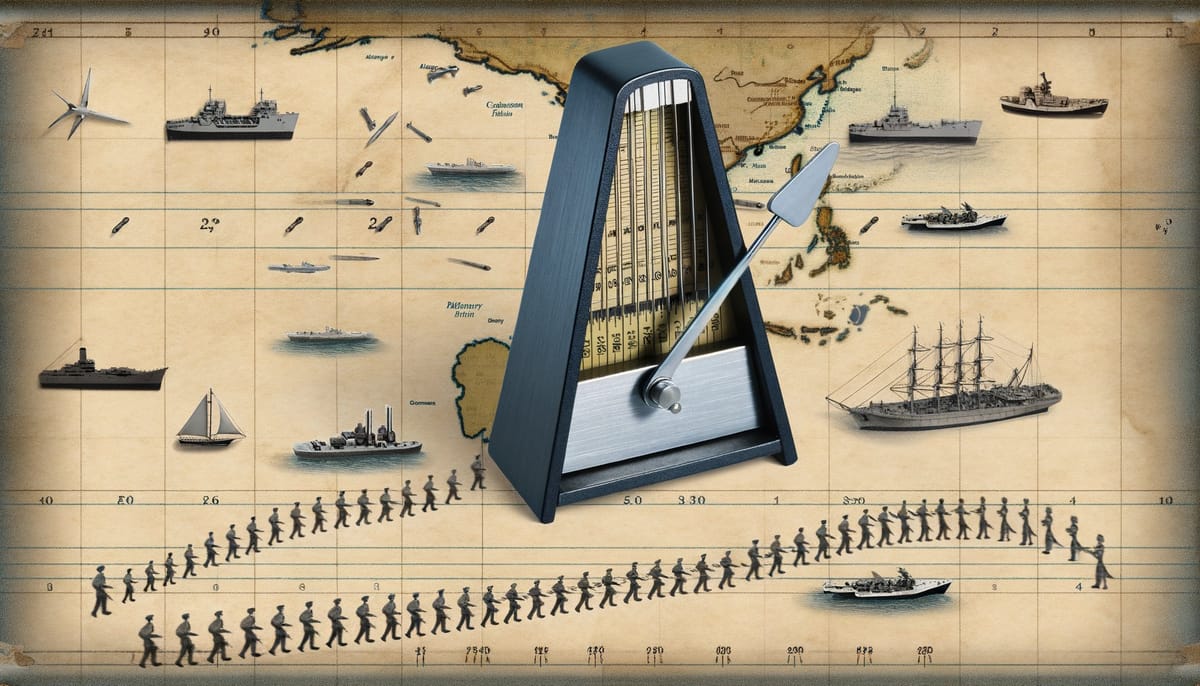
The Countdown That Counts Itself
In December 2024, the U.S. Department of Defense released its annual assessment of Chinese military power. Buried within 200 pages of capability analysis was a familiar refrain: Xi Jinping has ordered the People’s Liberation Army to be ready to take Taiwan by force by 2027. The date has achieved a strange permanence in strategic discourse—repeated in congressional testimonies, war games, and allied defense reviews until it has become less a prediction than an organizing principle for half the Pacific’s military budgets.
But here is the peculiar thing about 2027: the more it is treated as real, the more real it becomes. Not because Xi has decided to invade—CIA Director William Burns has been careful to note that “ready to invade is different than will invade”—but because the date has escaped its origins as an intelligence assessment and become a self-sustaining force in international relations. Taiwan extends conscription. America accelerates arms sales. Japan rewrites defense doctrine. Each response validates the threat, which validates further response.
The question is no longer whether 2027 reflects genuine PLA capability. It is whether the timeline has become a prophecy that fulfills itself through the very preparations meant to prevent it.
What the PLA Can Actually Do
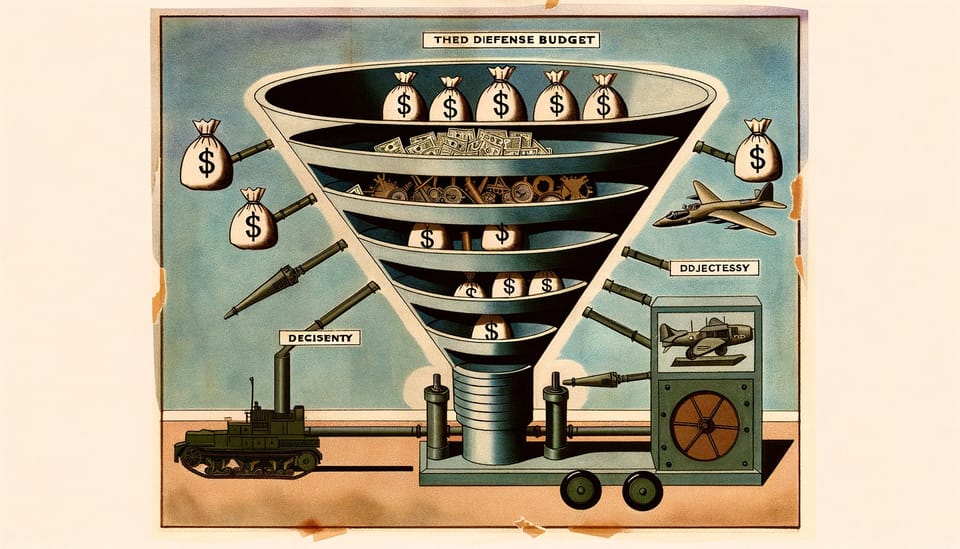
Start with capability, since that is what 2027 ostensibly measures. The Pentagon’s 2024 report estimates China’s real defense spending at $330-450 billion annually—far exceeding the official $232 billion budget. The PLA’s precision-strike missile inventory has tripled since 2020, reaching some 3,500 missiles on 1,500 launchers. Its navy now fields more hulls than the U.S. fleet, though displacement and capability lag behind. The report’s verdict: China is “rapidly advancing toward its goal of being prepared to take Taiwan by force.”
Yet capability is not capacity, and capacity is not intent. The PLA has never conducted a contested amphibious assault. Its last major combat operation—the 1979 invasion of Vietnam—revealed coordination failures so severe that subsequent reforms consumed decades. The anti-corruption purges that swept through the Rocket Force in 2023-2024 removed hand-picked loyalists, suggesting the rot Xi discovered ran deeper than he anticipated. When even trusted subordinates prove unreliable, what confidence can Beijing place in readiness reports?
This creates what might be called the corruption uncertainty problem. The PLA’s modernization metrics look impressive on paper. But paper is precisely where corruption lives. If procurement officers inflated capability assessments, if training exercises were staged for political theater rather than operational learning, if maintenance budgets were siphoned into private accounts, then 2027 readiness may be a Potemkin milestone—impressive from a distance, hollow up close.
The Pentagon’s assessment cannot resolve this uncertainty. Neither can Beijing’s. The very institutional pathologies that corruption creates—the reluctance to deliver bad news upward, the incentive to confirm what leaders want to hear—mean that Xi himself may not know whether the PLA can execute what he has ordered it to prepare for.
Blockade Before Invasion
The fixation on amphibious assault obscures a structural decoupling in PLA capabilities. China’s ability to blockade Taiwan is maturing on a fundamentally different timeline than its ability to invade. The precision-strike arsenal that has tripled since 2020 serves counter-intervention and maritime denial—keeping American carriers at distance, cratering Taiwanese airfields, severing undersea cables. None of this requires the PLA to solve the fiendishly difficult problem of landing and sustaining ground forces against a hostile population of 23 million.
A blockade scenario changes the calculus entirely. Taiwan imports 98% of its energy. Its pharmaceutical supply chains depend on just-in-time logistics vulnerable to disruption. Reports of Chinese infiltration of Taiwan’s medical cold chain infrastructure suggest Beijing has studied how to transform a blockade from external pressure into internal collapse accelerator. Cut the flow of insulin refrigeration, and you do not need to land a single soldier.
This matters because the 2027 conversation has been captured by the most dramatic scenario—D-Day across the Taiwan Strait—when the more plausible near-term threat is something closer to strangulation. The PLA may be ready to blockade well before it is ready to invade. Treating 2027 as the invasion deadline may cause defenders to optimize for the wrong contingency.
The Prophecy’s Mechanics
How does a date become a self-fulfilling prophecy? Through what second-order cybernetics calls observer-system feedback. When U.S. intelligence warns about 2027, the warning itself enters the system being observed. Taiwan responds by extending conscription, which Beijing interprets as preparation for independence. America accelerates arms transfers, which Beijing interprets as encirclement. Each interpretation generates countermeasures that appear to validate the original warning.
The mechanism runs deeper than action-reaction spirals. The 2027 date has become what game theorists call a focal point—a mutually salient coordinate that helps adversaries synchronize even without communication. For PLA budget planners seeking modernization funds, 2027 justifies procurement. For Pentagon officials seeking Indo-Pacific resources, 2027 justifies reallocation. For Taiwanese defense reformers, 2027 justifies conscription extension. The date solves domestic political problems for all parties simultaneously.
This creates convergent bureaucratic pressure toward the very outcome everyone claims to want to avoid. Procurement officers in Beijing, Washington, and Taipei are all working to the same deadline, not because any central authority coordinated them, but because the focal point emerged from the information environment and became self-reinforcing. The timeline synchronizes adversaries like a metronome.
India’s semiconductor subsidies illustrate the phenomenon. New Delhi has committed over $5 billion to onshore chip fabrication—a revealed preference that validates the 2027 crisis narrative. If India’s strategic planners believed the timeline was noise, they would not be spending infrastructure-tempo capital to hedge against it. But by hedging, they signal that the risk premium is real, which reinforces the timeline’s credibility for everyone else.
Taiwan’s Divided House
Taiwan’s response to 2027 has been schizophrenic in ways that illuminate the prophecy’s corrosive effects. President William Lai Ching-te, inaugurated in May 2024, inherited a legislature where his Democratic Progressive Party lacks a majority. The opposition Kuomintang and Taiwan People’s Party have blocked defense budget increases during the exact years when China is assessed to achieve invasion capability. Legislative paralysis peaks precisely when preparedness matters most.
The conscription extension—from four months to one year, effective 2024—tells a more complex story. Only 6% of eligible conscripts chose immediate service in 2024; 94% deferred. This selection effect means early cohorts are disproportionately composed of either ideological volunteers or those who could not defer—hardly a representative sample for building military culture. The barracks oral traditions these cohorts create will shape institutional memory for decades.
Polling reveals a measurement paradox Beijing can exploit. Some 67.8% of Taiwanese say they are willing to fight to defend the island. But 52.2% say they are unwilling to pay the ultimate price. This gap between “fighting” and “dying” creates ambiguity that Chinese planners may interpret as bluff. The willingness to resist is real but shallow—or perhaps the willingness to die is real but the survey methodology cannot capture it. Either way, the uncertainty itself becomes strategic information.
Taiwan’s civil defense handbook, published with much fanfare, represents what one analyst called “spore dispersal without root establishment.” Information has been broadcast across society, but the underground infrastructure—practiced local networks, pre-positioned resources, trained coordinators—that would allow those spores to germinate remains underdeveloped. The handbook is preparation theater, useful for signaling resolve but insufficient for actual resilience.
America’s Polarization Problem
The United States faces its own self-fulfilling dynamic. Domestic polarization does not merely make congressional authorization for Taiwan defense harder—it actively incentivizes presidents to expand unilateral war powers. When partisan gridlock blocks legislative action, the “national interest” bypass mechanism becomes the path of least resistance. The Libya precedent looms: executive action justified by urgency, accountability deferred indefinitely.
Research from American University finds that polarization degrades the credibility of American security commitments. Allies who witnessed the Afghanistan withdrawal, the oscillation between Trump and Biden policies, and the January 6th spectacle now price American reliability at a discount. Extended deterrence works only if the extending power is believed. Belief is eroding.
This creates a recursive problem. As allies doubt American commitment, they hedge. Japan’s defense spending surge, Australia’s AUKUS investment, South Korea’s indigenous missile programs—all represent insurance against American abandonment. But hedging signals doubt, which adversaries interpret as alliance weakness, which emboldens the very aggression hedging was meant to deter.
The 2027 timeline intersects this dynamic at its most dangerous point. If Beijing concludes that American political dysfunction makes intervention unlikely, the window for action appears to open. If Washington concludes that credibility requires dramatic demonstration, the temptation to signal resolve through risky commitments grows. Both conclusions could be wrong. Both could be acted upon.
The Legitimacy Trap
Xi Jinping’s decision calculus involves variables that capability assessments cannot capture. The Chinese Communist Party’s legitimacy has shifted from economic prosperity to nationalist narrative. As GDP growth slows—the official pivot to “high-quality development” is partly acknowledgment that double-digit expansion is over—military spending becomes a dual-purpose mechanism. It absorbs surplus industrial capacity while anchoring legitimacy in national strength rather than personal enrichment.
The 2027 PLA centennial goal exists in a dual hierarchy. Formally, it is a checkpoint in the 14th Five-Year Plan ladder: 2027 leads to 2035 (basic military modernization) leads to 2049 (world-class military). But Xi has rhetorically fused Taiwan reunification with “national rejuvenation” and the Chinese Dream, creating pressure where the administrative milestone becomes freighted with civilizational significance.
This fusion may paradoxically reduce invasion probability. Xi requires dual legacy: unifier and peacemaker. The 2027 milestone allows him to claim “readiness” (satisfying nationalist expectations) without requiring actual invasion (preserving the option to be remembered as the leader who achieved reunification peacefully). The date becomes a propaganda checkpoint rather than an operational deadline.
Yet the one-child policy demographic structure complicates everything. When each soldier represents an entire family’s lineage capital and retirement security, casualties do not merely reduce force strength—they terminate bloodlines. The PLA’s 23 million-strong reserve of military-age males sounds formidable until you recognize that each one is, statistically, an only son. Casualty tolerance in Chinese society may be far lower than capability metrics suggest.
What Breaks First
The default trajectory leads toward what strategists call “crisis instability”—a situation where both sides fear the other will strike first, creating incentives to preempt. China’s pre-positioned cyber infrastructure (the Volt Typhoon campaign embedded in American critical infrastructure) and Taiwan’s vulnerability to precision strikes create a “use it or lose it” dynamic that rewards whoever moves first in a crisis.
Economic interdependence, once considered a brake on conflict, has become a weapon. Taiwan’s semiconductor dominance—TSMC produces over 90% of the world’s most advanced chips—was supposed to make the island too valuable to attack. But the “silicon shield” is eroding as America, Japan, and Europe build alternative capacity. The very success of supply chain diversification reduces Taiwan’s deterrent value. By 2027, the shield may be thin enough to risk.
The scenario that keeps defense planners awake is not invasion but escalation spiral. A Chinese “gray zone” operation—a coast guard blockade, a cyber attack on financial systems, a quarantine of outlying islands—that Taiwan or America responds to with force, triggering kinetic exchange that neither side planned but neither can back down from. In this scenario, 2027 is not a deadline but a gravitational field, pulling events toward collision through accumulated momentum.
Intervention Points
Three leverage points exist, though none is cost-free.
First, strategic communication. The 2027 date has achieved its power partly through repetition. American officials could shift emphasis from “ready by 2027” to “capable but constrained”—acknowledging PLA modernization while highlighting the factors (corruption uncertainty, demographic constraints, economic interdependence) that make invasion costly. This risks appearing weak. It also risks being wrong. But it might reduce the focal-point effect that synchronizes adversarial preparations.
Second, Taiwan’s asymmetric posture. The “porcupine strategy”—mobile anti-ship missiles, sea mines, distributed air defense—makes invasion costly without requiring Taiwan to match PLA capability symmetrically. Accelerating this posture while de-emphasizing prestige platforms (submarines, advanced fighters) would signal defensive intent while raising the invasion price. The trade-off: Taiwan’s military culture resists the shift, and politicians prefer visible hardware to dispersed capabilities.
Third, economic entanglement reconstruction. The decoupling momentum is real, but selective re-engagement on specific supply chains could rebuild mutual vulnerability as deterrent. If China depends on Taiwanese semiconductor equipment and Taiwan depends on Chinese rare earths, both have hostages. The trade-off: this requires trusting economic interdependence as a constraint, which the Ukraine experience has discredited.
None of these interventions prevents conflict. They shift probabilities at the margin. The honest assessment is that 2027 has achieved escape velocity—it now shapes behavior independent of its original analytical basis.
FAQ: Key Questions Answered
Q: Has Xi Jinping actually ordered an invasion of Taiwan by 2027? A: No. U.S. intelligence assesses that Xi ordered the PLA to be ready to invade by 2027—a capability milestone, not an operational directive. CIA Director Burns has emphasized that readiness does not imply decision.
Q: Could China successfully invade Taiwan today? A: Probably not. The PLA has never conducted a contested amphibious assault, and recent corruption purges suggest capability reports may be inflated. A blockade is more feasible than invasion in the near term.
Q: What would trigger a Taiwan conflict? A: The most likely trigger is not a planned invasion but an escalation spiral from gray-zone operations—coast guard confrontations, cyber attacks, or quarantines of outlying islands that provoke responses neither side can back down from.
Q: Is Taiwan’s military prepared to defend itself? A: Partially. Taiwan has extended conscription and invested in asymmetric capabilities, but legislative gridlock has blocked defense budget increases, and civil defense infrastructure remains underdeveloped despite public handbooks.
The Date That Devours Itself
The 2027 timeline began as an intelligence assessment. It has become something else: a shared coordinate that organizes the behavior of adversaries, a bureaucratic justification that unlocks budgets across three continents, a focal point that synchronizes preparations for the conflict it was meant to warn against.
This is not to say the PLA poses no threat. It does. Chinese military modernization is real, and the capability gap with Taiwan widens yearly. But the specific date—2027—has achieved a life independent of capability analysis. It shapes decisions in Taipei, Washington, Tokyo, and Canberra regardless of whether Xi has decided anything.
The danger is not that 2027 is wrong. The danger is that it is becoming true through the preparations undertaken to prevent it. Each side, watching the other arm, concludes that the threat is real. Each side, concluding the threat is real, arms further. The spiral tightens.
Somewhere in this process, the prophecy stops predicting and starts creating. That transition may already have occurred. If so, the question is no longer whether 2027 reflects genuine capability. The question is whether anyone can stop counting down.
Sources & Further Reading
The analysis in this article draws on research and reporting from:
- U.S. Department of Defense China Military Power Report 2024 - Primary source for PLA capability assessments and defense spending estimates
- Taiwan’s 2025 National Defense Report - Official ROC assessment of defense posture and conscription reforms
- American University analysis on polarization and foreign policy - Research on how domestic division affects alliance credibility
- Lowy Institute analysis on the 2027 timeline - Expert assessment distinguishing readiness from intent
- Stanford FSI on the Taiwan temptation - Strategic analysis of Chinese decision calculus
- DW polling on Taiwanese willingness to fight - Survey data on public attitudes toward defense
- Tripwire force theory - Conceptual framework for understanding deterrence mechanisms
- RAND analysis of protracted war scenarios - War-gaming research on conflict trajectories