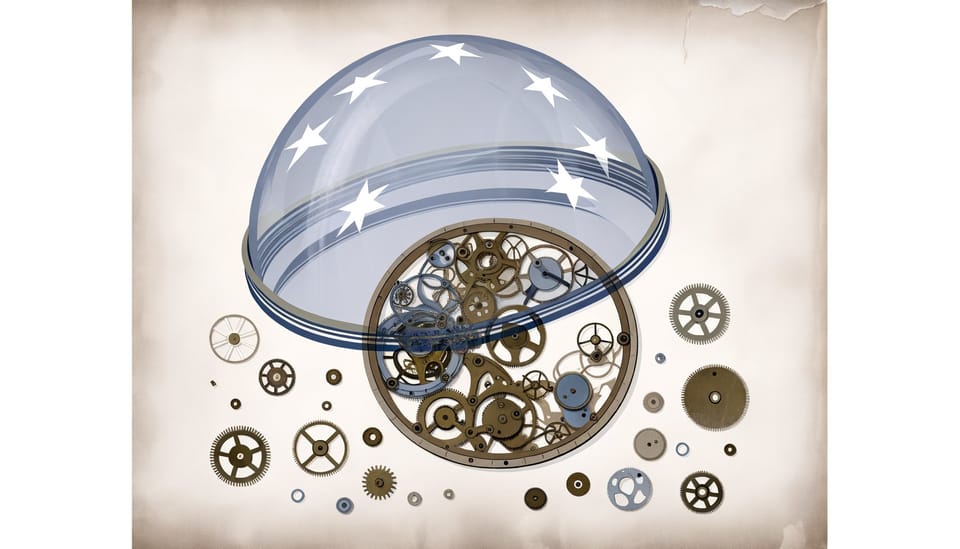
Japan's hypersonic missiles will work—the system that commands them will not
Tokyo's new strike weapons force a question Japanese strategic culture has avoided for three generations. The answer will fracture alliances before it deters adversaries.
🎧 Listen to this article
The Missile That Rewrites Memory
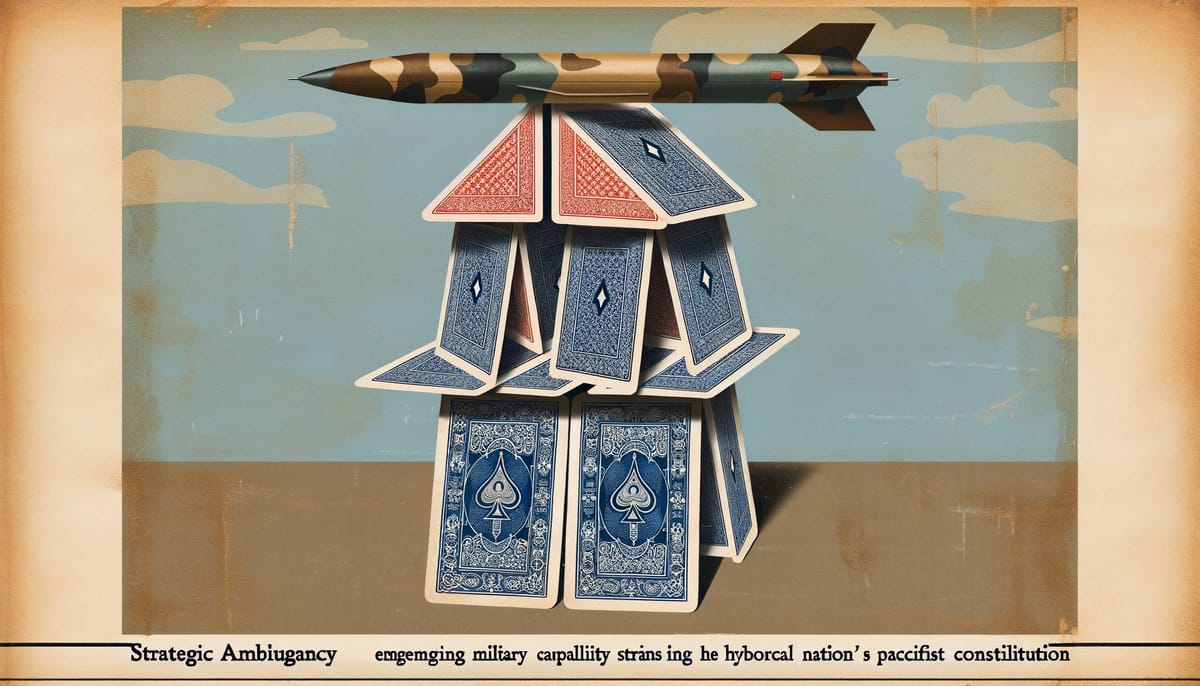
Japan’s defence establishment has spent eight decades perfecting the art of strategic ambiguity. Article 9 of the constitution renounces war. The Self-Defense Forces exist anyway. American bases dot the archipelago. Japanese troops never fire in anger. This careful choreography—aggressive capability wrapped in pacifist language—has kept the peace while keeping options open.
The Hyper Velocity Gliding Projectile changes everything.
When Mitsubishi Heavy Industries delivers Block 1 hypersonic missiles in 2026, Japan will possess what its 2022 National Security Strategy delicately terms “counterstrike capabilities.” The weapons can reach targets in China and North Korea within minutes. They manoeuvre at speeds exceeding Mach 5, rendering most air defences obsolete. And they force a question that Japanese strategic culture has studiously avoided for three generations: what happens when a nation constitutionally committed to self-defence acquires the means to strike first?
The answer depends on who breaks first. Not militarily—the weapons themselves may never be fired. What fractures is the elaborate architecture of assumptions, relationships, and unspoken agreements that has kept East Asia’s great powers from stumbling into catastrophe. Three fault lines run through this architecture. One will give way before the others.
The Trust Deficit Nobody Mentions
Start with Seoul. Japan and South Korea are America’s most capable Asian allies, bound by the 2016 General Security of Military Information Agreement (GSOMIA) to share intelligence on North Korean threats. They conduct trilateral exercises with American forces. Their navies coordinate patrols. On paper, they are partners.
In practice, they are barely speaking.
The problem predates hypersonics but will be sharpened by them. South Korean public opinion toward Japan remains poisoned by unresolved grievances over wartime forced labour and the comfort women system. When Moon Jae-in’s government threatened to terminate GSOMIA in 2019, American officials scrambled to prevent the alliance structure from fragmenting. The agreement survived. The underlying mistrust did not.
Japanese hypersonic missiles will land in this toxic environment. Consider the operational implications. If Tokyo deploys these weapons to deter North Korean aggression—their stated purpose—they will be aimed at targets that South Korea’s constitution considers part of its own territory. The ROK Constitution has never recognised the division of the peninsula. A Japanese strike on a North Korean missile base, however defensive in intent, would constitute an attack on what Seoul legally claims as Korean soil.
This is not abstract legal theory. It is the kind of contradiction that paralyses alliance coordination in a crisis. When Japan’s 2022 National Security Strategy describes the region as facing “its greatest trial since the end of World War II,” it does not mention that the trial includes managing a partner whose historical memory treats Japanese military capability as inherently threatening.
The intelligence-sharing relationship will erode first. Not through formal withdrawal—that would be too politically costly—but through the quiet atrophy of operational trust. South Korean officers will share less. Japanese planners will assume they are being excluded. American coordinators will spend more time managing allies than deterring adversaries. The hypersonic missiles will sit in their launchers, technically ready, operationally isolated.
Beijing’s Calculation Problem
China’s response to Japanese hypersonics will be louder but less consequential. The People’s Liberation Army has been preparing for this moment for years.
The 2025 Pentagon assessment of Chinese military power catalogues the scale of Beijing’s counter-intervention capabilities: six additional aircraft carriers projected by 2035, the DF-27 missile with 8,000-kilometre range capable of striking the northwestern United States, hardened command facilities near Shanghai and Ningbo, and a proliferating fleet of mobile launchers designed to survive a first strike. Japanese hypersonics do not fundamentally alter this balance. They complicate it.
The complication matters because it affects how Xi Jinping thinks about time. The Chinese leader’s formative political experiences—his father’s persecution during the Cultural Revolution, the Soviet collapse that followed Gorbachev’s reforms—produced a decision-making style that prioritises control over efficiency and treats political chaos as an existential threat. He centralises authority, eliminates collective leadership, and uses historical grievances to justify present actions.
Japanese hypersonic deployments feed directly into this cognitive framework. China’s nationalist narrative already portrays Japan as an unrepentant aggressor seeking to revive its militarist past. The Nanjing Massacre, now eight decades past, remains a living wound in official memory. When Beijing’s propagandists describe Japanese missiles as proof of resurgent imperialism, they are not merely performing for domestic audiences. They are expressing a genuine belief about Japanese intentions that shapes how Chinese planners model escalation scenarios.
The practical effect is doctrinal rigidity. China’s approach to crisis management emphasises early action and decisive force. Its military writings stress joint operations and counter-intervention as critical components of any Taiwan contingency. Japanese hypersonics, which can threaten PLA airbases and command nodes within minutes, compress the timeline for Chinese decision-making in exactly the ways most likely to produce miscalculation.
But this is not what breaks first. Beijing has been living with American hypersonic development for years. Japanese missiles add capability at the margin. They do not change the fundamental strategic geometry. China will respond with accelerated production of its own precision munitions, dispersal of critical infrastructure, and intensified information operations designed to split the US-Japan alliance. None of these responses will succeed quickly enough to matter.
The Constitutional Fracture
The real vulnerability lies in Tokyo itself.
Prime Minister Sanae Takaichi came to power as an ideological inheritor of Shinzo Abe’s vision for a “normal” Japan—one capable of defending itself without American permission and projecting power without constitutional apology. Her formative political experience was meeting Margaret Thatcher, who provided a template for being both female and conservative without contradiction. Abe’s assassination in 2022 created a sense of inherited mission. She accelerates timelines on key priorities to create irreversible momentum.
The hypersonic program is her signature achievement. It is also her greatest vulnerability.
Article 9 of the Japanese Constitution renounces “war as a sovereign right of the nation and the threat or use of force as means of settling international disputes.” Successive governments have interpreted this prohibition creatively. The Self-Defense Forces exist because they are, technically, not military forces. American bases operate because they are, technically, not Japanese. The 2014 reinterpretation allowing collective self-defence passed because it was, technically, still defensive.
Hypersonic missiles strain these fictions past breaking point. The weapons are designed to destroy targets in foreign countries before those countries can attack Japan. The government calls them “counterstrike capabilities” and insists they can only be used “after an armed attack against Japan has occurred.” But the physics of hypersonic warfare make this distinction meaningless. If Japan waits until missiles are actually inbound, the counterstrike window closes. Effective deterrence requires the credible threat of preemption.
Japanese legal scholars understand this. So do opposition politicians. The question is whether the Japanese public, raised on three generations of pacifist education, will accept weapons whose operational logic requires abandoning the defensive posture that defines national identity.
The answer is probably not. Public opinion surveys consistently show support for the US alliance and scepticism toward independent military capability. The coalition politics that brought Takaichi to power are fragile. Her government depends on partners who do not share her ideological commitment to constitutional revision. When the first serious crisis tests the hypersonic deterrent—a North Korean provocation, a Chinese incursion near the Senkaku Islands—the domestic debate over whether Japan can actually use these weapons will paralyse decision-making at exactly the moment when speed matters most.
The Okinawan Veto
There is a geographic dimension to this constitutional fracture that Tokyo prefers not to discuss.
The Ryukyu Islands, stretching from Kyushu toward Taiwan, are the obvious deployment location for hypersonic missiles aimed at Chinese and North Korean targets. They are also home to populations that have never fully accepted incorporation into the Japanese state. Okinawa hosted the bloodiest battle of the Pacific War. It remained under American occupation until 1972, two decades after the rest of Japan regained sovereignty. Its residents bear a disproportionate share of the American military presence and receive a disproportionately small share of the benefits.
Hypersonic deployments will intensify this grievance. Missiles attract retaliation. The populations living near launch sites become hostages to a strategic logic they did not choose and cannot escape. Okinawan activists have successfully blocked or delayed previous base expansions. They will mobilise against hypersonic installations with equal determination.
The Ainu communities of Hokkaido present a different but related challenge. Northern Japan offers alternative basing options that reduce vulnerability to Chinese strikes. It also hosts indigenous populations whose relationship to the Japanese state remains contested. The Hokkaido Ainu Association has not endorsed military expansion on traditional lands. Their opposition may not carry legal weight, but it carries moral weight in a society increasingly sensitive to indigenous rights.
These local vetoes will not stop hypersonic deployment. They will slow it, complicate it, and ensure that the weapons enter service amid domestic controversy rather than national consensus. The missiles will be operational. The political foundation for using them will not.
The Speed Mismatch
Hypersonic weapons create a temporal paradox that no amount of alliance coordination can resolve.
The missiles travel at speeds exceeding Mach 5. Flight times from Japanese territory to targets in China or North Korea are measured in minutes. Decision timelines must be correspondingly compressed. But the alliance structures through which Japan would coordinate any strike operate on human timescales—phone calls between leaders, consultations with lawyers, authorisation chains that run through multiple capitals.
American extended deterrence depends on this consultation process. The United States has spent decades assuring Asian allies that it will defend them while retaining control over escalation. Japanese hypersonics threaten this arrangement by creating capabilities that cannot wait for American approval. If Tokyo must decide within minutes whether to launch, Washington’s role shrinks from partner to observer.
The alternative—pre-delegating launch authority to Japanese commanders or integrating Japanese missiles into American targeting systems—raises its own problems. Pre-delegation undermines the political accountability that democracies require for decisions about war and peace. Integration subordinates Japanese sovereignty to American command structures in ways that contradict the “normal nation” vision driving the program.
Neither solution is stable. The hypersonic program will proceed anyway, creating a capability whose use remains constitutionally contested, politically fraught, and operationally ambiguous. This is not deterrence. It is the appearance of deterrence masking a decision-making vacuum.
What Actually Breaks
The sequence of fractures will unfold over years, not months. South Korean intelligence cooperation will thin first, as officers on both sides find reasons to share less and suspect more. The trilateral exercises will continue but accomplish less. American coordinators will paper over the gaps with diplomatic language that fools no one.
Chinese propaganda will intensify, but Chinese military planners will adapt. The PLA has been preparing for American hypersonics for a decade. Japanese missiles add targets to track and launchers to destroy. They do not change the fundamental calculus of a Taiwan contingency.
The decisive break will come in Tokyo. A crisis will emerge—it always does—and Japanese leaders will discover that they possess weapons they cannot use. The constitutional ambiguity that enabled procurement will prevent employment. The domestic coalition that funded development will fracture over deployment. The alliance that was supposed to be strengthened will be revealed as a coordination mechanism without a decision-making core.
This is not the catastrophic war that hypersonic critics fear. It is something quieter and more corrosive: the demonstration that Japan’s strategic modernisation has produced capability without coherence. The missiles will work. The system that commands them will not.
The Path Not Taken
There were alternatives. Japan could have invested the same resources in defensive systems—missile interceptors, hardened shelters, distributed communications—that would have complicated Chinese planning without raising constitutional questions. It could have pursued deeper integration with American command structures, accepting subordination in exchange for credibility. It could have addressed the historical grievances with South Korea that make alliance coordination so difficult.
None of these paths offered the symbolic satisfaction of offensive capability. None allowed Japanese leaders to claim they had finally shed the constraints of the postwar settlement. None provided the domestic political benefits of appearing strong.
The hypersonic program reflects a choice about national identity as much as military strategy. Japan wanted to be seen as a power that could strike back. Whether it can actually strike back—whether the constitutional, political, and alliance constraints permit employment in any realistic scenario—was a question for later.
Later has arrived.
Q: Can Japan legally use hypersonic missiles for preemptive strikes?
The Japanese government maintains that “counterstrike capabilities” are constitutional only when used after an armed attack has occurred. However, the physics of hypersonic warfare require decisions in minutes, making the distinction between preemption and response operationally meaningless. This constitutional ambiguity remains unresolved.
Q: How do Japanese hypersonic missiles affect the US-Japan alliance?
They create coordination problems that existing alliance structures cannot easily solve. American extended deterrence assumes Washington retains control over escalation decisions. Japanese hypersonics capable of striking China within minutes undermine this assumption by creating capabilities that cannot wait for American approval.
Q: Why does South Korea oppose Japanese military expansion?
Historical grievances over wartime forced labour and the comfort women system have poisoned public opinion toward Japan. Additionally, the ROK Constitution claims sovereignty over all of Korea, meaning Japanese strikes on North Korean targets would technically constitute attacks on territory Seoul considers its own.
Q: What is China’s likely response to Japanese hypersonic deployment?
Beijing will accelerate production of its own precision munitions, disperse critical military infrastructure, and intensify information operations designed to split the US-Japan alliance. These responses will unfold over years rather than months and are unlikely to fundamentally alter the regional military balance.
The Quiet Unravelling
East Asian stability has always been a confidence trick—a set of mutual assumptions that prevented any party from testing what would happen if they stopped assuming. Japan assumed America would defend it. China assumed Japan would not attack. South Korea assumed historical grievances could coexist with operational cooperation. Everyone assumed the constitutional constraints were real.
The hypersonic missiles do not destroy these assumptions. They reveal that the assumptions were already hollow. The weapons work. The system that would employ them does not. And in the gap between capability and coherence, the region’s stability will slowly, quietly, unmistakably erode.
Sources & Further Reading
The analysis in this article draws on research and reporting from:
- Japan’s 2022 National Security Strategy - Primary document establishing Japan’s counterstrike capability doctrine and regional threat assessment
- US Department of Defense China Military Power Report 2025 - Comprehensive assessment of PLA modernisation and force projection capabilities
- Japan’s Potential Contributions in an East China Sea Contingency (RAND) - Analysis of Japanese military capabilities in regional conflict scenarios
- Stimson Center Analysis of Japan’s National Security Strategy - Expert assessment of constitutional and legal constraints on Japanese military action
- The Diplomat on Japan’s Defense Buildup - Reporting on Japan’s 43 trillion yen defence modernisation program
- China’s Maritime Militia and Fishing Fleets (Military Review) - Analysis of grey zone capabilities affecting regional stability