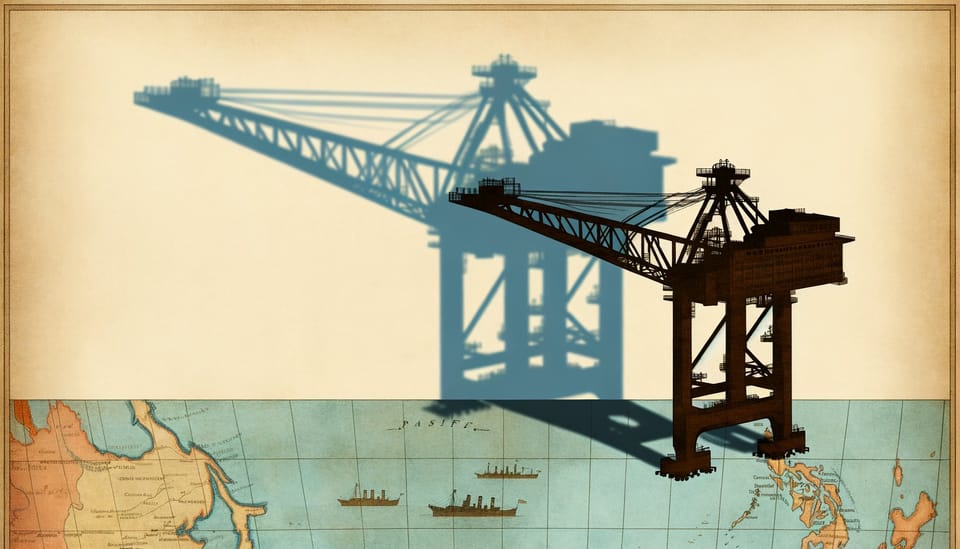
Japan's hypersonic missiles blur the line between defense and attack
Tokyo's new weapons can strike Chinese bases within minutes. Officials call them defensive. Beijing sees a sword dressed as a shield. The distinction may determine whether Asia's next crisis stays contained or spirals into catastrophe.
🎧 Listen to this article
The Shield That Strikes
Japan’s defense establishment has spent decades perfecting the art of semantic camouflage. When the Ministry of Defense announced in July 2024 that it had successfully test-launched its Hyper Velocity Gliding Projectile, officials described it as a weapon for “island defense”—a missile designed to repel invaders from remote territories. The framing was immaculate. The reality is more complicated.
A truck-launched hypersonic glide vehicle capable of striking targets hundreds of kilometers away is not a shield. It is a sword dressed in defensive clothing. The distinction matters because Japan’s entire postwar identity rests on the premise that it maintains military forces exclusively for self-defense. Article 9 of the constitution renounces war and prohibits the maintenance of “war potential.” For seventy years, successive governments have threaded this needle by acquiring weapons that could, in theory, be used offensively but were rhetorically confined to territorial protection.
The HVGP represents something different. Not because hypersonic technology is inherently offensive—all weapons exist on a spectrum—but because Japan’s 2022 National Security Strategy explicitly introduced “counterstrike capability” as a new pillar of defense policy. The document states that “possession of counterstrike capabilities is now indispensable.” This is not semantic evolution. It is doctrinal rupture.
The Constitutional Fiction
Japan’s relationship with Article 9 has always been creative. The Self-Defense Forces technically shouldn’t exist under a strict reading of the text. The Supreme Court has avoided ruling definitively on the matter, preferring to leave the question to political judgment. This ambiguity has allowed Japan to build one of the world’s most capable militaries while maintaining the legal fiction of pacifism.
The fiction served multiple purposes. Domestically, it reassured a population traumatized by war that their government would never again pursue imperial ambitions. Regionally, it signaled to neighbors—particularly China and Korea—that Japan’s military posture was fundamentally different from the prewar era. Strategically, it allowed Tokyo to shelter under the American security umbrella while contributing minimally to collective defense.
Each of these purposes has eroded. Public opinion has shifted as China’s military buildup accelerates and North Korea’s missile tests punctuate daily life. Regional reassurance has become less relevant as China’s own assertiveness generates anxiety throughout Asia. And the American umbrella, once assumed to be permanent, now comes with questions about burden-sharing and commitment.
The 2015 reinterpretation of Article 9 under Prime Minister Shinzo Abe cracked the door open for collective self-defense. The 2022 strategy kicked it wide. Japan can now legally strike enemy bases if an armed attack is imminent—a capability that would have been unthinkable a generation ago.
But legal permission is not the same as strategic clarity. The HVGP program reveals a tension at the heart of Japan’s defense transformation: the weapons are designed for American operational concepts, while the political justification remains tethered to Japanese constitutional constraints. These two logics do not easily reconcile.
Two Audiences, One Missile
The HVGP will be deployed in two blocks. Block 1, targeted for 2026, focuses on anti-ship missions—sinking vessels attempting to approach Japanese islands. Block 2 adds land-attack capability, extending the weapon’s reach to targets on foreign soil. Both versions travel at hypersonic speeds, meaning they can evade most existing missile defenses through a combination of velocity and maneuverability.
For Japanese domestic audiences, the narrative emphasizes defense of the Nansei archipelago—the island chain stretching from Kyushu toward Taiwan. China has increasingly probed this region with naval patrols and air incursions. In December 2025, Chinese J-15 jets locked fire-control radar on Japanese F-15s near Okinawa, an act that typically precedes weapons release. The threat is not hypothetical. Japanese planners argue that hypersonic missiles provide the standoff distance needed to defend remote islands without exposing forces to Chinese anti-access systems.
For American planners, the calculus is different. The HVGP integrates into a broader Indo-Pacific architecture designed to complicate Chinese military options in a Taiwan contingency. Japan’s missiles could target Chinese naval vessels, amphibious forces, or even bases on the mainland—depending on how far the weapon’s range extends and how targeting data flows between allied systems.
This dual-use ambiguity is not accidental. It allows Japan to maintain constitutional compliance while contributing to alliance requirements. But it also means that the same missile looks defensive from Tokyo and offensive from Beijing.
How Beijing Reads the Tea Leaves
China’s strategic community does not parse Japanese constitutional debates with sympathy. What matters is capability, not intention. A hypersonic missile that can strike Chinese forces is a hypersonic missile that can strike Chinese forces, regardless of whether Japanese lawyers have blessed its use as “self-defense.”
The historical overlay compounds the problem. Japan’s 1931-1945 occupation of China remains a live wound in Chinese political culture. State education emphasizes the “Century of Humiliation” as formative national experience. When PLA analysts see the HVGP, they do not see island defense. They see a technological descendant of the aircraft that bombed Shanghai.
This perception gap creates escalation risk independent of actual Japanese intentions. Chinese military planners must assume worst-case scenarios. If Japan possesses the capability to strike Chinese bases, China must develop countermeasures—more missiles, better defenses, faster response times. Japan observes these countermeasures and concludes that its concerns about Chinese aggression were justified. The spiral tightens.
The timing amplifies these dynamics. China’s leadership under Xi Jinping has tied Taiwan’s status to regime legitimacy and personal legacy. The window for peaceful resolution narrows as Xi ages and domestic pressures mount. Japan’s hypersonic program enters this environment not as a stabilizing deterrent but as an accelerant. It compresses decision timelines precisely when patience is most needed.
The Alliance Paradox
Japan’s transformation serves American interests—up to a point. Washington has long pressed Tokyo to contribute more to regional security. The HVGP program, funded by Japan’s expanded defense budget (now approaching 2% of GDP), represents exactly the kind of capability investment that American strategists have requested.
But alliance management is not simply about capability aggregation. It requires coordination of doctrine, targeting, and escalation control. Here the picture becomes murkier.
The United States and Japan are co-developing the Glide Phase Interceptor, a defensive system designed to shoot down hypersonic missiles. Japan leads development of rocket motors and propulsion components. This defensive cooperation makes strategic sense—both countries face hypersonic threats from China and North Korea.
The offensive side is less transparent. American targeting systems and intelligence networks would likely support HVGP employment in any serious conflict. But the degree of integration, the rules governing use, and the command relationships remain classified. This opacity serves tactical purposes—adversaries cannot easily predict how the alliance will respond—but it creates strategic uncertainty.
The risk is entrapment. If American targeting data flows to Japanese missiles, does Japan retain independent control over escalation? If a Japanese strike on Chinese forces triggers retaliation against American bases, has Washington been dragged into a war it did not choose? These questions have no public answers because they have no settled private answers either.
Okinawa’s Burden
The geography of Japan’s hypersonic deployment concentrates risk on Okinawa. The prefecture hosts the majority of American forces in Japan and sits directly in the path of any Taiwan contingency. HVGP launchers positioned on the Nansei islands would become priority targets for Chinese missiles in the opening hours of a conflict.
Okinawans have long resented their role as strategic buffer. The prefecture bears disproportionate costs—noise, crime, land appropriation—while mainland Japan enjoys the benefits of the alliance without the burdens. Hypersonic deployment intensifies this asymmetry. Okinawa becomes not just a host for foreign bases but a launch platform for strikes that could invite devastating retaliation.
Local opposition has limited political traction. Tokyo’s strategic calculus treats Okinawan concerns as manageable friction rather than fundamental constraint. The national government can override prefectural objections on security matters, and it has done so repeatedly. But the moral dimension persists. Japan’s defense transformation rests partly on the willingness to sacrifice peripheral populations for central security—a dynamic that echoes, uncomfortably, prewar patterns of imperial burden-sharing.
The Speed Problem
Hypersonic weapons compress decision timelines in ways that challenge human judgment. A missile traveling at Mach 5 covers vast distances in minutes. The window for assessment, consultation, and response shrinks accordingly. Leaders who might otherwise pause to verify intelligence or explore diplomatic options face pressure to act before the situation clarifies.
This compression affects both sides. Chinese commanders observing Japanese missile preparations must decide whether to strike first or risk losing their own forces. Japanese commanders detecting Chinese mobilization must decide whether to launch preemptively or accept the possibility of being caught on the ground. The incentives for early action intensify.
Nuclear shadows lengthen these risks. China maintains a relatively small nuclear arsenal compared to the United States and Russia, but it has expanded rapidly in recent years. Chinese doctrine has traditionally emphasized no-first-use, but the credibility of this commitment under extreme pressure remains uncertain. If a Japanese hypersonic strike degraded Chinese conventional capabilities, would Beijing escalate to nuclear threats to restore deterrence? The question is not rhetorical. It is the scenario that keeps strategists awake.
What Stability Requires
Deterrence theorists distinguish between deterrence by punishment and deterrence by denial. The former threatens unacceptable retaliation; the latter makes aggression unlikely to succeed. Japan’s hypersonic program operates in the denial space—it aims to convince China that any attempt to seize Japanese territory or coerce Taiwan would fail.
Denial can be stabilizing if it raises costs without threatening core interests. A China that believes it cannot successfully invade Taiwan might choose not to try. But denial becomes destabilizing if it threatens capabilities that China considers essential for survival. Strikes on mainland bases, command facilities, or nuclear-adjacent infrastructure cross thresholds that denial logic cannot easily manage.
The distinction requires precision in targeting doctrine that may not exist. Can Japan credibly commit to using HVGP only against naval forces and not against mainland targets? Can China believe such commitments when the same missile can reach both? The technology does not discriminate between stabilizing and destabilizing uses. Only human decisions do.
Arms control offers one avenue for managing these risks, but the prospects are dim. China has resisted bilateral negotiations with the United States on nuclear and conventional forces, preferring to build up rather than constrain. Japan has no tradition of arms control engagement and limited diplomatic capacity for such negotiations. The trilateral dynamics—adding North Korea’s missiles and Russia’s Pacific posture—further complicate any framework.
The Domestic Politics of Transformation
Japan’s defense transformation enjoys broader public support than at any point since 1945. Polls consistently show majorities favoring increased defense spending and stronger alliance ties. The shift reflects genuine concern about regional security, not merely elite manipulation.
But support is shallow. The Japanese public has not fully internalized what counterstrike capability means in practice. Politicians describe the HVGP as defensive because that framing polls well, not because it accurately captures the weapon’s strategic function. When—not if—a crisis forces Japan to confront the reality of striking foreign territory, the political consensus may fracture.
Prime Minister Sanae Takaichi, who took office in 2024, represents the nationalist wing of the Liberal Democratic Party. Her mentorship under Abe and commitment to constitutional revision suggest she will push the transformation further. But her coalition depends on partners less enthusiastic about military normalization. The Komeito party, traditionally pacifist, provides crucial votes in the Diet. How far Takaichi can move without losing coalition support remains untested.
The opposition offers no coherent alternative. The Constitutional Democratic Party criticizes specific policies but has not articulated a different vision for Japan’s security in an era of Chinese assertiveness. Pacifism as a political program has lost credibility; pragmatic alternatives have not emerged to replace it.
The Path Ahead
Japan’s hypersonic program will proceed. The industrial base is committed—Mitsubishi Heavy Industries has contracts, engineers have careers, and bureaucratic momentum is difficult to reverse. Block 1 deployment in 2026 will establish facts on the ground. Block 2 will follow. The question is not whether Japan acquires these capabilities but how it manages their implications.
Three dynamics will shape the trajectory. First, alliance coordination must deepen to prevent entrapment and ensure escalation control. This requires difficult conversations about targeting doctrine, command relationships, and red lines—conversations that both governments have preferred to avoid. The alternative is stumbling into conflict through misaligned assumptions.
Second, Japan must develop credible signaling mechanisms to communicate the limited purposes of its capabilities. This is harder than it sounds. Declaratory policy means little without verification, and verification requires transparency that undermines operational effectiveness. The challenge is finding forms of restraint that adversaries can believe.
Third, regional architecture needs strengthening. The Quad (United States, Japan, Australia, India) provides one framework, but it lacks the institutional depth to manage crisis dynamics. ASEAN-centered mechanisms have proven inadequate for great-power competition. Something new is needed—perhaps a security dialogue that includes China, perhaps confidence-building measures focused on specific flashpoints, perhaps arms control negotiations that no one currently wants. The shape is unclear; the necessity is not.
Japan’s hypersonic program does not end its defensive-only posture—that posture ended with the 2022 strategy, if not earlier. What the program does is make the end visible. The sword is no longer hidden in the shield. Whether it cuts toward stability or catastrophe depends on choices not yet made.
Frequently Asked Questions
Q: Does Japan’s constitution actually prohibit offensive weapons? A: Article 9 renounces war and prohibits “war potential,” but successive governments have interpreted this to allow defensive military forces. The 2022 National Security Strategy introduced “counterstrike capability” as constitutionally permissible self-defense, effectively erasing the offensive/defensive distinction for practical purposes.
Q: How fast are hypersonic weapons compared to conventional missiles? A: Hypersonic weapons travel faster than Mach 5—approximately 3,836 miles per hour. This speed, combined with their ability to maneuver during flight, makes them extremely difficult to intercept with current missile defense systems.
Q: Could Japan’s missiles actually reach Chinese military bases? A: The HVGP’s exact range is classified, but Block 2 variants are designed for land-attack missions. Analysts assess that the system could reach targets on the Chinese mainland from positions in the Nansei islands, though Japan officially describes the capability as defensive.
Q: What is the US role in Japan’s hypersonic program? A: The United States and Japan are co-developing the Glide Phase Interceptor for hypersonic defense, with Japan leading propulsion development. The offensive HVGP is a Japanese program, though it would likely integrate with American intelligence and targeting systems in any conflict scenario.
The Closing Calculation
In a conference room in Tokyo, defense officials rehearse the language of restraint. The missiles are for island defense. The capability is minimum necessary. The posture remains exclusively defensive. The words are carefully chosen because they must satisfy audiences with incompatible requirements—a domestic public that wants security without militarism, allies that want capability without liability, adversaries that want reassurance without believing it.
The HVGP will not decide whether Asia’s future is peaceful or violent. That depends on decisions about Taiwan, on economic interdependence, on leadership transitions in Beijing and Washington and Tokyo. But the missile will shape the environment in which those decisions are made. It compresses time. It raises stakes. It forces clarity where ambiguity once provided comfort.
Japan has chosen to arm itself with weapons that travel faster than diplomacy can follow. Whether that choice produces deterrence or disaster will not be known until the moment it matters most—and by then, the missiles will already be in flight.
Sources & Further Reading
The analysis in this article draws on research and reporting from:
- Japan’s National Security Strategy (2022) - The foundational document establishing counterstrike capability as Japanese policy
- Defense News coverage of HVGP test launch - Primary reporting on Japan’s hypersonic program development
- US Department of Defense statement on GPI cooperation - Official documentation of US-Japan hypersonic defense cooperation
- BBC News on China-Japan air incident - Reporting on escalating military tensions near Okinawa
- Congressional Research Service report on hypersonic weapons - Technical and policy analysis of hypersonic systems
- ISDP analysis of Article 9 - Academic examination of Japan’s constitutional constraints
- SPF USA on Japan’s 2022 security reforms - Analysis of Japan’s defense policy transformation