Iran's Strait of Hormuz threats are undermining its own nuclear bargaining position
Tehran wields the world's most important oil chokepoint as leverage in nuclear negotiations with Washington. But each provocation strengthens the case for the military strikes Iran hopes to prevent, while exposing fragilities—from Gulf desalination plants to China's monopsony grip—that constrain...

The Chokepoint That Chokes Both Ways
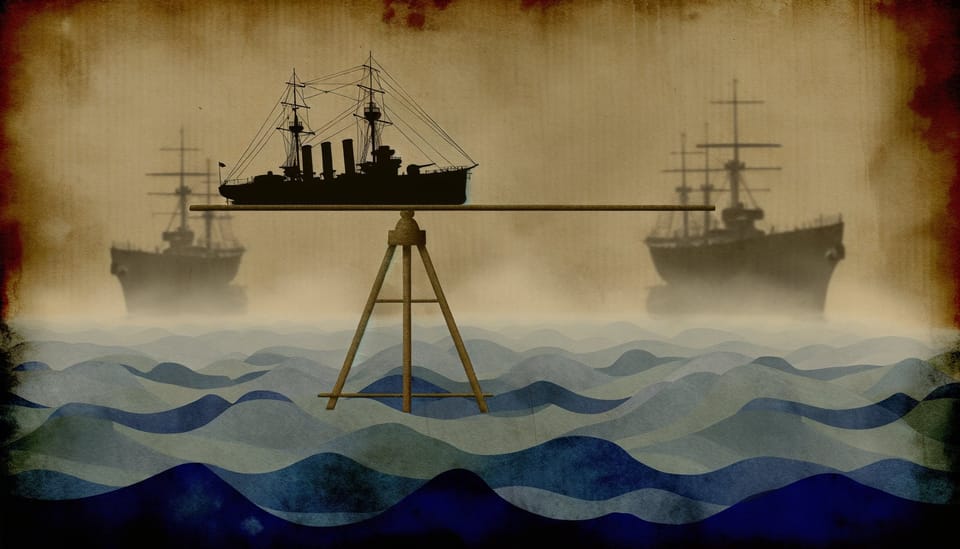
Iran’s leaders talk about closing the Strait of Hormuz the way a man with a grenade talks about pulling the pin in a crowded room. The threat works only if everyone believes he is crazy enough to do it—and only if he can survive the blast. Tehran’s problem is that the room has started to doubt his grip, and the blast radius keeps expanding to include his own house.
Twenty million barrels of oil pass through those 33 kilometres of water every day. That volume—roughly a fifth of global petroleum consumption—gives Iran a hostage of extraordinary value. But hostage-taking follows rules. The captor must convince the audience he will kill the hostage. He must also convince them that surrendering to his demands costs less than the hostage’s death. And he must, above all, avoid a situation where the rescuers conclude that the hostage is already dead.
In the 2025–2026 nuclear negotiations, Iran has tried to wield Hormuz as precisely this kind of coercive instrument. The record suggests it is failing—not because the threat lacks credibility, but because the very act of brandishing it is accelerating the military response it was designed to prevent.
Grey Water
The conventional view treats Hormuz brinkmanship as a binary: Iran either closes the strait or it doesn’t. This misreads Tehran’s actual playbook. The Islamic Revolutionary Guard Corps Navy operates not through blockade but through graduated harassment—tanker seizures, live-fire exercises, fast-boat swarms, mine-laying threats, and temporary disruptions calibrated to raise insurance premiums without triggering a full military response. The International Crisis Group has characterised this as “using the Strait of Hormuz as a trigger point and a tool of coercive diplomacy,” part of “Iran’s broader strategic playbook.”
The IRGC Navy’s toolkit is substantial. Over 100 fast attack boats, ten Chinese-made Houdong-class missile boats, C-802 anti-ship missiles with 120-kilometre range, mines, submarines, and a growing drone fleet. Janes recognises the IRGCN as “the most prominent practitioner of ‘small boat swarm tactics’” among the world’s naval forces. Iran has deployed missile systems on three disputed Gulf islands. In February 2026, the IRGC unveiled another underground missile base on Iran’s southern coast.
These capabilities serve a specific strategic function. They allow Tehran to impose costs—elevated war-risk premiums of $200,000 per VLCC voyage, rerouted shipping, nervous markets—without crossing the line into outright casus belli. The grey zone is the strategy. Full closure would be suicide. Graduated pressure is supposed to be leverage.
But leverage requires a negotiating table, and the table keeps collapsing. The 2025–2026 talks, initiated on April 12, 2025, after Trump’s letter to Supreme Leader Khamenei, have proceeded through indirect rounds mediated by Oman in Rome, Muscat, and Geneva. A sixth round was cancelled after Israel’s June 13, 2025 strikes on Iranian nuclear facilities. Talks resumed in February 2026—against the backdrop of a rapid American military buildup that makes previous deployments look modest.
Here lies the structural problem. Iran’s grey-zone maritime pressure is designed to signal resolve without provoking escalation. Yet each provocation feeds directly into the domestic political case—in Washington and Tel Aviv—for preventive military action. The tanker seizure that raises Brent crude by three dollars also raises the salience of “the Iran problem” in Trump’s inbox. And Trump’s decision calculus does not reward patience.
The Grenade With a Timer
To understand why Hormuz brinkmanship accelerates rather than deters, examine the temporal mismatch between Iranian strategy and American decision-making.
Khamenei’s strategic culture operates on extended timelines. He survived eight years of war with Iraq, decades of sanctions, and multiple rounds of internal unrest. His default mode is strategic patience: delay commitment, maintain ambiguity, avoid forcing a decisive confrontation. When cornered, he pivots sharply—accepting the JCPOA framework in 2015, accepting the Iran-Iraq War ceasefire in 1988—then retroactively frames capitulation as calculated strategy.
Trump operates on a different clock entirely. His decision pattern, refined through decades of zero-sum real-estate negotiation and reinforced by a decade of reality television, favours dramatic escalation followed by the search for an off-ramp that can be framed as victory. His February 2025 National Security Presidential Memorandum restored “maximum pressure,” directing Treasury to “drive Iran’s oil exports to zero.” When Trump sets deadlines, he means them—or at least his adversaries cannot afford to assume he doesn’t.
This temporal mismatch converts Hormuz brinkmanship from leverage into provocation. Each Iranian escalation—a seized tanker, a drone flyover, an underwater mine exercise—lands in an American political context where the institutional preference for restraint has been systematically replaced by a preference for decisive action. Trump’s national security apparatus has been positioned for “highly kinetic” operations. The IRGCN’s calibrated grey-zone pressure, designed to stay below the threshold of military response, keeps ratcheting the American threat assessment upward without triggering the one thing that might restrain Washington: a deal.
Iran’s nuclear programme compounds the problem. The IAEA reported in May 2025 that Iran had accumulated 408.6 kilograms of uranium enriched to 60% U-235—enough, if further enriched, for multiple weapons. Breakout time: one week or less. Iran is the only non-nuclear-weapon state to have produced such material. This reality creates a use-it-or-lose-it anxiety in Tel Aviv and a now-or-never urgency in certain corners of Washington. Hormuz threats do not reduce this anxiety. They amplify it, by suggesting that a post-breakout Iran would hold the global economy hostage permanently.
The June 2025 strikes demonstrated the consequences. Israel, with American support, hit Iranian nuclear facilities in a twelve-day campaign that confounded decades of predictions about massive Iranian retaliation and all-out regional war. Iran’s electronic warfare systems failed. The IRGC’s response was limited. The predictions of catastrophic escalation, which had constrained Western action for forty years, proved wrong.
That precedent matters enormously. It taught Washington and Tel Aviv that strikes on Iran carry lower costs than assumed. It also taught Tehran that its deterrent—the promise of regional conflagration—lacks credibility. This is the worst possible lesson for a state relying on brinkmanship: the adversary has learned that you blink.
Cascading Vulnerabilities
Zoom out from the bilateral Iran-US dynamic and the picture darkens further. Hormuz brinkmanship doesn’t operate in a vacuum. It sends shockwaves through a regional system riddled with fragilities that Iran’s own strategists appear to underestimate.
The most alarming fragility involves water. Gulf states derive the vast majority of their potable water from coastal desalination plants fed by Persian Gulf seawater. Most GCC nations hold only two to five days of emergency reserves. Riyadh has three to four days. Abu Dhabi’s Liwa aquifer storage—ninety days of emergency supply—is an outlier, not the norm. A single oil-contamination event in the Persian Gulf, whether from a struck tanker, a scuttled vessel, or a deliberate spill, could shut down desalination intake across multiple states simultaneously.
This is not a theoretical concern. Desalination infrastructure is distributed along the coast, which normally provides redundancy. But geographic contamination—oil carried by currents across hundreds of kilometres—turns that distribution into federated vulnerability. The GCC Water Grid, meant to provide “strategic security” through interconnection, would propagate contamination from one nation’s failed plants to its neighbours. Six separate failure points become one.
The timeline for catastrophe compresses to days, not weeks. A government facing desalination shutdown cannot negotiate, cannot wait for diplomatic resolution, cannot absorb a grey-zone provocation while maintaining social order. The 72-to-96-hour window before water scarcity becomes a civilizational emergency imposes a decision tempo that makes calibrated brinkmanship impossible. Iran’s grey-zone pressure, which depends on slow-burn cost imposition, collides with a system that can collapse in hours.
Gulf states understand this. They are evaluating pipeline options to hedge against Hormuz disruption—but the fact that they are hedging while simultaneously hosting mediation talks in Muscat signals that GCC nations no longer trust American security architecture to prevent closure. Saudi Arabia can reroute roughly half its exports through the East-West Pipeline to the Red Sea. The UAE has no comparable bypass. This asymmetry converts a collective Gulf problem into an existential UAE-specific trap.
Iran’s own economic exposure is equally severe. China purchased roughly 90% of Iran’s shipped oil by mid-2025—not market share but monopsony capture. Tehran has no alternative buyers at scale. Any disruption that threatens Chinese energy security threatens the one relationship keeping Iran’s economy from total collapse. Beijing wants a stable Persian Gulf to maintain uninterrupted oil flow. Iran’s leverage over Hormuz is simultaneously leverage over its only major customer—which means using it threatens the economic lifeline it cannot replace.
The feedback loop is vicious. Hormuz brinkmanship raises insurance premiums, which raises global oil prices, which raises inflation in the United States, which increases domestic political pressure on Trump to act decisively, which increases the probability of strikes, which is precisely what brinkmanship was supposed to prevent.
What Breaks
Follow the current trajectory forward. Iran continues grey-zone pressure to establish negotiating leverage. The United States continues its military buildup. The nuclear clock keeps ticking—breakout time is already measured in days, not months. Gulf states continue hedging, which progressively weakens the regional coalition Iran needs to keep intact to make Hormuz threats credible.
Three things break.
First, deterrence credibility. The June 2025 strikes already cracked it. Every month Iran fails to demonstrate that provocations carry consequences for the attacker, the credibility deficit widens. The IRGCN’s swarm boats and C-802 missiles are formidable against commercial shipping. Against a determined US carrier strike group backed by Israeli air power, they are a speed bump. Iran’s proxy network—Khamenei’s implicit threat of “regional war”—functioned as a deterrent only so long as no one tested it. It was tested. The test results were not encouraging for Tehran.
Second, the negotiating window. Iran has signalled willingness for a “fast deal” as the military buildup grinds on—a tacit admission that time is not on its side. But Trump’s maximum-pressure framework demands more than the JCPOA ever required: not just enrichment caps but missile limits and regional behaviour constraints. The gap between what Iran can accept and what Trump can sell as victory may be unbridgeable. Each Hormuz provocation widens that gap by reinforcing the American narrative that Iran is a rogue actor requiring coercion, not a rational negotiating partner deserving concessions.
Third, regional stability. Gulf Arab states are gripped by anxiety over nuclear contamination risks from potential strikes on Iranian facilities. This anxiety does not translate into support for Iran’s position. It translates into pressure on Washington to either resolve the crisis or finish it—but not to let it simmer. Gulf capitals fear the slow boil more than the explosion, because the slow boil corrodes investment, raises insurance costs, and keeps the desalination-vulnerability question permanently unresolved.
Iran’s Hormuz card, in short, is a depreciating asset. Every time Tehran plays it, the card loses value—because the threat becomes familiar, the response capability grows, and the alternative infrastructure (pipelines, strategic reserves, diversified supply routes) incrementally reduces the strait’s monopoly on global energy flows.
Three Doors, All Narrow
Realistic intervention points exist. None is costless.
A fast deal that trades enrichment caps for sanctions relief. This is the most stabilising outcome and the least likely. It would require Iran to accept intrusive verification beyond anything in the JCPOA, including limits on its 60%-enriched stockpile and meaningful restrictions on centrifuge deployment. It would require Trump to accept something less than total capitulation—and to sell it domestically as victory despite giving Iran sanctions relief. The IAEA would need to verify compliance from a starting point of deep mutual distrust. Political feasibility: LOW. Iran’s domestic hardliners would frame any deal as surrender after the June strikes. Trump’s domestic base would frame any deal short of disarmament as weakness. The narrow path runs through Oman’s mediators and depends on both leaders’ willingness to accept imperfect outcomes—a quality neither has demonstrated.
A tacit mutual restraint arrangement without a formal deal. Iran freezes enrichment at current levels and reduces Hormuz provocations. The United States slows its military buildup and quietly eases enforcement of oil sanctions. Neither side signs anything. Neither side claims victory. This arrangement has historical precedent—it roughly describes the period between 2019 and 2021—but it requires trust that neither side possesses and stability that the current trajectory is eroding daily. Political feasibility: MEDIUM. Both leaders can maintain it without domestic political cost precisely because it is informal. The risk is that any incident—a rogue IRGCN commander seizing a tanker, an Israeli intelligence operation gone wrong—shatters the arrangement with no institutional framework to restore it.
Preventive strikes followed by coerced negotiation. The United States and Israel strike Iranian nuclear facilities and key IRGC assets, then offer talks from a position of overwhelming leverage. This is the option the current military buildup is designed to enable. It would eliminate Iran’s near-breakout capability and dramatically weaken the IRGCN’s Hormuz infrastructure. The costs are substantial: oil price spikes of $30-50 per barrel in the short term, potential contamination of Gulf waters affecting desalination, retaliatory attacks on Gulf infrastructure and US bases, and the long-term consequence of convincing Iran that only actual nuclear weapons—not threshold capability—provide security. Political feasibility: HIGH under current US leadership. The June 2025 precedent lowered the perceived cost. The February 2026 buildup suggests preparation is already advanced.
The most likely scenario is a lurching combination of all three: intermittent talks that produce partial agreements, punctuated by military crises that reset the dynamic, with the underlying nuclear programme advancing incrementally between rounds. This is the worst outcome for everyone except arms dealers and insurance underwriters—but it is the outcome most consistent with how both leaderships actually make decisions.
FAQ: Key Questions Answered
Q: Could Iran actually close the Strait of Hormuz completely? A: Temporarily, yes—through mine-laying, fast-boat swarms, and anti-ship missile fire, Iran could halt commercial traffic for days or weeks. Permanently, no. The US Fifth Fleet and allied naval forces would reopen the strait, though at significant cost in time, equipment, and escalation risk. Iran’s own economy would collapse faster than its adversaries’, since it depends on the same waterway for its oil exports.
Q: How much would an oil price spike from a Hormuz disruption cost the global economy? A: The IEA estimates that only 3.5–5.5 million barrels per day of bypass pipeline capacity exists (Saudi and UAE routes). A full closure would remove roughly 15 million barrels per day from accessible global supply—enough to drive prices above $150 per barrel. Even a partial disruption with elevated insurance premiums adds $5-15 per barrel. For the United States, each $10 increase in oil prices shaves roughly 0.2-0.3 percentage points off GDP growth.
Q: What is Iran’s current nuclear breakout time? A: As of the IAEA’s May 2025 report, Iran had amassed 408.6 kg of uranium enriched to 60% U-235, with breakout time estimated at one week or less. This makes Iran functionally a threshold nuclear state, though producing a deliverable warhead would take additional months.
Q: Why don’t Gulf states simply support strikes on Iran to end the Hormuz threat? A: Because strikes carry their own catastrophic risks for Gulf populations—nuclear contamination of Gulf waters, retaliatory missile attacks on desalination plants and oil infrastructure, and prolonged regional instability. Gulf states want the threat resolved but fear the cure as much as the disease. Their preferred outcome is a negotiated settlement that constrains Iran’s nuclear programme without a war fought across their territory.
The Pin and the Room
Return to the man with the grenade. Iran’s brinkmanship assumes that the room—the global economy, the Gulf states, the American electorate—fears the blast enough to grant concessions. But the room has been slowly reinforcing its walls, building exits, and—after June 2025—learning that the grenade may be smaller than advertised.
Khamenei’s strategic patience served Iran well for decades when the main threat was sanctions, not strikes. Patience makes sense when time is on your side. But Iran’s negotiating position is deteriorating on every axis simultaneously: its nuclear programme has provoked rather than deterred military action, its conventional deterrent failed its most important test, its only major oil customer holds monopsony power over its economy, and its regional proxy network—the instrument of its “regional war” threat—has been degraded.
The strait remains strategically vital. Twenty million barrels a day cannot be wished away. But leverage requires not just the ability to impose costs—it requires the adversary’s belief that those costs exceed the price of action. Iran’s brinkmanship has, over two years of escalation, systematically eroded that belief. The room is no longer watching the grenade. It is watching the man’s hands, calculating how fast it can move before he decides to pull.
Sources & Further Reading
The analysis in this article draws on research and reporting from:
- IEA Strait of Hormuz Factsheet - Primary data on oil and LNG flows through the strait
- IAEA GOV/2025/25 - Iran’s uranium enrichment stockpile and breakout assessment
- White House NSPM-2 Fact Sheet - Maximum pressure policy directives
- Al Jazeera: Tracking the US Military Build-up Near Iran - February 2026 deployment details
- CNN: What Is the Strait of Hormuz? - Strategic significance and Chinese energy dependency
- Modern Diplomacy: Iran’s Maritime Power Play - International Crisis Group characterisation of Hormuz strategy
- The War Zone: Iran Signals Possible Fast Deal - Iranian diplomatic signals amid military pressure
- CNN: Anxiety Grips Gulf Arab States - Gulf state concerns over nuclear contamination
- FRSTRATEGIE: IRGC Navy’s Long-Term Strategy - IRGCN asymmetric warfare doctrine
- GCC Enhancing Resilience (IMF) - Gulf infrastructure hedging and pipeline diversification