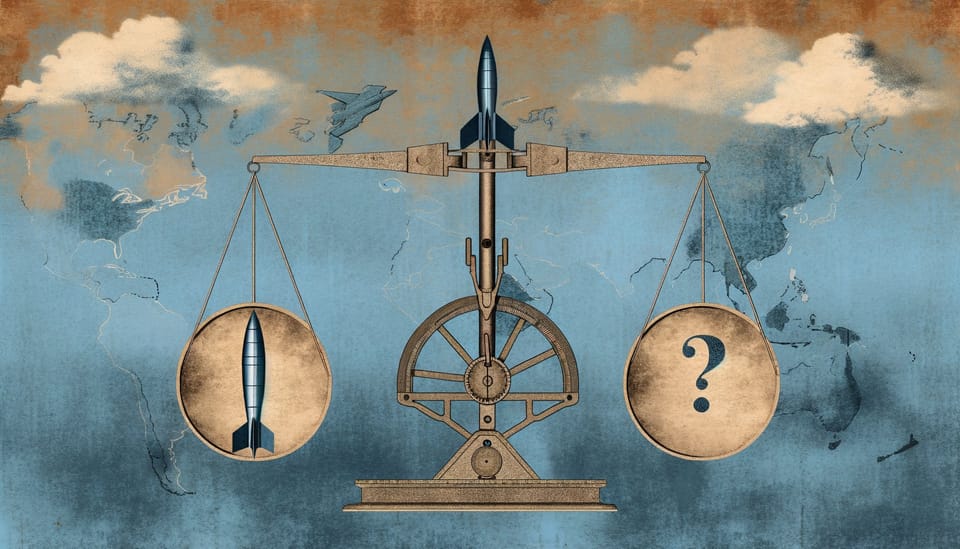
Has Chinese espionage already crippled Taiwan's military before the war begins?
Taiwan prosecuted 64 espionage cases last year while absorbing 2.4 million cyberattacks daily. The island can still fight—but decades of Chinese intelligence penetration have eroded command coherence, constrained American cooperation, and enabled Beijing to calibrate coercion with uncomfortable...
🎧 Listen to this article
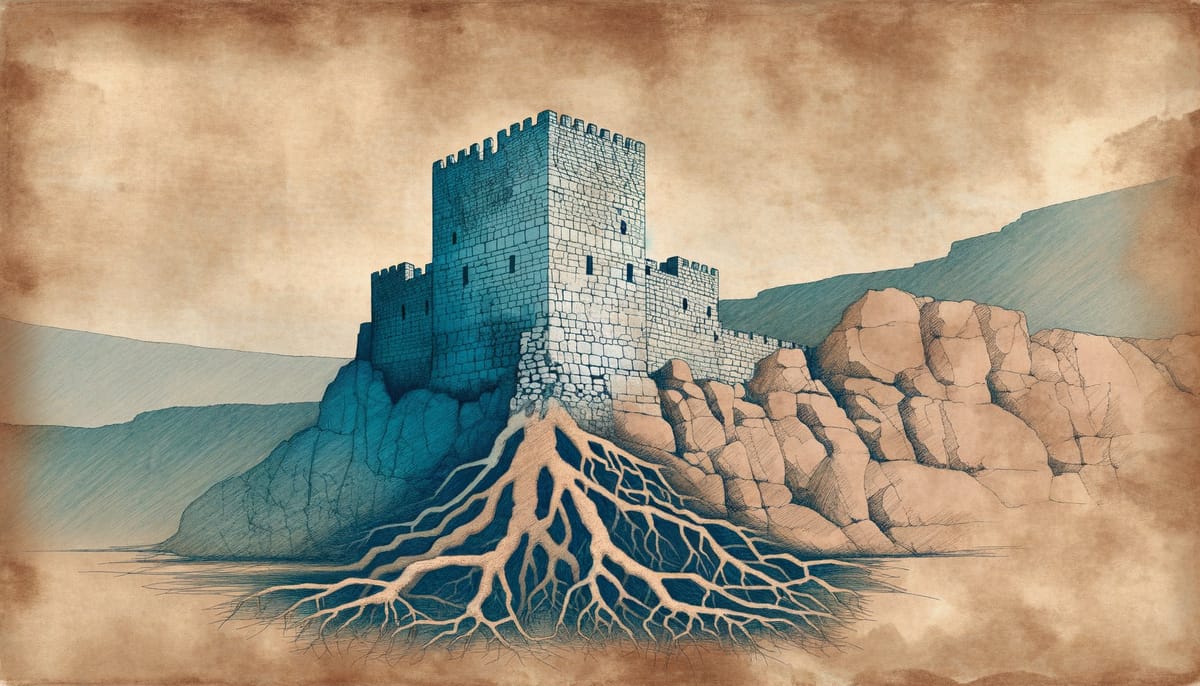
The Spy Who Already Won
In January 2025, Taiwan’s National Security Bureau released a report documenting 2.4 million cyberattacks per day against government networks—double the previous year’s rate. Most originated from the People’s Republic of China. The number is so large it risks becoming meaningless, a statistic that numbs rather than alarms. But buried within that digital deluge lies a more troubling signal: the attacks that succeed don’t always look like attacks at all.
Taiwan’s military counterintelligence apparatus has been busy. In 2024 alone, 64 individuals faced espionage-related charges, a figure that represents both vigilance and vulnerability. The cases reveal a pattern that should concern anyone betting on Taiwan’s ability to resist a cross-strait assault. Retired generals recruited through business partnerships. Active-duty officers compromised through family connections. Intelligence personnel turned through a combination of ideology, money, and the peculiar gravitational pull that shared language and culture exert across the narrow strait.
The question is not whether Chinese intelligence has penetrated Taiwan’s military. It has. The question is whether that penetration has already crossed a threshold that transforms Taiwan’s defense from a credible deterrent into an elaborate performance—impressive in peacetime, hollow when tested.
The Anatomy of Compromise
Understanding Taiwan’s vulnerability requires grasping how Chinese intelligence operates differently from Western models. The Ministry of State Security and the PLA’s Intelligence Bureau do not merely recruit spies. They cultivate ecosystems.
The mechanism works through what intelligence professionals call “the long game.” A Taiwanese officer retires. He joins a business consultancy with mainland clients. He maintains friendships with former colleagues. He attends temple festivals where community leaders—some with their own cross-strait ties—gather information through conversation rather than interrogation. Years pass. The retired officer’s nephew enters military service. The nephew faces financial pressure. A solution presents itself through channels that feel familial rather than foreign.
This is not espionage as Hollywood imagines it. It is espionage as anthropology—patient, relational, embedded in the social fabric that connects two societies that share everything except a government.
Taiwan’s National Security Bureau has documented how Chinese intelligence uses “military veterans to recruit active service members” and establishes “contacts with criminal gangs, local temples and religious groups, and civilian organizations.” The temple connection deserves particular attention. Taiwan’s religious institutions function as organic social networks, mapping community relationships with a precision that no database could match. For intelligence officers seeking recruitment targets, temples offer something invaluable: trust that has been earned over generations.
The scale of documented penetration suggests systematic effort. Recent spy scandals have exposed vulnerabilities across Taiwan’s security apparatus, from military intelligence to civilian agencies with defense responsibilities. One case revealed what analysts called an “incredible security blunder”—compromises reaching into Taiwan’s arsenal that demonstrated Beijing’s ability to map defensive capabilities with disturbing precision.
But raw case counts mislead. Sixty-four prosecutions could indicate either a well-penetrated military or an effective counterintelligence service catching spies before they cause damage. The truth lies in what those spies accessed before capture—and whether captured spies represent the network’s failures or merely its expendable components.
What Beijing Knows
The operational impact of intelligence penetration depends on what information has been compromised. Here, the evidence suggests Taiwan faces a structural disadvantage that no counterintelligence reform can fully address.
Consider the problem from Beijing’s perspective. To plan a successful cross-strait operation, PLA strategists need answers to specific questions. Where are Taiwan’s mobile missile batteries positioned? What are the readiness states of air defense systems? Which units would respond to an amphibious landing, and through what routes? How do Taiwan’s command-and-control systems function under stress? What are the personal characteristics of key commanders—their risk tolerance, their decision-making patterns, their potential vulnerabilities?
Decades of penetration have likely provided answers to most of these questions. Taiwan’s Order of Battle—the detailed mapping of military units, equipment, and capabilities—has almost certainly been compromised to a degree that allows PLA planners to model Taiwanese responses with uncomfortable accuracy. The U.S.-China Economic and Security Review Commission’s 2025 report warns that “China is rapidly advancing toward its goal of being prepared to take Taiwan by force,” a preparation that requires precisely the intelligence that penetration provides.
The asymmetry cuts deeper than stolen documents. Chinese intelligence has had decades to study Taiwanese military culture from the inside. They understand not just what Taiwan’s military can do, but how it thinks. They know which officers prioritize caution over initiative, which units maintain genuine readiness versus those that perform well on inspections, which communication channels carry real orders versus bureaucratic noise.
This knowledge enables something more dangerous than surprise attack: calibrated pressure. Beijing can design coercive operations—military exercises, blockade scenarios, gray-zone incursions—with precise understanding of which actions will trigger which responses. They can probe without provoking, escalate without miscalculating, because they see Taiwan’s decision-making apparatus from within.
The Counterintelligence Dilemma
Taiwan has not been passive. The Anti-Infiltration Act passed in 2019 created legal frameworks to prosecute Chinese influence operations. The Ministry of National Defense has implemented security clearance reforms. Wellington Koo, the current defense minister, has prioritized institutional overhaul, bringing a lawyer’s systematic approach to a military establishment long resistant to civilian oversight.
Yet counterintelligence faces a mathematical problem. Taiwan’s military comprises roughly 170,000 active personnel and over 1.6 million reservists. Each represents a potential vulnerability. Each has family connections, financial pressures, ideological commitments, and human relationships that extend beyond any security perimeter. Screening every individual with the rigor necessary to detect sophisticated recruitment is impossible. The counterintelligence apparatus must choose between thoroughness and paralysis.
The choice creates its own pathology. Aggressive counterintelligence generates false positives—loyal officers suspected, careers destroyed, unit cohesion damaged by mutual suspicion. The Taipei Times has reported on calls to revise the Anti-Infiltration Act, reflecting ongoing tension between security imperatives and civil liberties. Too much vigilance breeds paranoia. Too little invites penetration.
Taiwan’s response has increasingly emphasized resilience over prevention. If penetration cannot be stopped, the argument goes, its effects can be mitigated through redundancy, compartmentalization, and distributed command structures. The 2025 National Defense Report emphasizes “resistance and unconventional defense strategies”—an implicit acknowledgment that conventional command-and-control may not survive first contact with an adversary who has mapped it in detail.
This shift toward asymmetric defense represents both adaptation and admission. Taiwan is preparing to fight a war in which its own command structure cannot be trusted.
The Alliance Complication
Taiwan’s intelligence vulnerability creates cascading problems for its most important security relationship. The United States has long provided Taiwan with defense articles, intelligence sharing, and implicit security guarantees. Each of these becomes problematic when the recipient cannot guarantee information security.
American officials face an uncomfortable calculus. Sharing advanced intelligence with Taiwan improves the island’s defensive capabilities. But if that intelligence flows to Beijing through compromised personnel, the sharing damages American interests while providing only temporary benefit to Taiwan. The more valuable the intelligence, the more dangerous its compromise.
This dynamic has already constrained cooperation. American reluctance to share certain capabilities or information reflects not distrust of Taiwan’s intentions but realistic assessment of Taiwan’s counterintelligence environment. The result is a security partnership operating below its potential precisely when maximizing that potential matters most.
The problem compounds with joint planning. Any serious defense of Taiwan against Chinese attack requires coordination between Taiwanese and American forces. Such coordination requires shared understanding of plans, capabilities, and command arrangements. Yet every element shared becomes a potential leak. American planners must assume that anything communicated to Taiwan may reach Beijing—and plan accordingly.
Some analysts argue this constraint is manageable. Operational security can compartmentalize sensitive information. Real-time coordination during conflict can bypass compromised channels. American capabilities that Taiwan doesn’t know about cannot be betrayed by Taiwanese sources.
These arguments contain truth but miss the deeper problem. Effective alliance requires trust. Trust requires information sharing. Information sharing requires confidence that shared information remains secure. When that confidence erodes, the alliance functions but does not flourish. Taiwan gets American support, but not American partnership.
The Morale Dimension
Intelligence penetration damages military effectiveness through channels that don’t appear in capability assessments. When soldiers believe their organization has been compromised, their behavior changes in ways that degrade performance even if the penetration itself is contained.
Taiwan faces a morale challenge that extends beyond espionage. Generational surveys reveal declining enthusiasm for military service among younger Taiwanese. The extension of conscription from four months to one year has generated resistance. Social media—including platforms like TikTok with documented connections to Chinese influence operations—amplifies narratives that question whether Taiwan’s military is worth joining, whether resistance is futile, whether accommodation might be wiser than confrontation.
Espionage scandals feed this narrative. Each prosecution confirms that the military cannot protect its own secrets. Each revelation suggests that sacrifice might be betrayed before it is made. The psychological effect may exceed the operational damage.
Chinese information operations exploit this vulnerability systematically. Disinformation campaigns don’t need to prove that Taiwan’s military is compromised. They need only suggest it, repeatedly, through channels that reach young Taiwanese already skeptical of military institutions. The goal is not to recruit spies but to create an environment in which military service feels pointless—defending an institution that cannot defend itself.
The counterintelligence response to this challenge requires more than catching spies. It requires rebuilding institutional credibility in an information environment designed to destroy it.
Scenarios and Thresholds
Whether intelligence penetration has “compromised” Taiwan’s defense depends on which conflict scenario one imagines. The answer differs dramatically across the range of possibilities.
In a full-scale amphibious invasion, penetration matters less than physics. Taiwan’s geography—a hundred miles of water, limited landing beaches, mountainous terrain—creates defensive advantages that intelligence cannot eliminate. Chinese forces would face attrition regardless of what they know about Taiwan’s dispositions. Compromised command-and-control would hurt Taiwan, but distributed resistance could continue even if centralized command collapsed.
In a blockade scenario, penetration matters more. Knowing Taiwan’s economic vulnerabilities, reserve stockpiles, and political pressure points allows Beijing to calibrate coercion with precision. Understanding which leaders might crack, which industries would fail first, which population segments would demand accommodation—this intelligence transforms blockade from blunt instrument to surgical tool.
In a decapitation strike targeting Taiwan’s leadership and command infrastructure, penetration could prove decisive. If Beijing knows where key decision-makers will be, which communication systems they rely upon, and how succession would function after their elimination, a first strike could paralyze Taiwan’s response before organized resistance begins.
The most dangerous scenario may be the one Taiwan is least prepared to recognize: the conflict that doesn’t look like conflict. Gray-zone operations, gradually escalating pressure, incremental erosion of Taiwan’s autonomy through means that never cross the threshold of war. In this scenario, intelligence penetration enables Beijing to manage escalation with precision, always staying below the level that would trigger American intervention while steadily degrading Taiwan’s position.
Taiwan’s defense reforms have focused primarily on the invasion scenario—the dramatic, visible threat. The penetration problem suggests the greater danger may lie in the scenarios where information advantage matters most: the slow strangulation that intelligence makes possible.
The Honest Assessment
Has Chinese intelligence penetration already compromised Taiwan’s ability to defend itself? The honest answer requires distinguishing between types of compromise.
Taiwan’s ability to resist invasion remains substantial. Geography, motivated defenders, American support, and the sheer difficulty of amphibious operations against prepared defenses create real obstacles that intelligence penetration cannot eliminate. A Chinese invasion would be costly regardless of what Beijing knows about Taiwan’s military.
Taiwan’s ability to maintain command coherence under sustained pressure has been degraded. Decades of penetration have given Beijing detailed understanding of Taiwan’s military decision-making, enabling calibrated coercion that exploits known vulnerabilities. Taiwan’s shift toward distributed, resilient defense structures represents appropriate adaptation but also acknowledgment of compromise.
Taiwan’s alliance relationships have been constrained. American reluctance to share certain capabilities reflects realistic assessment of Taiwan’s counterintelligence environment. The security partnership operates below potential.
Taiwan’s institutional credibility has been damaged. Repeated espionage scandals, amplified by Chinese information operations, have contributed to declining confidence in military institutions among younger Taiwanese. This damage compounds over time.
The aggregate picture suggests not catastrophic compromise but systematic erosion. Taiwan can still fight. It cannot fight as effectively as it could without decades of penetration. The gap between actual capability and potential capability represents China’s intelligence dividend—paid in advance of any conflict, compounding with each passing year.
What Would Change the Trajectory
Three interventions could alter this dynamic, each with significant costs.
First, Taiwan could implement security reforms that prioritize counterintelligence over operational convenience. This would mean accepting slower promotion processes, more intrusive vetting, and restrictions on cross-strait contact that would affect millions of families. The political cost would be substantial. The DPP government would face accusations of authoritarianism. The KMT would exploit restrictions for electoral advantage. Civil society would resist surveillance expansion. But without such measures, penetration continues.
Second, the United States could invest in Taiwan’s counterintelligence capabilities directly, providing training, technology, and institutional support that Taiwan cannot develop independently. This would require accepting deeper involvement in Taiwan’s internal security—a commitment that crosses lines American policy has traditionally respected. It would also require trusting that American assistance would not itself be compromised.
Third, Taiwan could restructure its military to assume penetration rather than prevent it. This means radical decentralization, with units capable of independent action when communications fail and command structures collapse. It means accepting that some operations will be betrayed and planning for that betrayal. It means building a military that functions despite its own compromise.
None of these options is politically easy. All involve trade-offs that Taiwan’s democratic system may resist. The most likely trajectory is therefore continued erosion—reforms that address symptoms without transforming structures, counterintelligence successes that catch some spies while others remain active, alliance cooperation that helps but doesn’t solve the underlying problem.
Taiwan will remain defensible. It will not become impregnable. The gap between those conditions is where Chinese intelligence operates—and where Taiwan’s future may be decided before any shot is fired.
Frequently Asked Questions
Q: How many Chinese spies have been caught in Taiwan’s military? A: In 2024 alone, Taiwan charged 64 individuals with espionage-related offenses, though this figure includes both military and civilian cases. The actual number of active Chinese intelligence assets within Taiwan’s defense establishment remains unknown—caught spies represent only the visible portion of any intelligence network.
Q: Could Taiwan’s military still function if its command structure is compromised? A: Taiwan has increasingly adopted distributed defense concepts that assume centralized command may fail. Units are being trained for independent action, and the military has emphasized “resistance and unconventional defense strategies” that could continue even if traditional command-and-control collapses.
Q: Does Chinese espionage affect US willingness to defend Taiwan? A: American officials must weigh the risk that intelligence shared with Taiwan could reach Beijing. This has constrained some aspects of security cooperation, though the US continues to provide significant defense support. The deeper concern is whether joint planning for Taiwan’s defense can proceed when operational security cannot be guaranteed.
Q: What makes Taiwan particularly vulnerable to Chinese intelligence operations? A: Shared language, extensive family ties across the strait, deep economic integration, and cultural connections create recruitment opportunities that don’t exist in most espionage contexts. Chinese intelligence can exploit relationships that feel natural rather than foreign, making detection exceptionally difficult.
Sources & Further Reading
The analysis in this article draws on research and reporting from:
- ASPI Strategist: How Taipei is fighting back against Beijing’s spies - Detailed analysis of Taiwan’s counterintelligence efforts and espionage prosecution statistics
- U.S.-China Economic and Security Review Commission 2025 Report - Official U.S. government assessment of China’s Taiwan preparations
- Taiwan National Security Bureau: Analysis on China’s Cyberattack Techniques - Primary source documentation of cyber threat volume
- South China Morning Post: Taiwan spy scandals expose frailty of political and military defences - Investigative reporting on recent espionage cases
- Global Taiwan Institute: Assessment of PRC Fifth Column Network - Expert analysis of Chinese intelligence infrastructure in Taiwan
- East Asia Forum: Taiwan’s draft divide exposes generation gap - Analysis of generational attitudes toward military service
- Wikipedia: Anti-Infiltration Act - Background on Taiwan’s legal framework for countering Chinese influence