Daily Brief: 29 December 2025
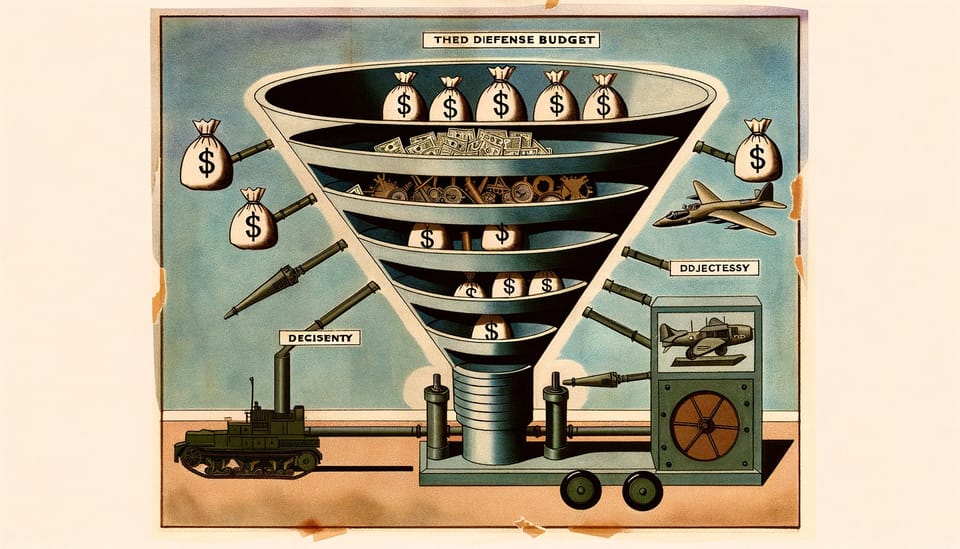
Pacific micro-states auction themselves to superpowers while Japan spends $58B on defense it constitutionally can't use offensively.

Pacific | Diplomacy | Micro-states monetize US-China competition through strategic switching and security partnerships
Situation
Pacific micro-states are actively auctioning their diplomatic recognition and strategic partnerships between Beijing and Washington. Nauru switched recognition from Taiwan to China in January 2024 for a reported $125 million, timing the move to maximize impact during Taiwan’s presidential election.
The Solomon Islands’ 2022 security agreement with China—allowing Chinese security forces deployment—triggered panic in Washington and Canberra, leading to over $810 million in new US assistance and embassy reopenings. These states leverage positional scarcity: their exclusive economic zones span millions of square kilometers despite populations under 12,000 people.
Context
This represents a reversal of traditional great power dynamics where small states typically get crushed in strategic competition. Pacific micro-states possess juridical sovereignty equal to superpowers but lack practical capabilities—no militaries, minimal bureaucracies, climate-threatened territories.
Yet geography creates tradeable assets. American planners see potential Chinese bases complicating Pacific operations; Chinese strategists see opportunities to break island chain containment. The finite supply of Taiwan recognition—only four Pacific states remain loyal—creates bidding wars where China can outspend Taiwan’s development assistance.
Recent US Compacts of Free Association negotiations demonstrate this leverage: prolonged congressional delays allowed micro-states to hint at Chinese alternatives, ultimately securing $7.1 billion over twenty years.
Trajectory
The auction model faces structural limits that may determine its sustainability. States require credible alternatives to maintain leverage, but Chinese loans create dependencies while US security arrangements constrain sovereignty.
Domestic institutions cannot be insulated from external competition—great powers cultivate factions and shape information environments, not just governments. Most critically, micro-states lack bureaucratic capacity to manage sophisticated hedging strategies simultaneously.
Climate change introduces an existential wildcard that scrambles conventional calculations, potentially making survival trump sovereignty in future negotiations.
Japan | Defence | $58B military surge creates deterrent capabilities constrained by constitutional strike limitations
Situation
Japan’s Cabinet approved a record ¥9 trillion ($58 billion) defence budget for 2025, the fourth consecutive year of aggressive military expansion. By 2027, Tokyo will spend 2% of GDP on defence—a figure politically unthinkable a decade ago.
The spending focuses on standoff capabilities including Tomahawk cruise missiles, extended-range Type-12 missiles, and integrated air defence systems. These represent genuine military capabilities that will complicate Chinese attack planning.
However, Article 9 constitutional constraints create a temporal paradox: Japan can legally acquire counterstrike weapons but cannot use them preemptively, only after “an armed attack against Japan has been initiated.”
Context
This creates a deterrence architecture dependent on capabilities Japan cannot fully deploy. While the nation builds sophisticated offensive systems, constitutional doctrine requires absorbing the first blow before retaliation becomes legally permissible.
The industrial capacity problem compounds strategic limitations. Japan’s defence base was designed for peacetime maintenance, not wartime production surge. China has increased artillery production 200-300% since 2022; Japan cannot match this industrial flexibility without structural transformation requiring years.
Cost-exchange ratios favor attackers. Chinese strategy combines precision ballistic missiles with cheap saturation weapons, forcing Japan’s expensive interceptors to defend against both simultaneously. A $2 million interceptor defending against a $2,000 drone creates unsustainable mathematics over extended conflict.
Trajectory
Japan is purchasing strategic ambiguity rather than conventional deterrence. The uncertainty about whether Tokyo’s legal system will authorize strikes during actual combat may itself deter Chinese planning—or prove catastrophic if deterrence fails.
The spending reflects acceptance that pure defensive postures are insufficient against China’s missile arsenal, but constitutional constraints prevent fully credible offensive deterrence. Success depends entirely on alliance integration with the United States.
Japan’s approach represents a sophisticated hedge: building genuine capabilities while preserving constitutional flexibility, betting that ambiguity provides more strategic value than clarity.
Yesterday’s Assessments
- The Carrier Question: China’s Missiles and the Future of Taiwan Defense
- The Decade That Decides: America, China, and Russia’s Collision Course
- The Pacific Auction: How Micro-States Learned to Sell Sovereignty
- Daily Brief: 28 December 2025
- Why Sudan’s Peace Agreements Keep Succeeding at Everything Except Peace
- Japan’s $58 Billion Bet: Deterrence or Target Practice?
Until tomorrow.